
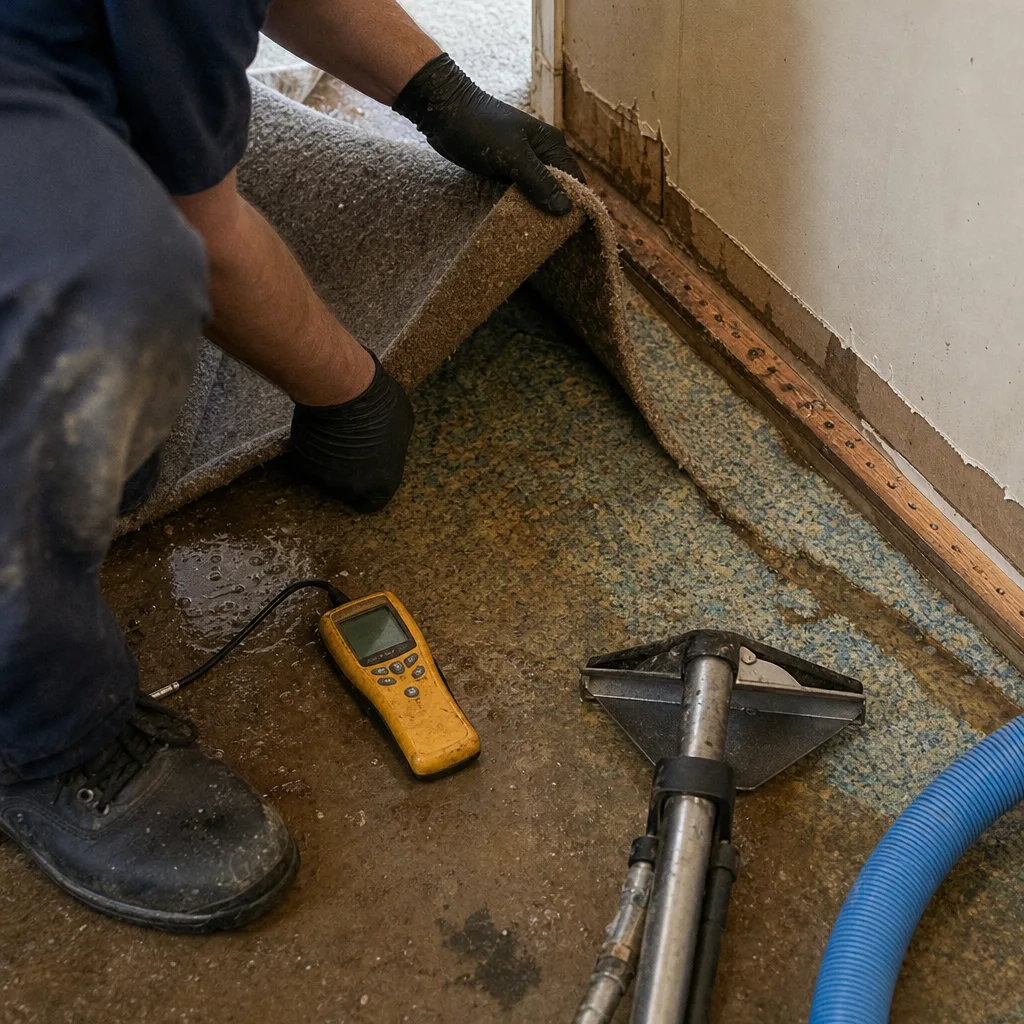
Free visual inspection and a written scope of work before any mitigation begins - photos, moisture readings, and drying logs go in your claim file
The scope we write is the scope we bill. Anything new gets shown to you, in writing, before we touch it.
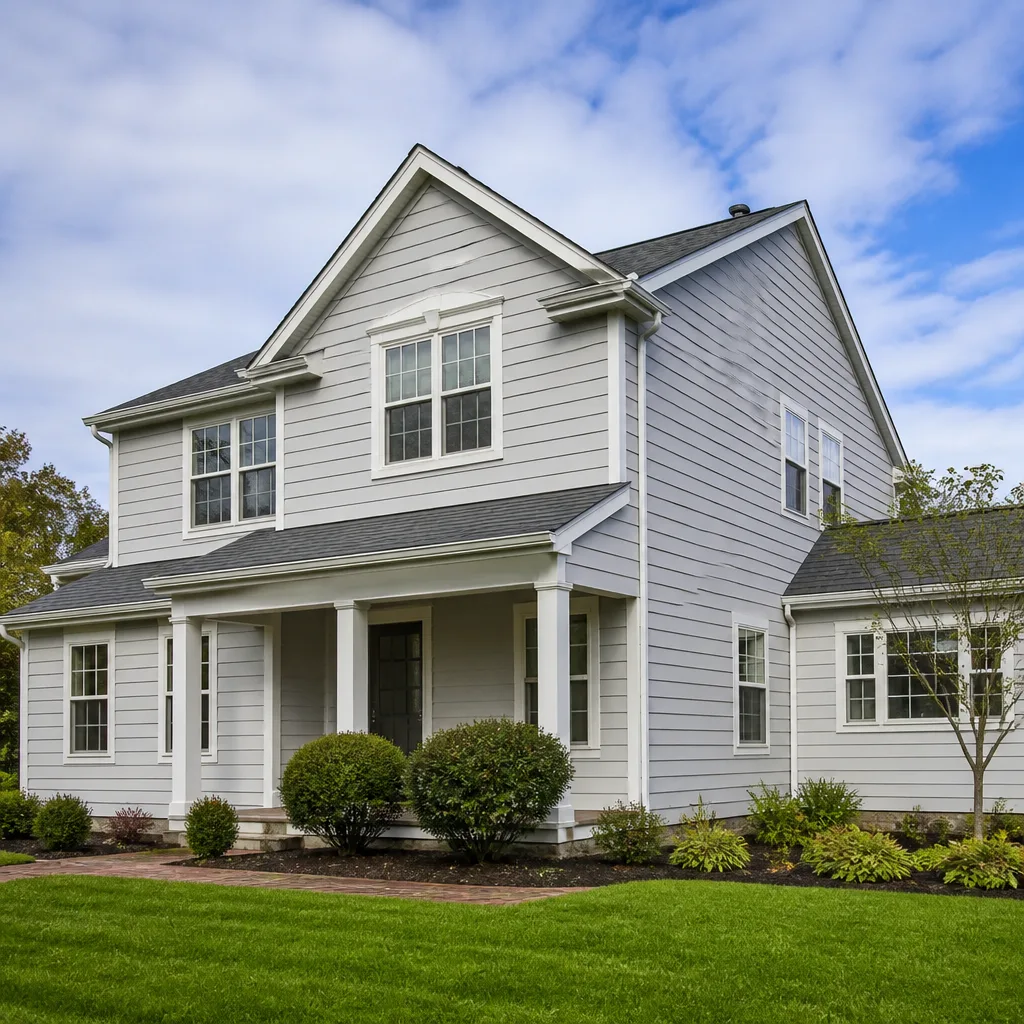
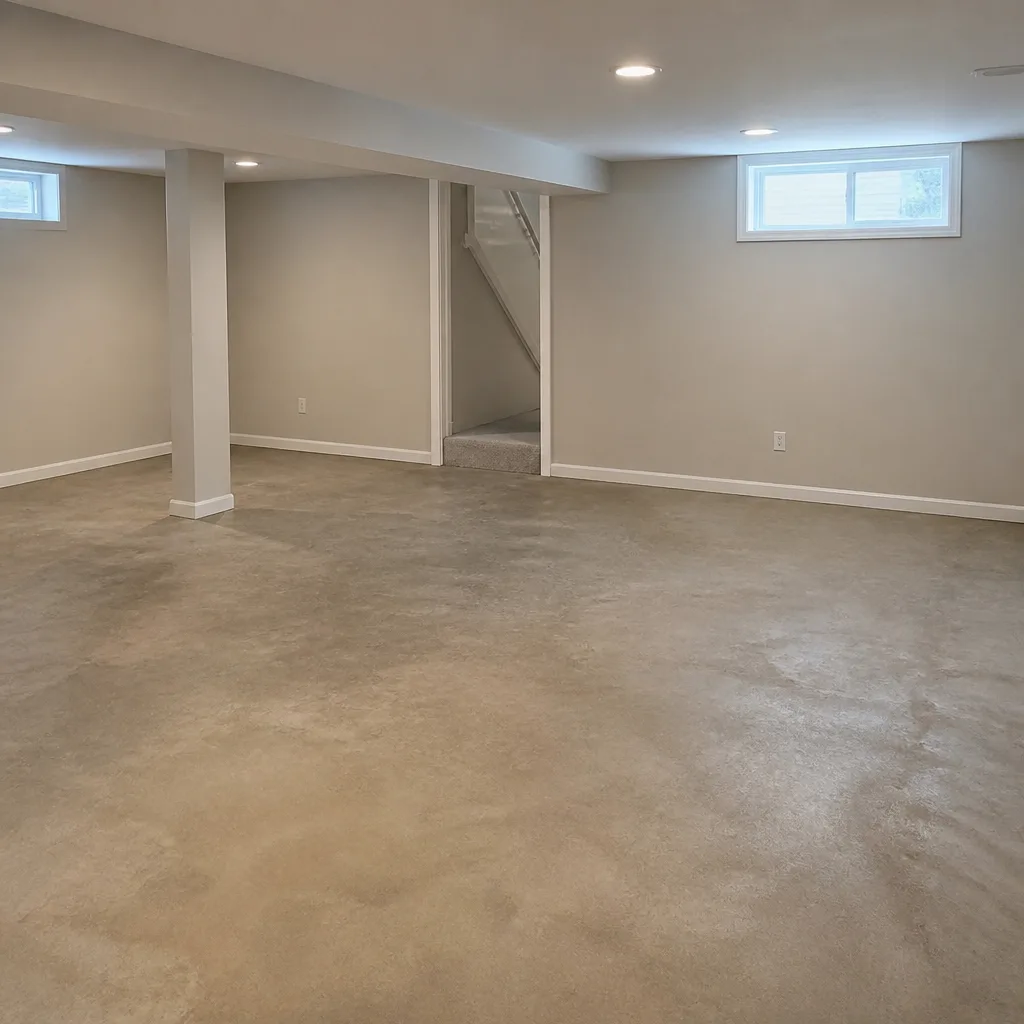
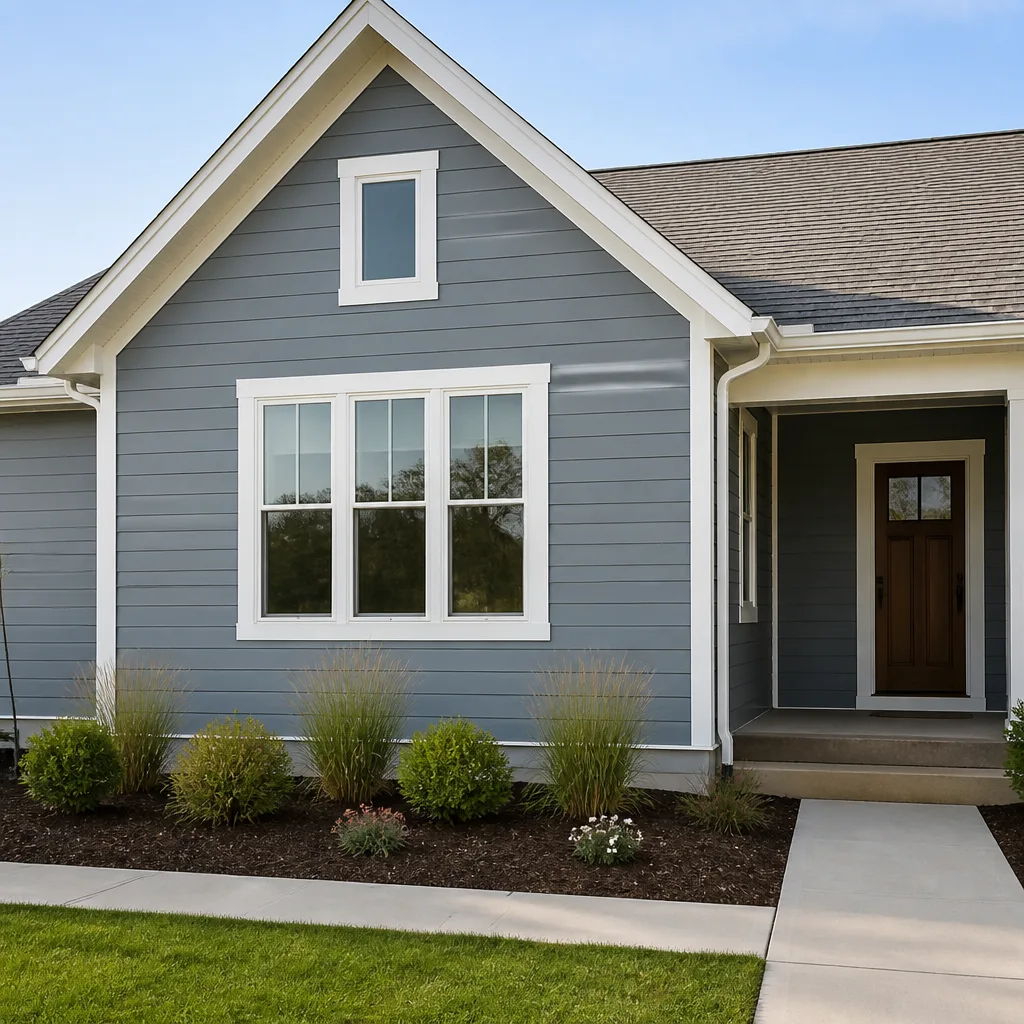
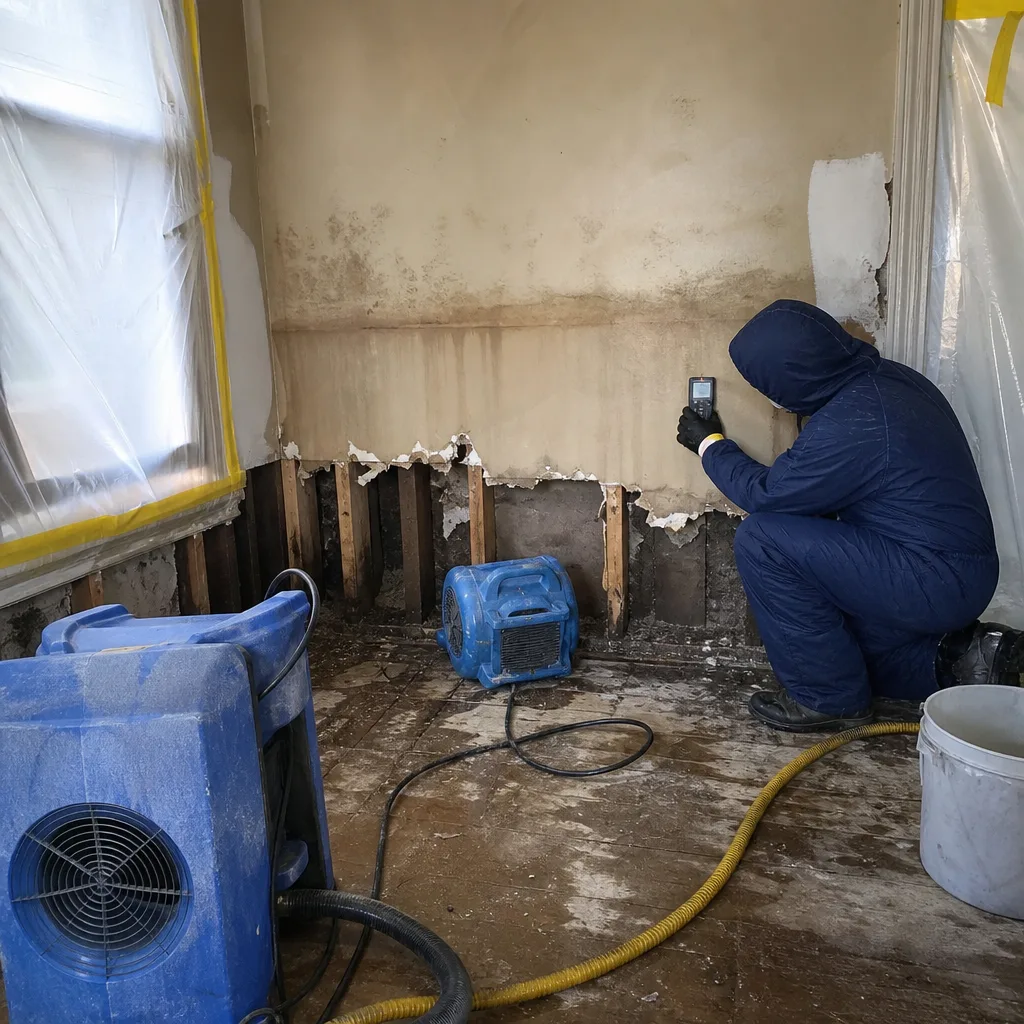 Before
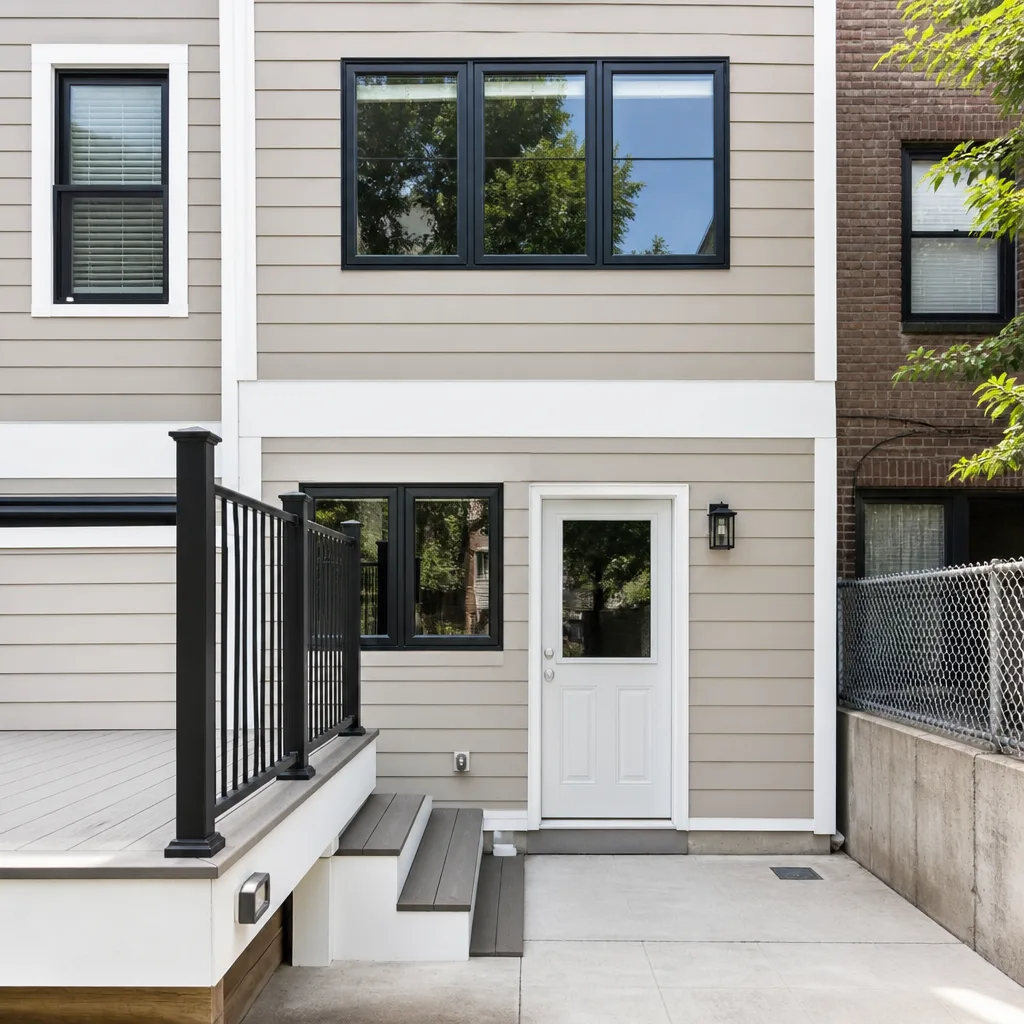 After
After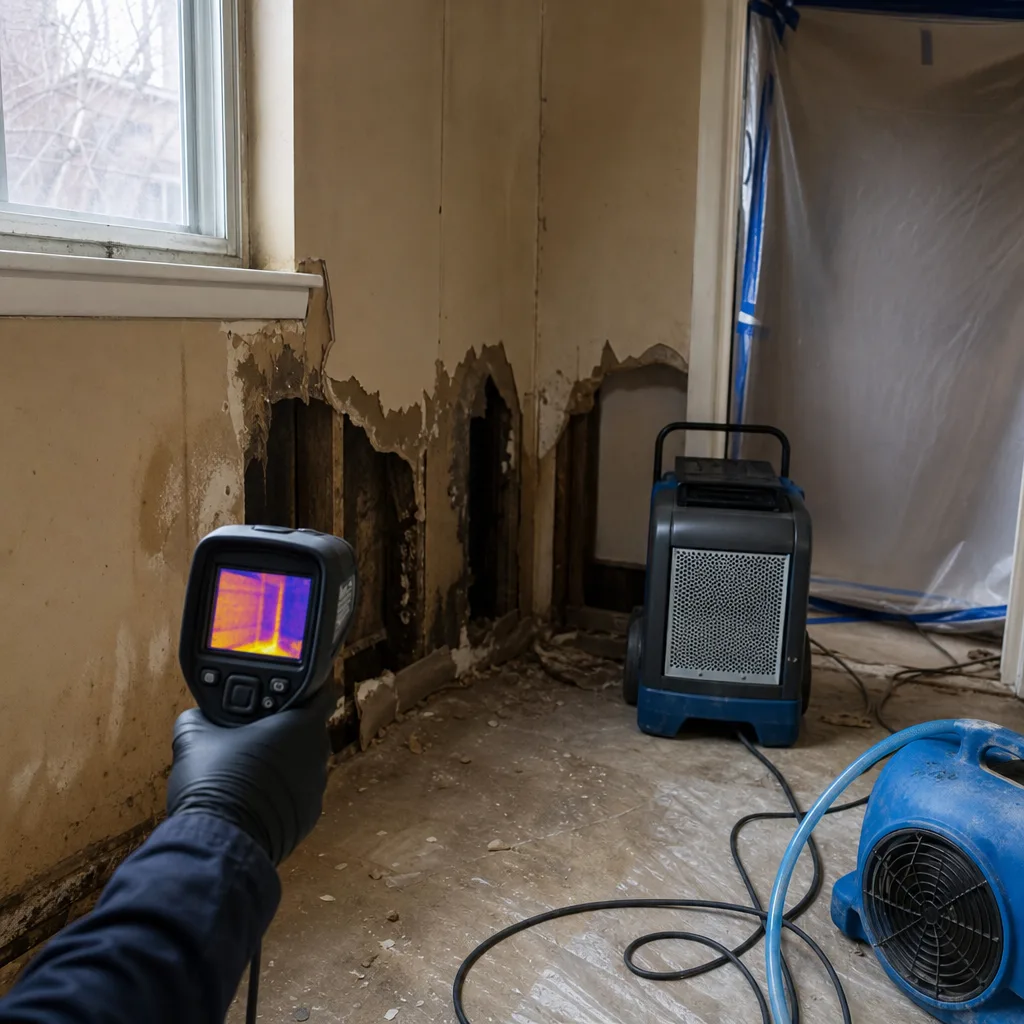 Before
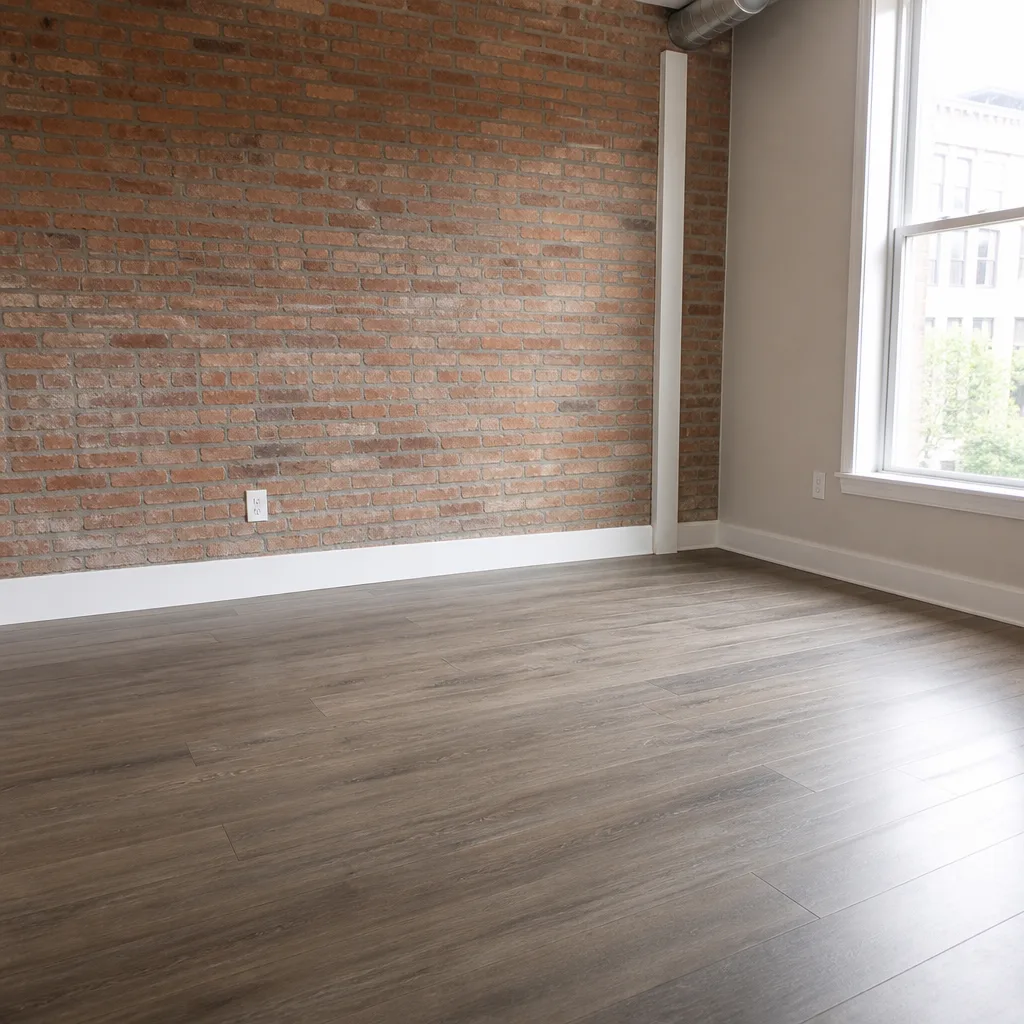 After
After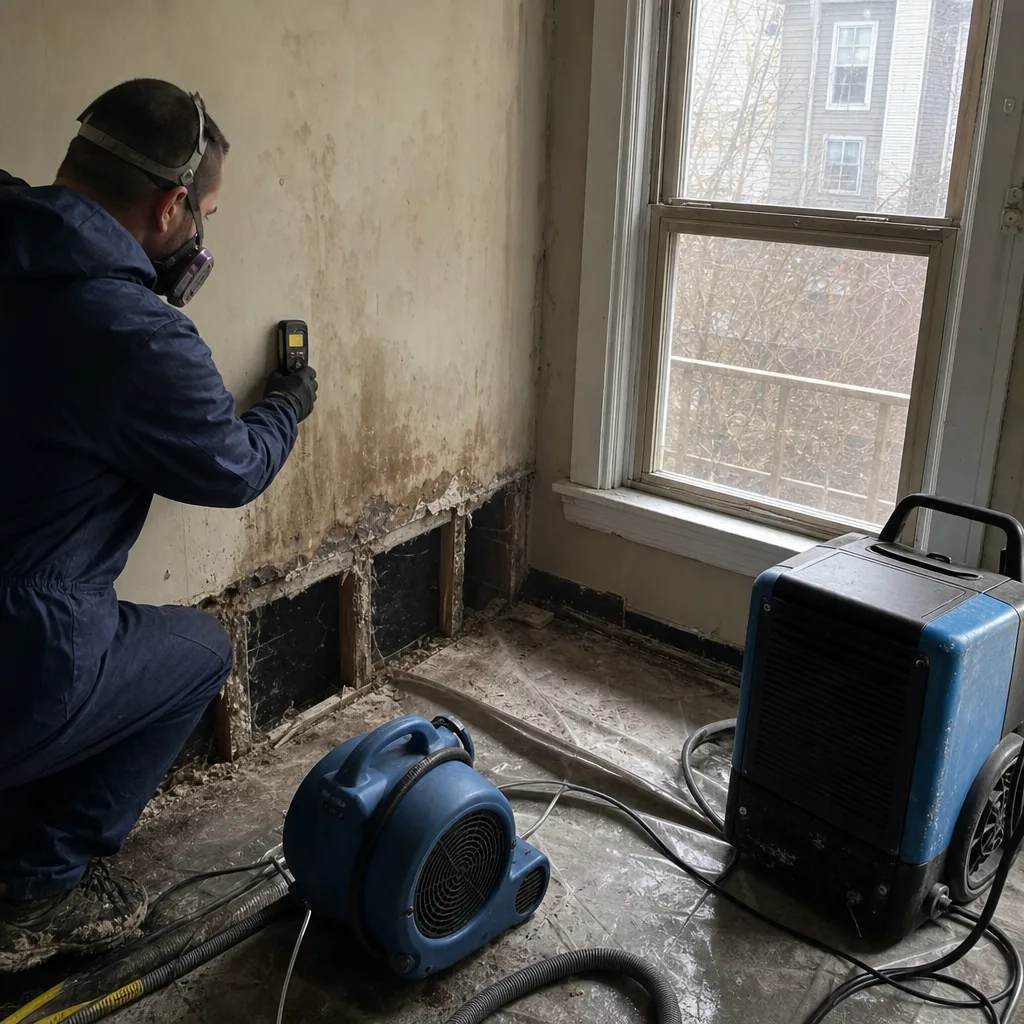 Before
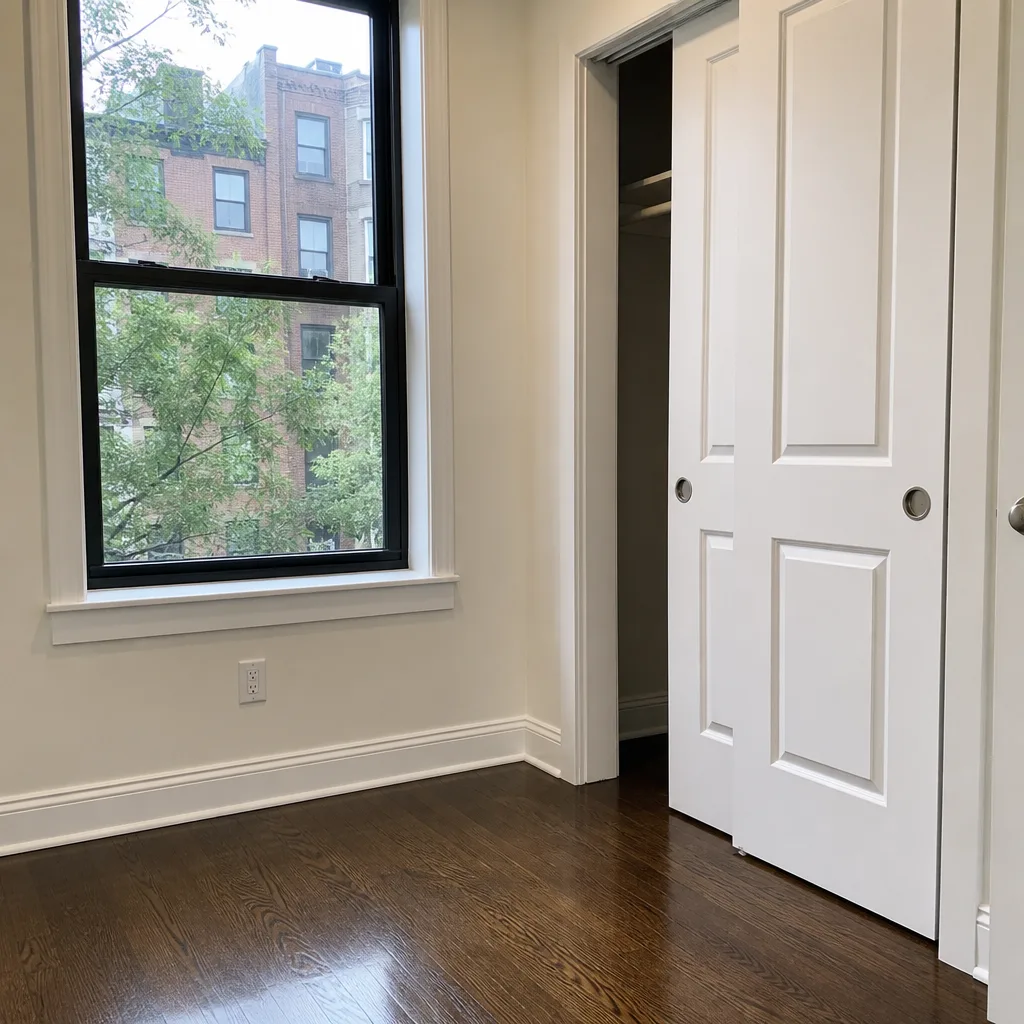 After
After24/7 Emergency Water Damage Restoration in Upper West Side
Water damage restoration in Upper West Side typically costs $1,400-$4,200 for a standard single-unit water release, with multi-floor cascades in pre-war co-ops running $6,500-$18,000 before reconstruction. We dispatch certified crews into Upper West Side within 45 minutes, and our phones are answered by a live dispatcher at 2 a.m., not a recording. Call (640) 500-3278 the moment you see water where it shouldn’t be. The first hour determines whether original parquet floors, horsehair plaster walls, and your neighbor’s ceiling survive. Every minute water sits in a pre-war building, it wicks upward through lath, saturates subflooring, and begins delaminating century-old finishes that no amount of modern drywall work can replace.
Understanding Water Damage Restoration Severity in Upper West Side Properties
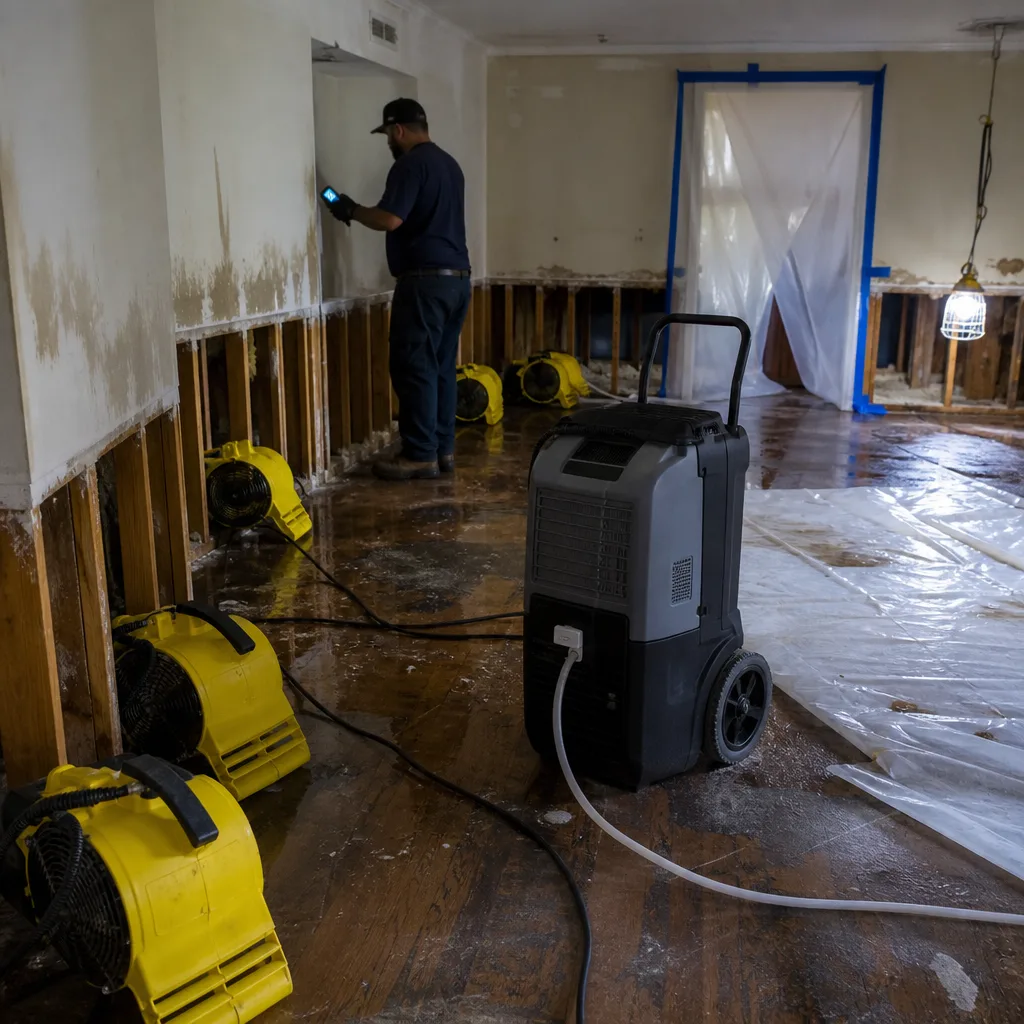
Water damage in Upper West Side buildings rarely stays in one apartment. The housing stock here is overwhelmingly pre-war co-op and rental towers built between the 1890s and 1940s, with cast-iron risers running vertically through shared walls, horsehair plaster over wood lath, and tongue-and-groove parquet over pine subfloors. When a Category 1 supply line lets go on the 12th floor, water follows gravity through pipe chases, light fixtures, and the spaces between joists, surfacing four or five floors down. Category 2 water, from washing machine overflows or radiator leaks, carries contaminants that require antimicrobial treatment before drying. Category 3 water, from sewage backups in sub-grade mechanical rooms, demands full containment, controlled demolition of saturated plaster, and HEPA air scrubbing. In Upper West Side’s stacked co-ops, we moisture-map not just the unit where the leak originated but every unit below it along the water’s travel path. Thermal imaging cameras find water behind plaster that feels dry to the touch, and penetrating moisture meters read through 14 layers of old paint to tell us how far the water actually traveled inside the walls.
Why Upper West Side Property Owners Choose Floodline Restoration Co.
- 45-minute response commitment: Our crews stage near Riverside Drive, West End Avenue, and Central Park West, so a certified technician reaches your building within the window that matters for parquet floors and plaster walls.
- Live answer, 24 hours a day: A real dispatcher picks up at 2 a.m., not an automated system. You’ll know a crew is rolling before you hang up, and you’ll have our name and the technician’s name in writing.
- IICRC-certified crews, WRT and ASD credentials: Our technicians hold Water Damage Restoration Technician and Applied Structural Drying certifications, plus RIA and IFA training. They know the difference between drying lath and drying drywall, because it’s not the same job.
- Free visual inspection with a written scope: Before any equipment gets placed in your unit, you’ll receive a written, line-item scope of work and a moisture map showing exactly what needs drying and why.
- Direct insurance billing, no homeowner-as-messenger: We coordinate directly with your carrier and your co-op’s master policy adjuster. You’re never the one relaying claim numbers between parties.
- One crew from extraction to reconstruction: The same team that reads the moisture map on day one handles daily readings, hands the log to your carrier, and rebuilds plaster, paint, and floors when drying is done. No mid-job handoff to an inherited crew.
Our Water Damage Restoration Process
Inspection & Assessment
We arrive, map moisture throughout the affected unit and any units below, and identify the water category. In a pre-war Upper West Side building, this means reading moisture in lath, joist bays, and parquet, not just visible surfaces. You get a written scope before work starts.
Extraction & Stabilization
We remove standing water with truck-mounted and portable extraction units. For Category 2 and 3 water on hardwood, we deploy Injectidry floor-drying panels to pull moisture plank-by-plank from the underside, preserving original floors that co-op boards will not allow us to replace with modern equivalents.
Drying & Dehumidification
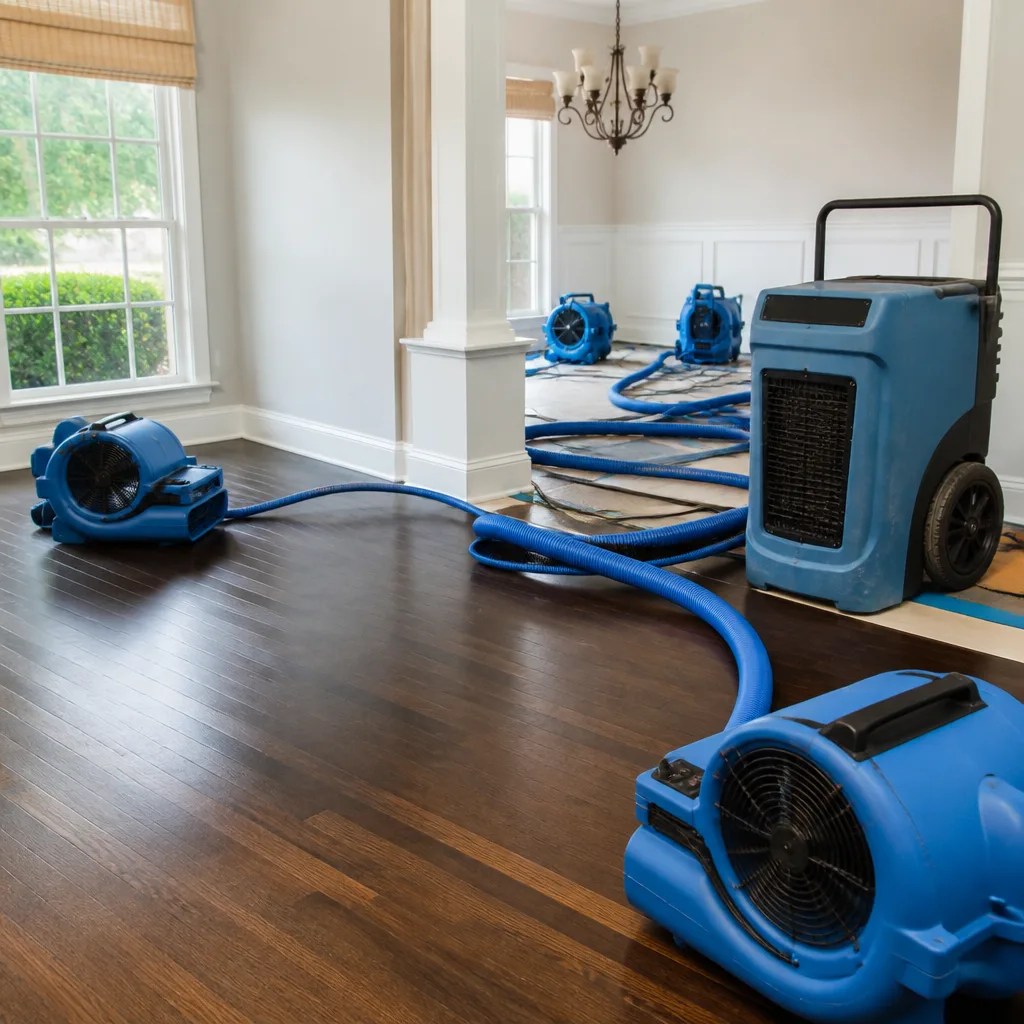
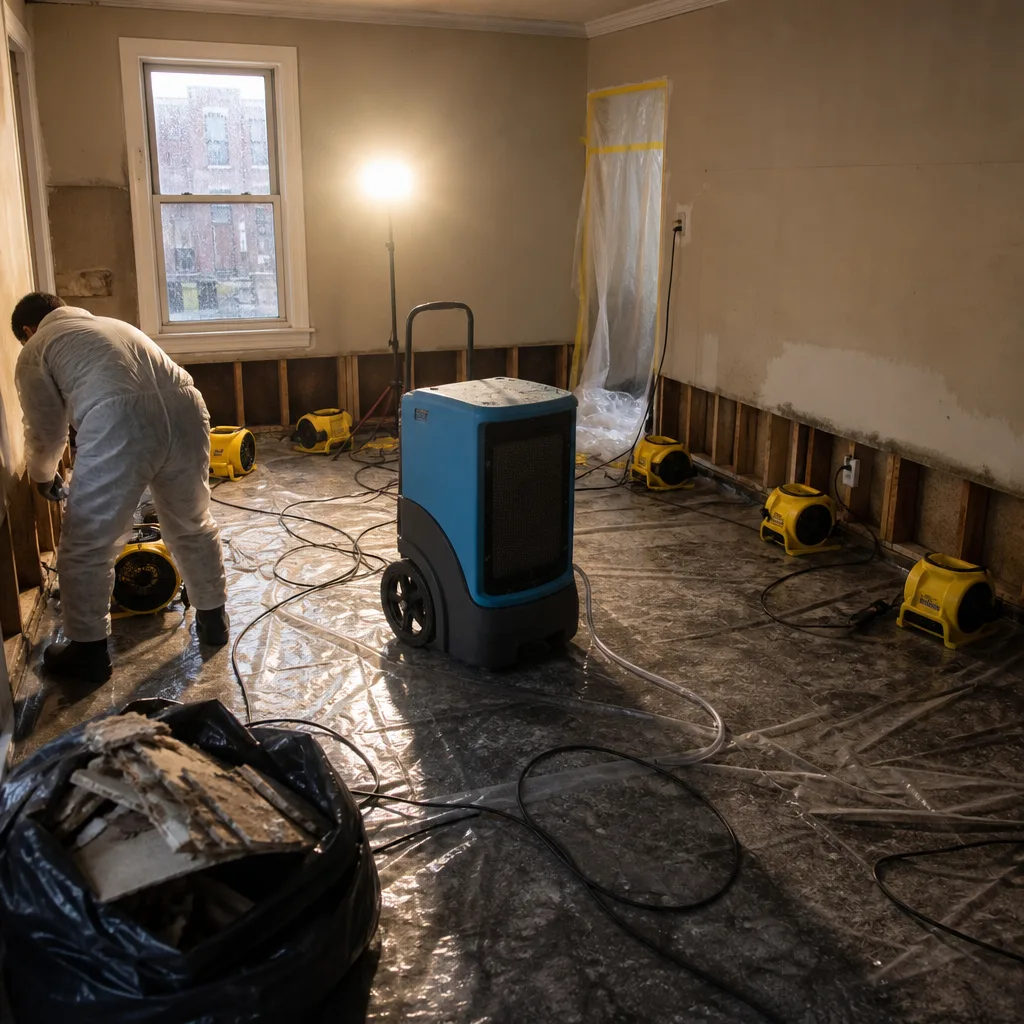
Dri-Eaz air movers and Phoenix dehumidifiers run on a schedule approved by your building’s managing agent. We place drying equipment to create laminar airflow through wall cavities and beneath floors, and we take daily moisture readings until we hit the dry standard established on day one.
Cleaning & Sanitization
Once drying is verified, we clean all affected surfaces and apply antimicrobial treatments where the water category requires it. HEPA air scrubbers run during the drying phase to capture airborne contaminants released from disturbed plaster and old building dust.
Plaster & Parquet Restoration
Upper West Side co-ops protect original finishes in their alteration agreements. We work with plaster-matching specialists to restore lime-and-horsehair walls, and we sand, seal, and refinish parquet where it survived. We do not propose drywall swaps where the building’s character and rules require plaster repair.
Repairs & Restoration
After drying and specialty restoration, we complete the rebuild: painting, trim, floor refinishing, and any required plumbing or valve repairs. The job is not done until the moisture log is in your hands and the 90-Day Done Right Promise is on paper.
Need Emergency Water Damage Restoration in Upper West Side Now?
Crews minutes away, answering live 24 hours a day. The sooner we start, the less it costs.
Working With Your Insurance Company
Water damage claims in Upper West Side co-ops are rarely simple. A burst supply line on the 8th floor triggers the building’s master policy, your HO-6 policy, and often the neighbor’s HO-6 below you. Floodline Restoration Co. documents everything from the first hour: photos room by room, thermal imaging captures of hidden moisture, daily drying logs, and a line-item scope of work in the format adjusters at every major carrier expect. We coordinate directly with your adjuster and the building’s adjuster, so you don’t spend your week on hold with two insurance companies while water keeps wicking through your floors. Our crews understand co-op claims: alteration agreements, building code requirements, and the difference between a covered repair and a betterment that the board might require. We document it all, and we stand behind the restoration in writing.
What We Provide Your Insurer
- Thorough documentation of the loss
- Photos of all damage, room by room
- Moisture readings and drying logs
- A detailed, line-item scope of work
- Direct coordination with your carrier
Built for Upper West Side’s Loss Calendar
Upper West Side water damage follows a seasonal rhythm, and we plan our crew staging around it. January and February bring deep freezes that stress old cast-iron supply risers and domestic plumbing throughout pre-war buildings; a cold snap below 10°F is when we get the most calls for splits in lines running through exterior-facing walls and uninsulated pipe chases. Late March and April thaw out frozen ground, and the western blocks near Riverside Drive see elevated groundwater pushing into basement mechanical rooms where boilers and electrical panels live. Summer brings humid air that slows evaporation in unventilated apartments and extends drying times for lath-and-plaster walls that hold moisture stubbornly. Nor’easters and heavy fall rains hammer older roof systems on landmark-pending buildings, sending water down through multiple floors before anyone notices a stain on the ceiling of the 4th-floor unit. The lesson is the same in every season: water in a stacked pre-war building doesn’t stay where it starts.
Water Damage Restoration Across Upper West Side’s Neighborhoods
The response route changes depending on where you are on the Upper West Side. Along West End Avenue and Riverside Drive, we’re dealing with grand 1920s co-ops with thick plaster walls, steam heat risers that predate modern pressure relief valves, and freight elevators whose access windows are booked days in advance by moving companies. Managing agents here expect restoration crews to check in before bringing equipment through the lobby. Over on Central Park West, buildings run the same way but with stricter facade rules: no window fans, no hoses through public hallways, and a super who wants to see credentials before the freight elevator moves. Amsterdam and Columbus Avenue buildings skew slightly newer, with more 1930s-1950s construction, but the water issues are the same old vertical travel through shared walls. Around 72nd Street and Broadway, we see smaller pre-war walk-ups where water cascades through only three or four floors, but access is tighter, and every stairwell and hallway becomes a drying-equipment staging area. In the West 80s and 90s between Broadway and Riverside, the terrain sloping toward the Hudson means basement flooding follows every heavy rain, and sub-grade mechanical rooms need constant moisture management during wet seasons.
Specialized Water Damage Restoration Services We Offer in Upper West Side
Emergency Water Extraction
Standing water in a pre-war Upper West Side apartment needs extraction that accounts for what’s beneath the surface. We remove water from parquet, carpet, tile, and concrete subfloors using truck-mounted and portable extraction systems rated for commercial recovery. In co-ops, we coordinate with the managing agent to route hoses through service entrances rather than public lobbies, keeping the building’s appearance and house rules intact while water is still in your unit.
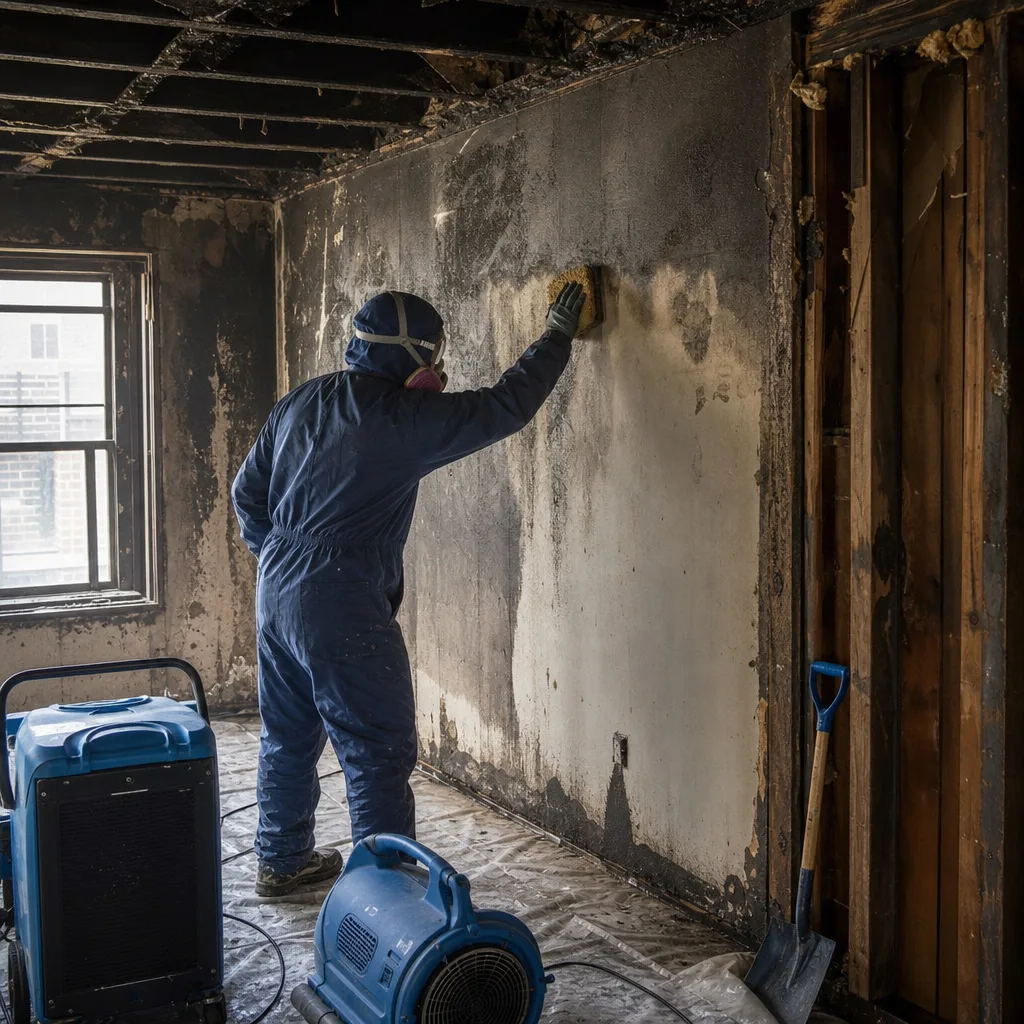
Structural Drying & Dehumidification
Drying a lath-and-plaster wall is a different science than drying drywall. Plaster holds moisture deep in its wood lath keys, and if you stop drying too early, you get mold behind the wall and a delayed claim. We use XPOWER and B-Air air movers for targeted airflow, Phoenix desiccant and refrigerant dehumidifiers for humidity control, and daily moisture readings logged against the dry standard established on day one. In co-op buildings, we run equipment schedules that respect house rules about noise windows and hallway access.
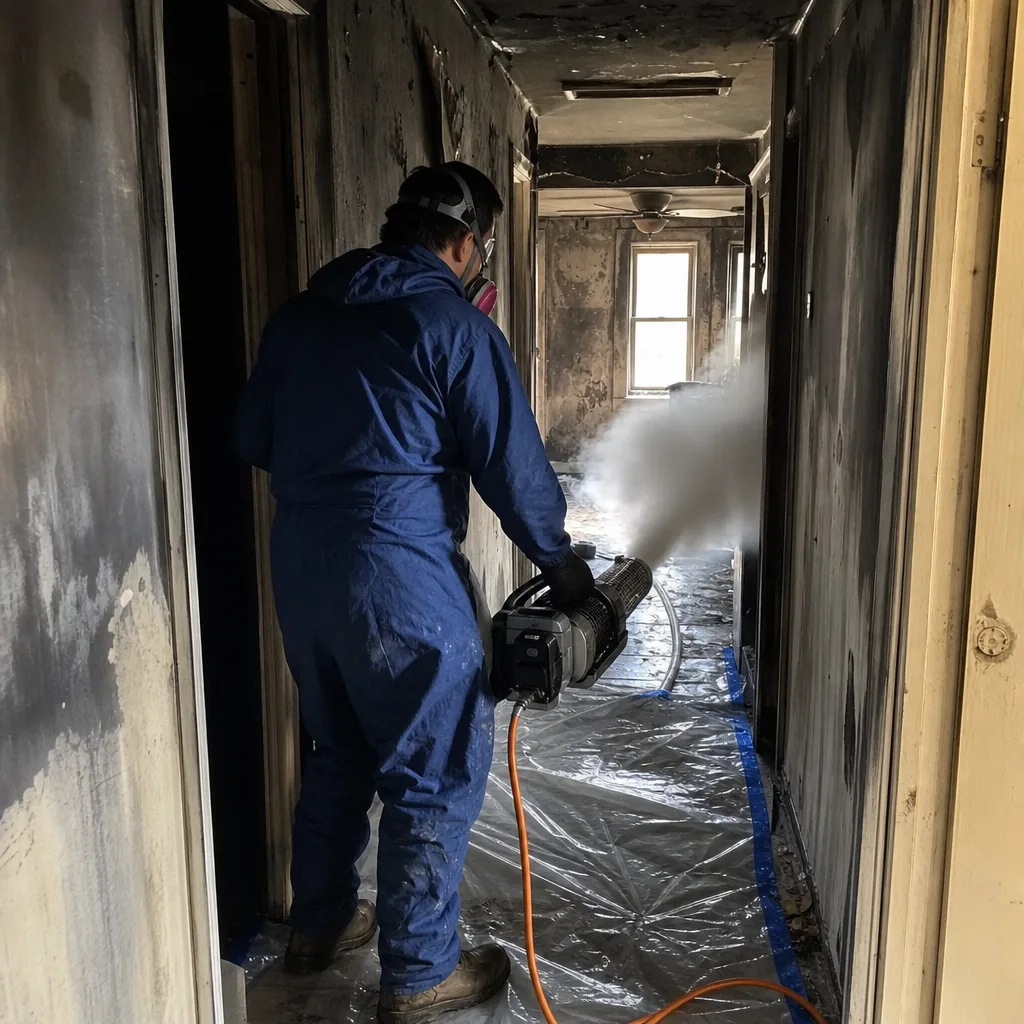
Burst Pipe Restoration
When a cast-iron riser or domestic supply line fails in an Upper West Side tower, water travels fast and far. We trace the leak path from the point of failure downward through every affected unit, not just the one where the pipe broke. Our crews work with plumbers to isolate the break, then begin extraction and drying in every apartment touched by the cascade. We document the full vertical travel path for both your HO-6 carrier and the building’s master policy adjuster.
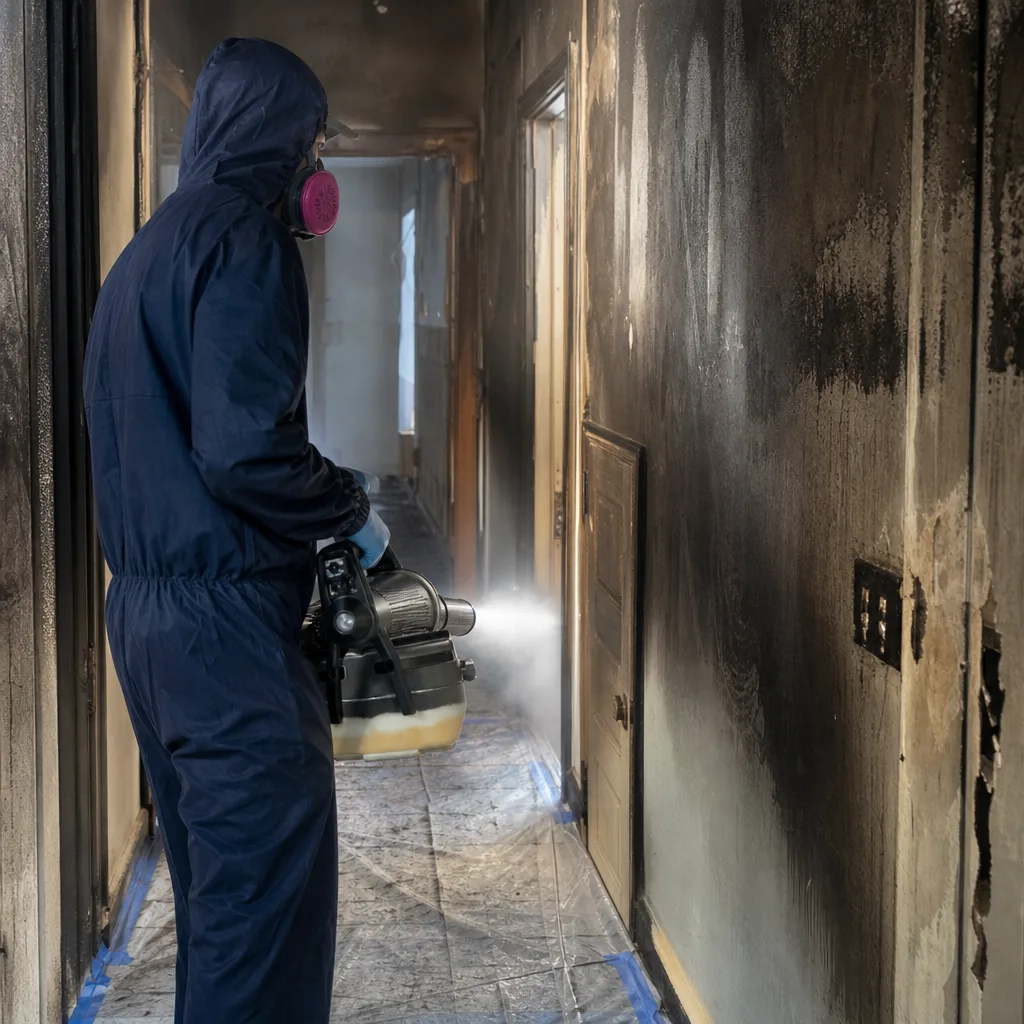
Flood Cleanup
River-facing blocks near Riverside Park and low-lying street-level units take on groundwater during storms and snowmelt. Flood cleanup requires Category 3 protocols when the water has touched soil or come through drainage systems: containment barriers, full PPE, controlled demolition of saturated materials, and clearance testing before anyone reoccupies the space. We have done this work in basement mechanical rooms, lobby-level commercial spaces, and ground-floor apartments throughout Upper West Side.
Basement Water Removal
Basements in Upper West Side brownstones and pre-war co-ops hold boilers, electrical rooms, storage cages, and decades of building history. Removing water from these spaces means protecting the mechanical systems that keep the building running while extracting from concrete pits, floor drains, and storage areas with no natural airflow. We bring in submersible pumps and self-contained drying chambers built around the equipment that cannot be moved.
Ceiling & Roof Leak Water Damage
Water from a failed roof membrane or leaking parapet travels through multiple floors of plaster and joists before showing up as a stain. We trace the water path from the point of entry to the visible damage, dry the entire route, and coordinate with roofers and masons when the source needs separate repair. In landmark-protected Upper West Side buildings, roof repairs often require board and LPC approvals, so our documentation matters for the eventual claim and the alteration application.
What happens when you call
- 1
A real person answersNo phone trees - you reach a local pro.
- 2
You get an upfront price rangeHonest numbers before anyone is dispatched.
- 3
A background-checked tech heads outLicensed & insured, dispatched right away.
- 4
You approve before work beginsNothing starts until you say go.
Water Damage Restoration Costs in Upper West Side, NY
Water damage restoration in Upper West Side runs higher than in the outer boroughs, driven by building access rules, plaster restoration requirements, and the insurance complexity of co-op vertical claims. A Category 1 water release contained to one unit with standard drying runs $1,400-$3,200. A multi-floor cascade requiring Injectidry floor panels, plaster repair, and 5-10 days of drying runs $6,500-$18,000. Category 3 sewage or groundwater cleanup starts at $4,800 and goes up with the square footage and the extent of controlled demolition. What moves the price: number of affected units, floor type, wall construction (plaster costs more to dry and repair than drywall), freight elevator scheduling, and whether the co-op board requires specialty plaster matching. Most Upper West Side claims are covered under the building’s master policy for the structure and your HO-6 for interior finishes. We provide the written scope before any equipment is placed, so you and your carrier know the number going in. Call (640) 500-3278 for a free visual inspection and a firm written estimate.
We Also Serve Cities Near Upper West Side
Our crews handle water damage work in Upper West Side and the surrounding Manhattan neighborhoods, including Washington Square, Lower Manhattan, Midtown West, and Midtown Manhattan. If you’re in a pre-war building anywhere in Manhattan and water is where it shouldn’t be, call us. The same certified crews and the same 90-Day Done Right Promise apply.
Upper West Side Water Damage Restoration Questions, Answered
How quickly can you get equipment into a pre-war Upper West Side co-op after a burst pipe?
In most Upper West Side buildings, our first technician arrives within 45 minutes of your call, and extraction equipment is running within 2-3 hours, assuming the managing agent or super clears access. The limiting factor is not our response; it’s freight elevator scheduling and building house rules. We call the managing agent from the truck while en route, so the freight elevator is ready when we arrive. For emergency Category 1 water where floors are actively being damaged, many supers will clear a service elevator immediately, even if the formal board approval comes later. Call (640) 500-3278 and we’ll start that coordination before we ring your doorbell.
Do you need co-op board approval to start water damage restoration in a UWS unit?
For emergency extraction and drying, you generally do not need board approval to protect your unit from ongoing water damage. Your proprietary lease includes an obligation to mitigate damage, and most managing agents will clear emergency access immediately. What does require board approval is the reconstruction phase: any work touching structural elements, original finishes, or common building systems requires a signed alteration agreement. We have watched rebuild phases stall for weeks while boards review alteration applications. That’s why our documentation package is built to support both the insurance claim and the alteration application, and we start the board conversation on day one, not after drying is complete.
Can you save original parquet flooring after a Category 2 water release?
Often, yes, if we get water out of the plank system before delamination begins. We use Injectidry floor-drying panels that pull moisture from the underside of parquet flooring, working with the wood’s natural grain and expansion behavior rather than against it. On West 86th Street near Riverside Drive, our crew responded to a burst cast-iron supply line that flooded six stacked units. We deployed Dri-Eaz air movers and Phoenix dehumidifiers only after the managing agent cleared the freight elevator window, and moisture mapping showed 23% readings in the lath-and-plaster ceilings. We used Injectidry floor-drying panels plank-by-plank to preserve the original parquet, avoiding a board-rejected drywall swap and getting readings back to pre-loss condition in five days. There are limits: severely cupped, waterlogged planks that have already separated from the subfloor may need replacement. The sooner we start, the better the odds of saving the floor.
How do you handle multi-unit water cascades in a pre-war tower?
We map the water’s vertical path from the source and treat the affected units as a single drying project, not separate jobs. That means one moisture map covering every affected floor, one drying plan coordinated with the building’s managing agent, and one documentation package shared across all involved adjusters. The co-op’s master policy covers the building’s structure and common systems, while each unit owner’s HO-6 covers interior finishes and personal property. We coordinate both. Multi-unit cascades require more than extra dehumidifiers; they require a project manager who understands co-op rules and can get crews into three or four units without violating house rules about noise hours and elevator access.
What’s the biggest difference between UWS water damage and a suburban home?
In a suburban house, water damage is a single-owner, single-insurer event. In an Upper West Side co-op, a single burst pipe becomes a multi-party project involving the managing agent, the co-op board, the master policy carrier, and multiple HO-6 adjusters. There’s no basement sump pump to mitigate the spread. Water travels through shared walls, floors, and pipe chases, and every restoration decision, from where we place air movers to how we repair plaster, has to answer to a board that protects the building’s original character. The coordination burden is the job. That’s why Floodline Restoration Co. runs this work with a project-management structure, not a technician-and-a-van structure. We’ve worked with buildings along Riverside Drive, West End Avenue, and Central Park West, and we know when to call the super, when to call the managing agent, and when to call the board’s attorney.
How long does drying take in a pre-war UWS apartment?
Three to six days for a typical Class 2 or Class 3 water release in a plaster-and-parquet apartment, depending on wall construction, humidity, and ventilation. Plaster over wood lath holds moisture longer than drywall, and closed-off co-op units with no cross-ventilation dry slower than houses with open windows and external airflow. We take daily moisture readings and compare them against the dry standard established on day one, using thermal imaging to spot hidden pockets that a surface meter alone would miss. We do not remove drying equipment until the moisture log shows every affected area has hit the target. Rushing this phase in a pre-war building means mold inside walls and a denied claim later.
What should I do in the first 30 minutes after discovering water damage in my UWS apartment?
Call (640) 500-3278 first, then shut off the water at the local valve if you know where it is and can reach it safely. Notify your super and managing agent immediately, because freight elevator access and building access will be needed. Move small items and electronics out of standing water if you can do so without walking through contaminated water in bare feet or risking electrical shock. Do not use a shop vac on Category 2 or 3 water, and do not attempt to open walls or pull up flooring yourself; in a co-op, that kind of DIY demolition can violate your proprietary lease and complicate your claim. Take photos of everything while it’s still wet, then let our crew take over. The faster extraction starts, the less the final restoration costs.
Will my insurance cover water damage restoration in a co-op?
Most Upper West Side co-op water damage from sudden pipe failures is covered, but the claim is split across multiple policies. Your HO-6 policy typically covers interior finishes, personal property, and improvements you made, while the building’s master policy covers the structure, common pipes, and fixtures. If a washing machine hose or supply line failed in your unit and caused damage below, your liability coverage may respond to your neighbors’ claims. The adjusting process moves faster when documentation from the first hour is complete and consistent. We provide moisture logs, thermal imaging captures, and a line-item scope that meets carrier standards, and we bill directly, so you’re not floating restoration costs while two adjusters argue about who pays for the plaster repair. Call (640) 500-3278 and we’ll walk you through your specific situation.
Serving Upper West Side, NY - Our Local Coverage Area
We’re based in the Upper West Side area and know this community well. Use the map below to see our service coverage - if you’re nearby, we can almost certainly help.
Contact Floodline Restoration Co. for Water Damage Restoration in Upper West Side
Floodline Restoration Co. has been restoring homes and building trust for over 42 years, led by Curt Bowman and built around a dispatch board, not a sales desk. Our Water Damage Restoration team handles the full cycle, from first extraction to finished rebuild, and we back it all with the 90-Day Done Right Promise in writing. Senior and veteran discounts of 5% always apply, and current offers include $50 off any repair over $250 and an $89 seasonal tune-up. Background-checked, uniformed technicians arrive in marked vehicles, and every job starts with a written scope. If you’re dealing with water damage in Upper West Side, call (640) 500-3278 now. A live person answers, 24 hours a day, and a crew will be on the way.
Written by Curt Bowman, Owner at Floodline Restoration Co., serving New York City with water damage restoration since 2010.