
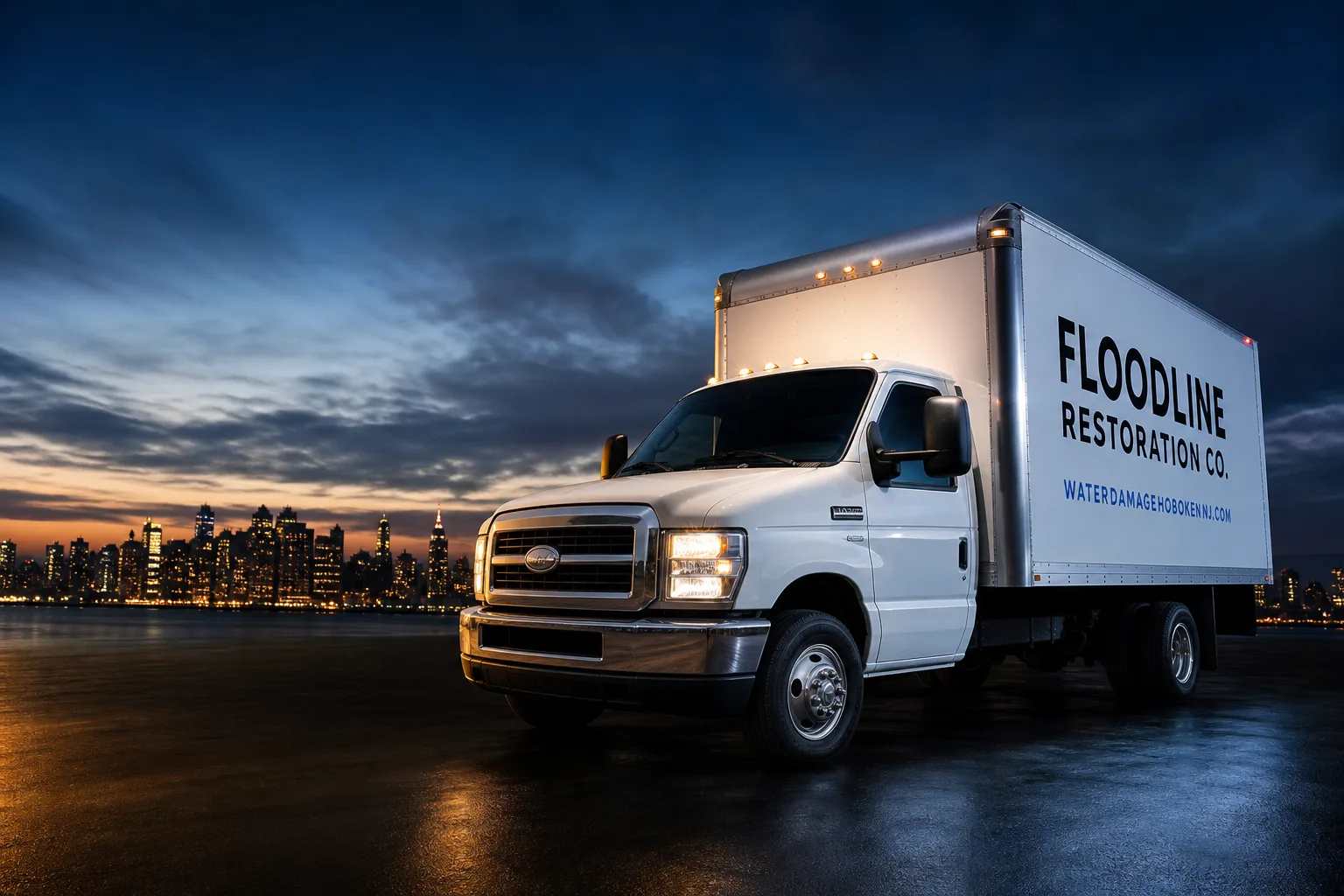
Free visual inspection and a written scope of work before any mitigation begins - photos, moisture readings, and drying logs go in your claim file
The scope we write is the scope we bill. Anything new gets shown to you, in writing, before we touch it.
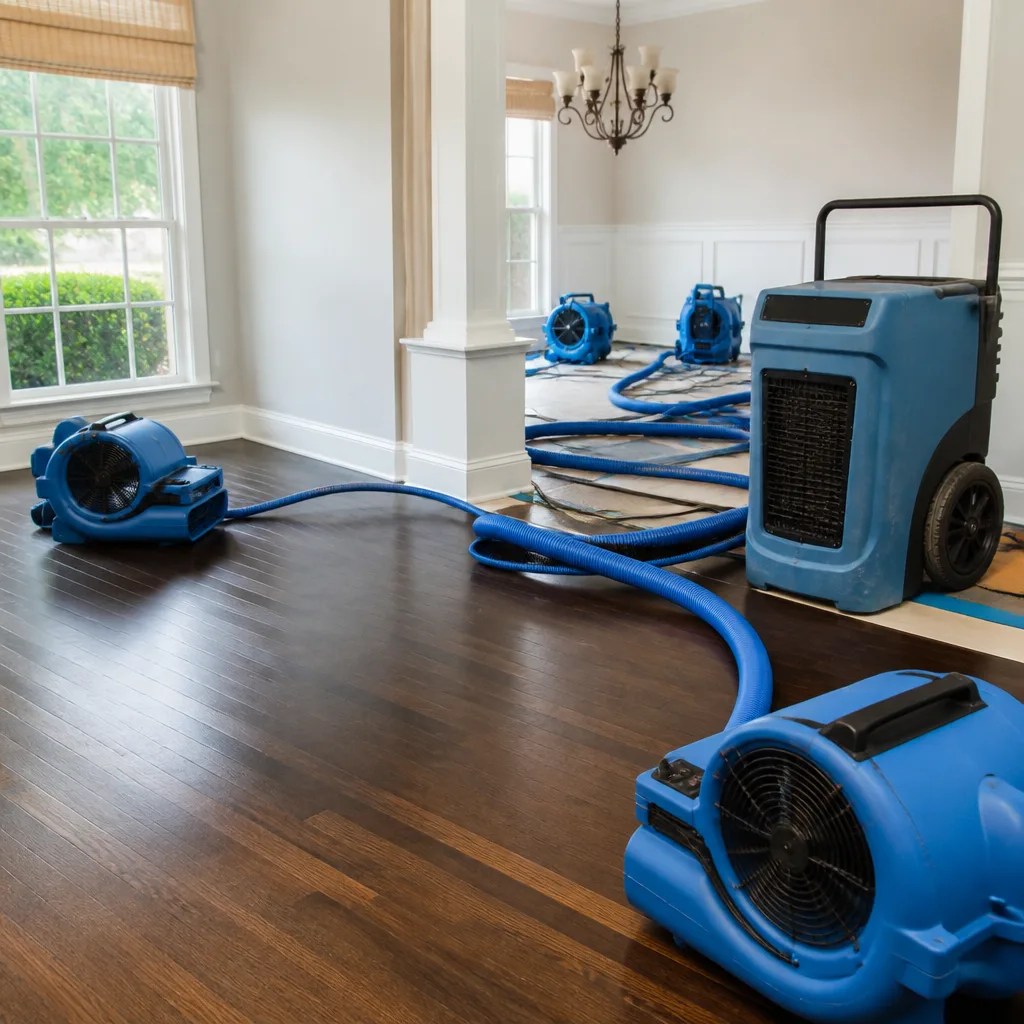
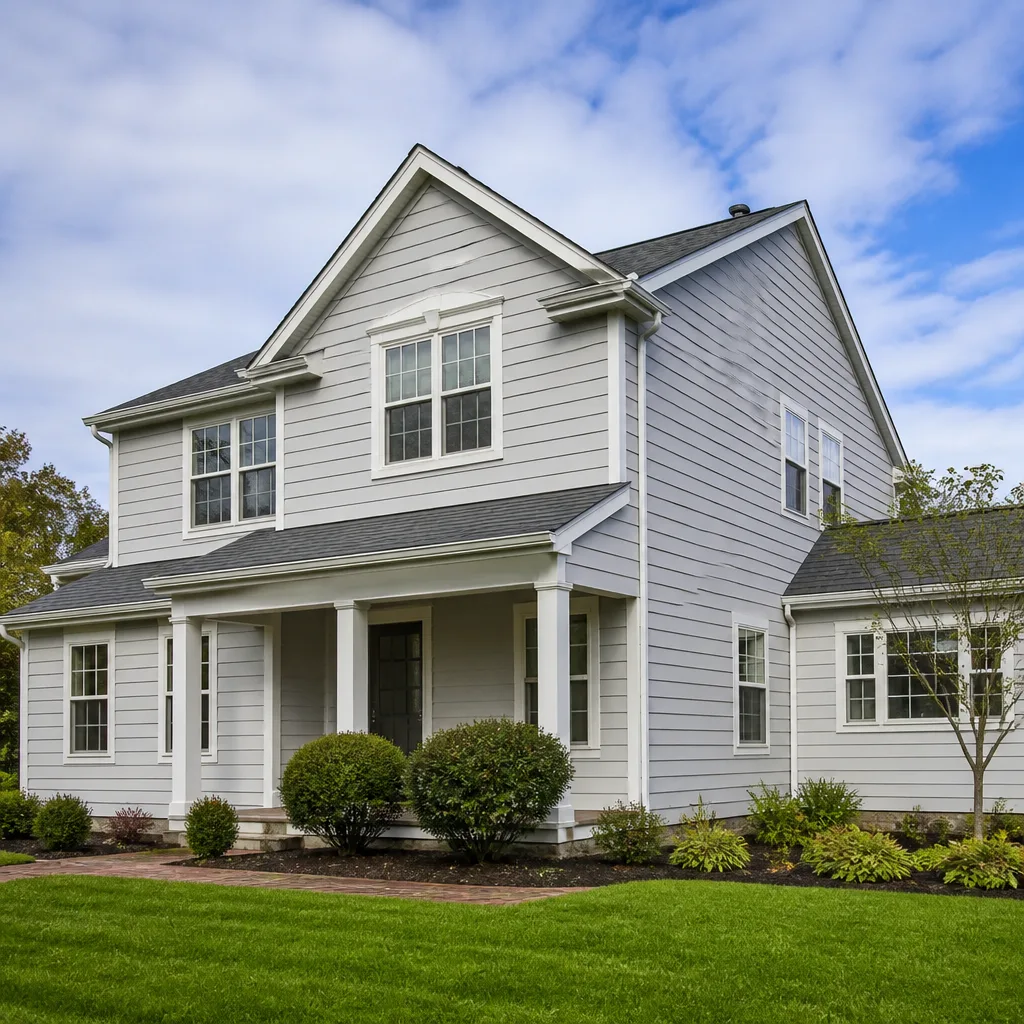
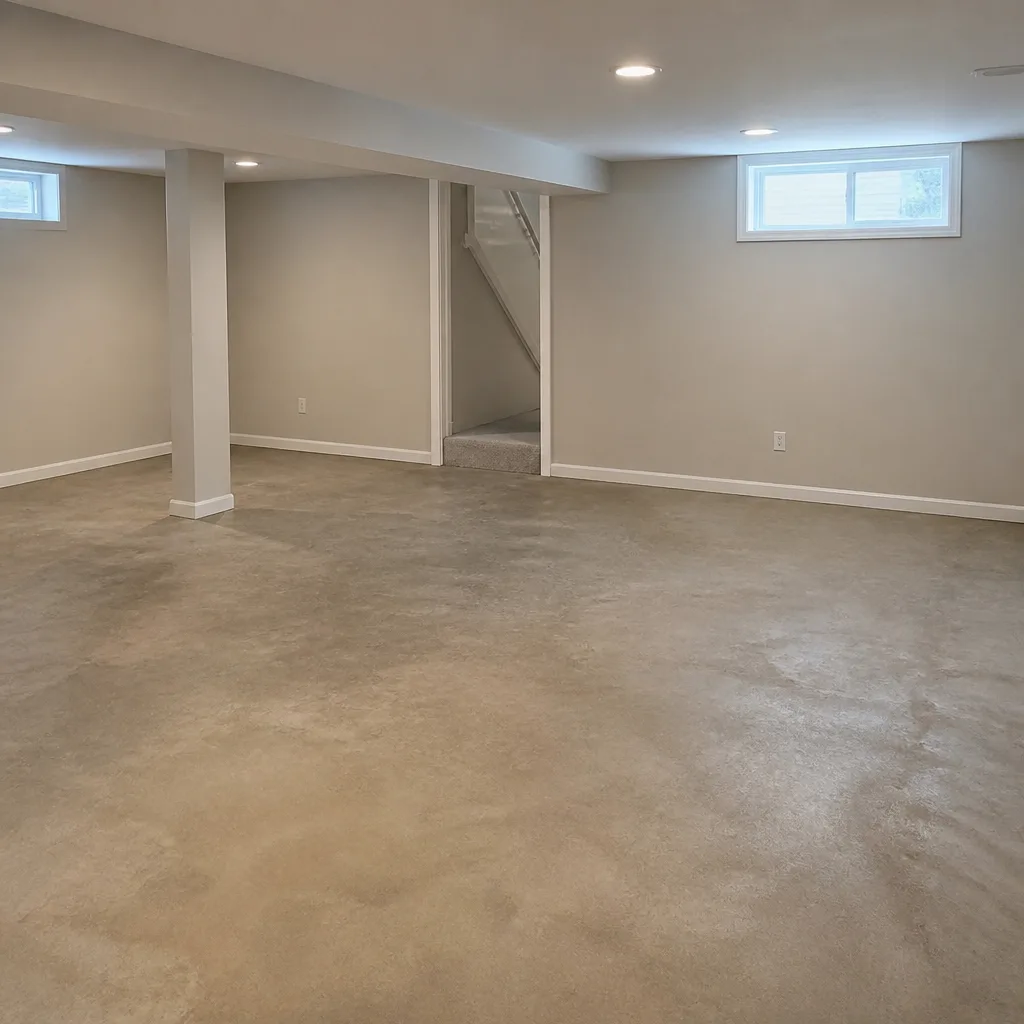
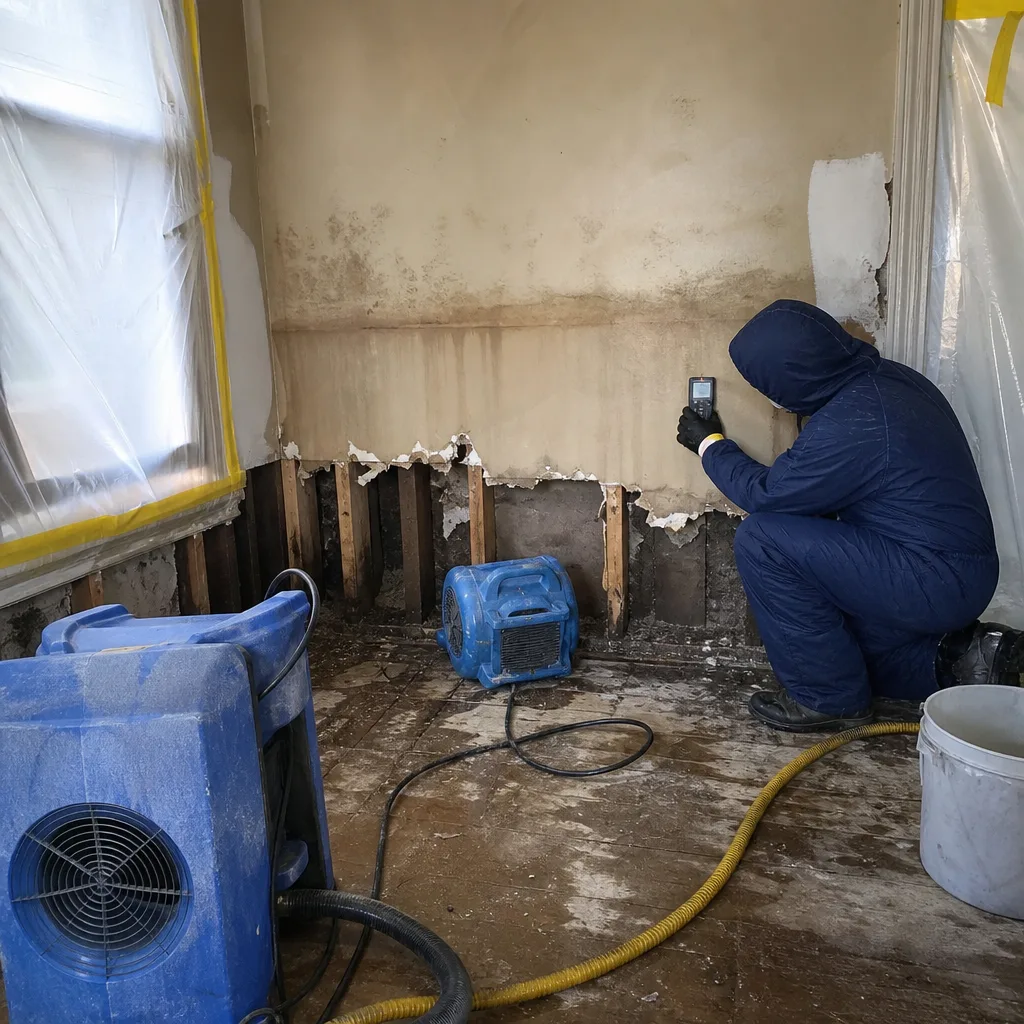 Before
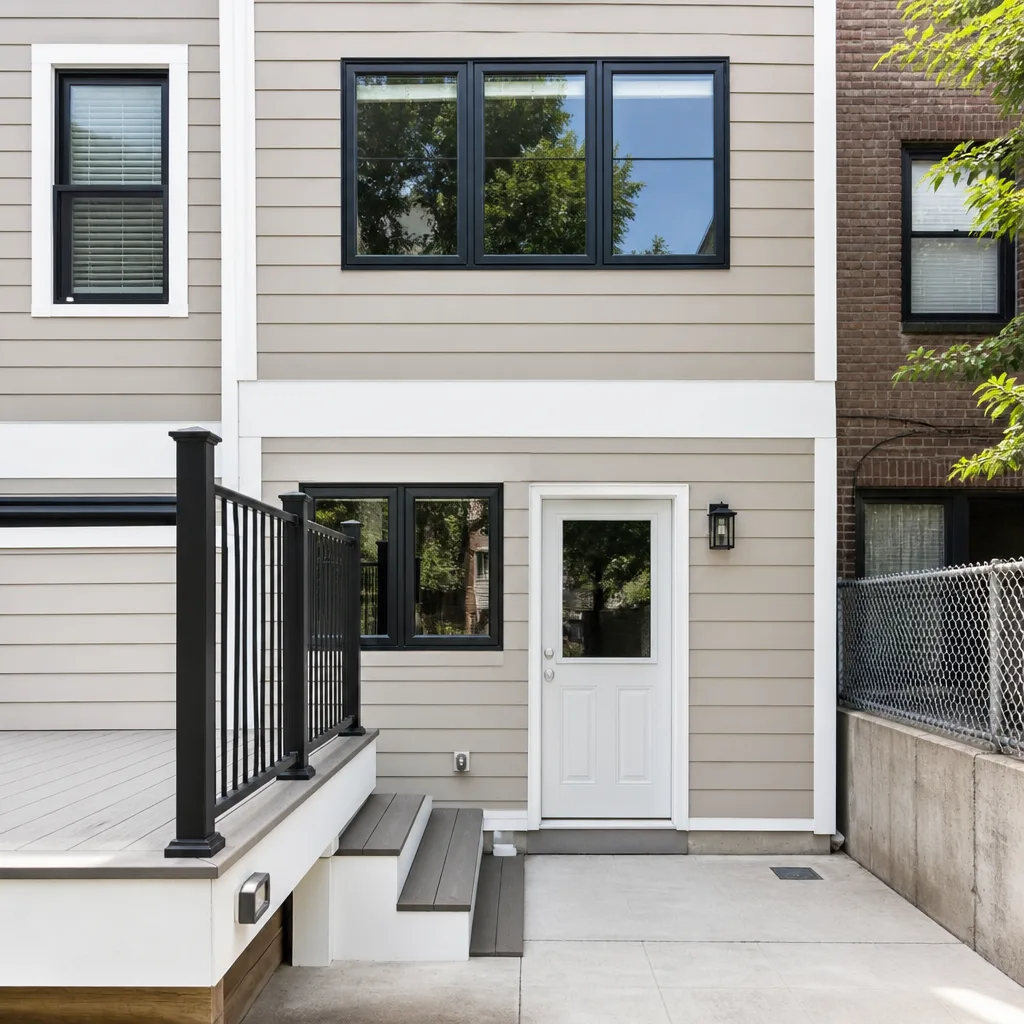 After
After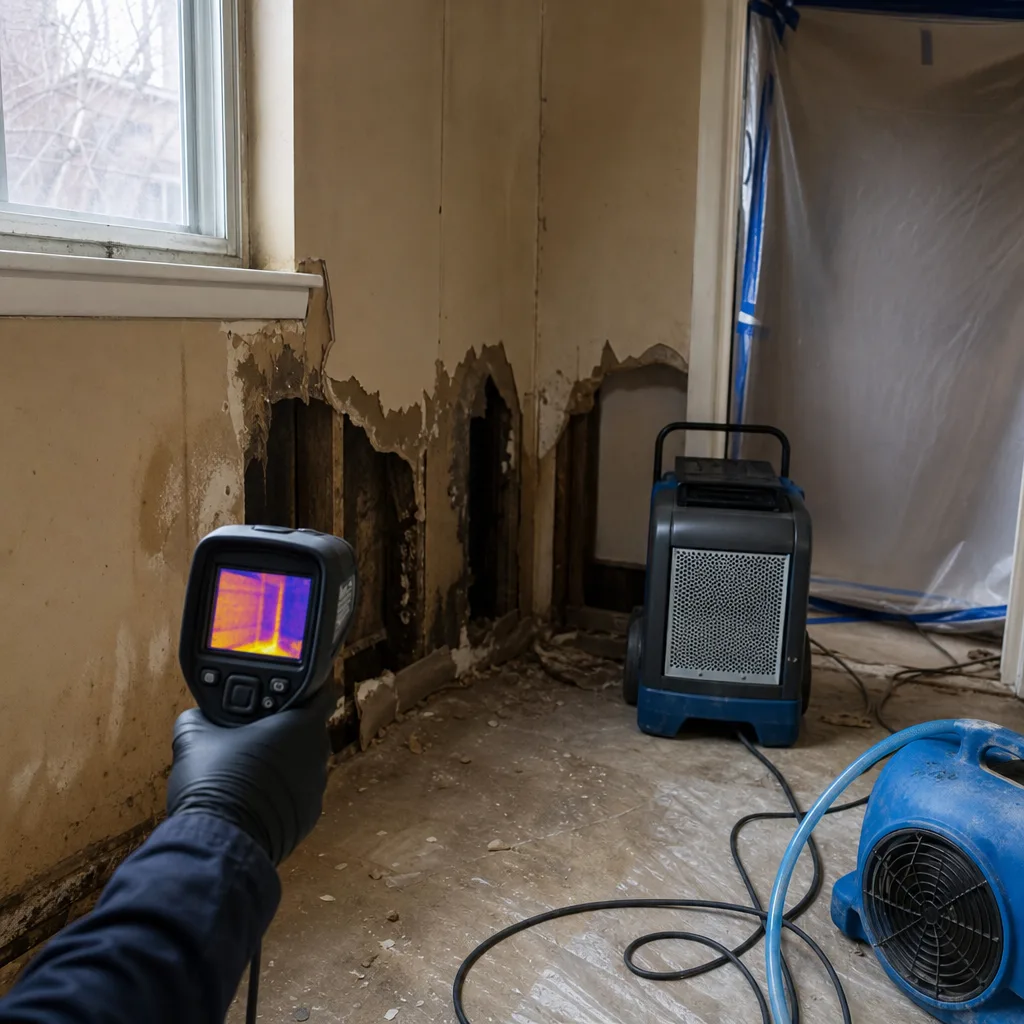 Before
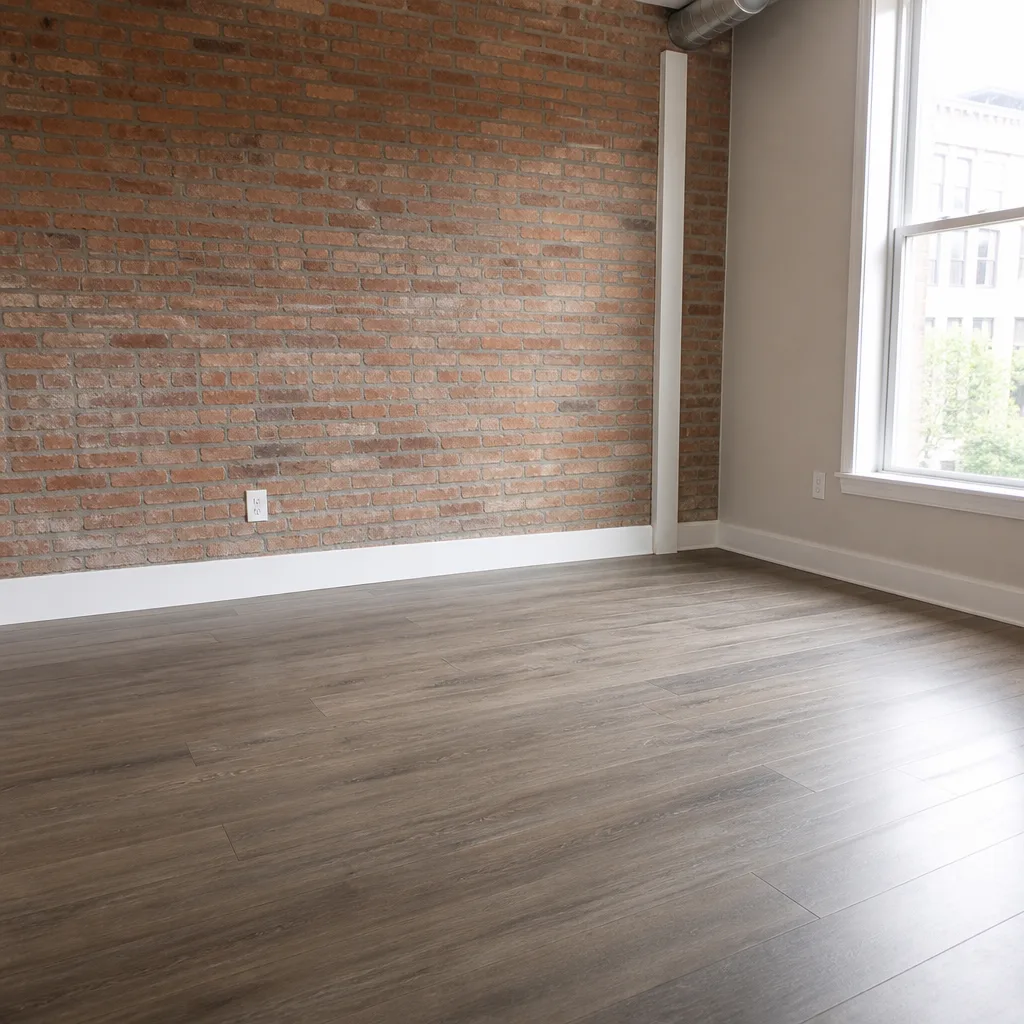 After
After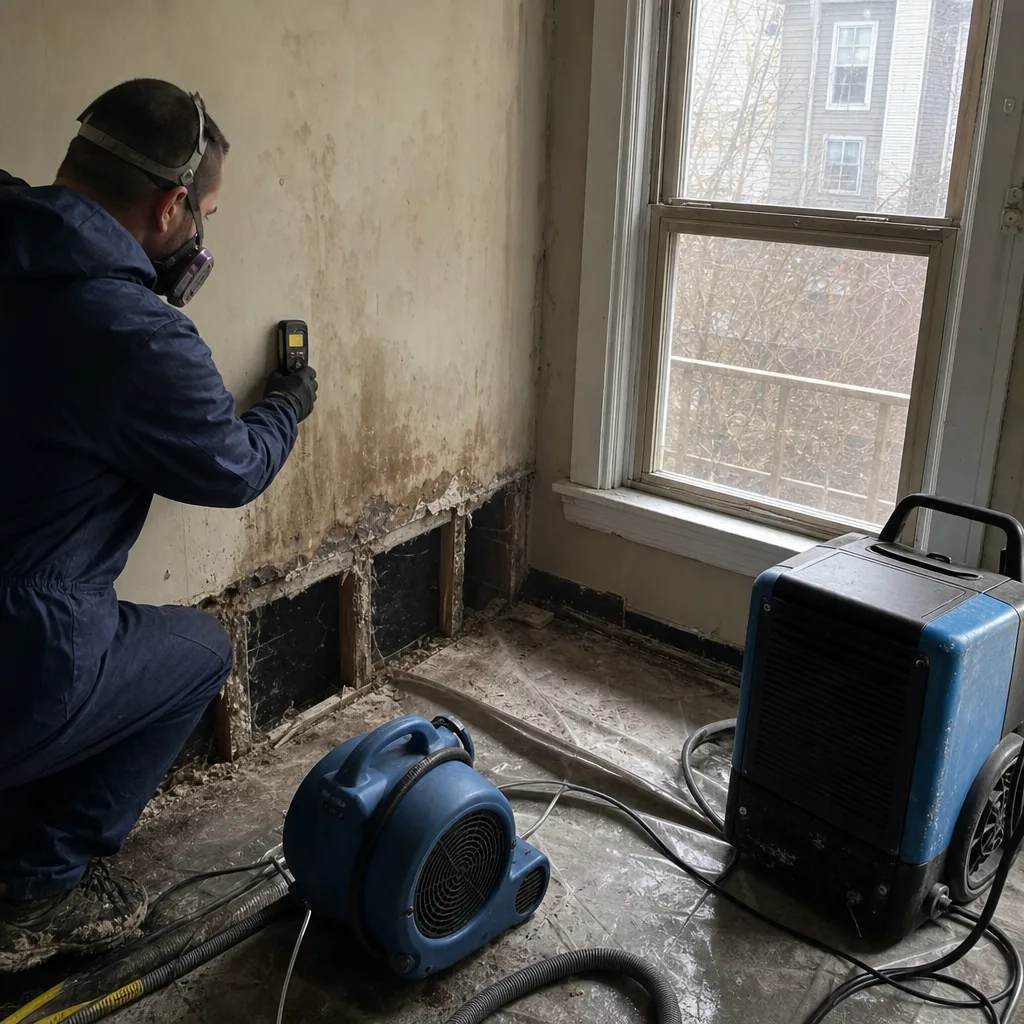 Before
 After
After24/7 Emergency Water Damage Restoration in West New York
Water damage in a West New York walk-up needs a response measured in minutes, not hours. A burst supply line on the fourth floor of a pre-war brick building will find its way to the third floor before you finish reading this. Our crews are dispatched from right here in the metro area and reach most West New York addresses within 45 minutes of your call. Call (640) 500-3278 any hour, any day, and a live dispatcher picks up. Not a recording. Not a call-back service. A person who knows West New York and knows exactly what to do next. The first hour decides whether you’re drying plaster or replacing ceilings. We start extraction on the first visit, because in a town where walls are brick and plaster and floors are shared, water moves faster than paperwork.
Understanding Water Damage Restoration Severity in West New York Properties
Water damage is classified into three categories, and in West New York’s aging apartment stock, the category matters more than most homeowners realize. Category 1 water starts clean, from a supply line or faucet. Leave it sitting in a 1910-era masonry wall cavity for twelve hours and it becomes Category 2, carrying contaminants from building materials. Let it reach a shared hallway or soak through a plaster ceiling into the apartment below, and you’re often looking at Category 3, the kind that requires full containment, antimicrobial treatment, and sometimes drywall or plaster removal. The trouble with West New York’s brick-and-plaster construction is that moisture doesn’t dry. It wicks. Moisture mapping with thermal imaging and hygrometers shows water traveling horizontally through brick party walls and vertically through lath-and-plaster ceilings in patterns that newer, frame-built housing simply doesn’t produce. Our Water Damage Restoration team reads that moisture map on day one and revisits it daily, because surface dryness in a pre-war building means almost nothing. The wall can look dry and still hold 25% moisture content inside the cavity.
Why West New York Property Owners Choose Floodline Restoration Co.
- 45-minute response commitment for West New York addresses. We stage crews in the metro area specifically so a certified technician reaches Palisade Avenue or Bergenline Avenue before the water has finished its downward trip.
- A live person answers at 2 a.m. Always a dispatcher, never a phone tree. You’ll know who’s coming and when before you hang up.
- IICRC-certified crews. Our technicians hold WRT and ASD certifications, and are trained to RIA and IFA standards. We don’t send a handyman with a shop vac to a Category 3 loss in a six-story walk-up.
- Free visual inspection. We assess the scene, identify the water category, and give you a straight answer about what’s wet and what’s salvageable. No charge for that.
- Direct insurance billing. We bill your carrier directly and document everything in the format adjusters want. We’ll sit on the phone with your adjuster, not leave you to translate our scope of work.
- One team from extraction to reconstruction. The same crew that sets containment on day one is the crew that hangs new drywall week three. No handoffs, no inherited crews, no one blaming the last guy.
Our Water Damage Restoration Process
Inspection & Assessment
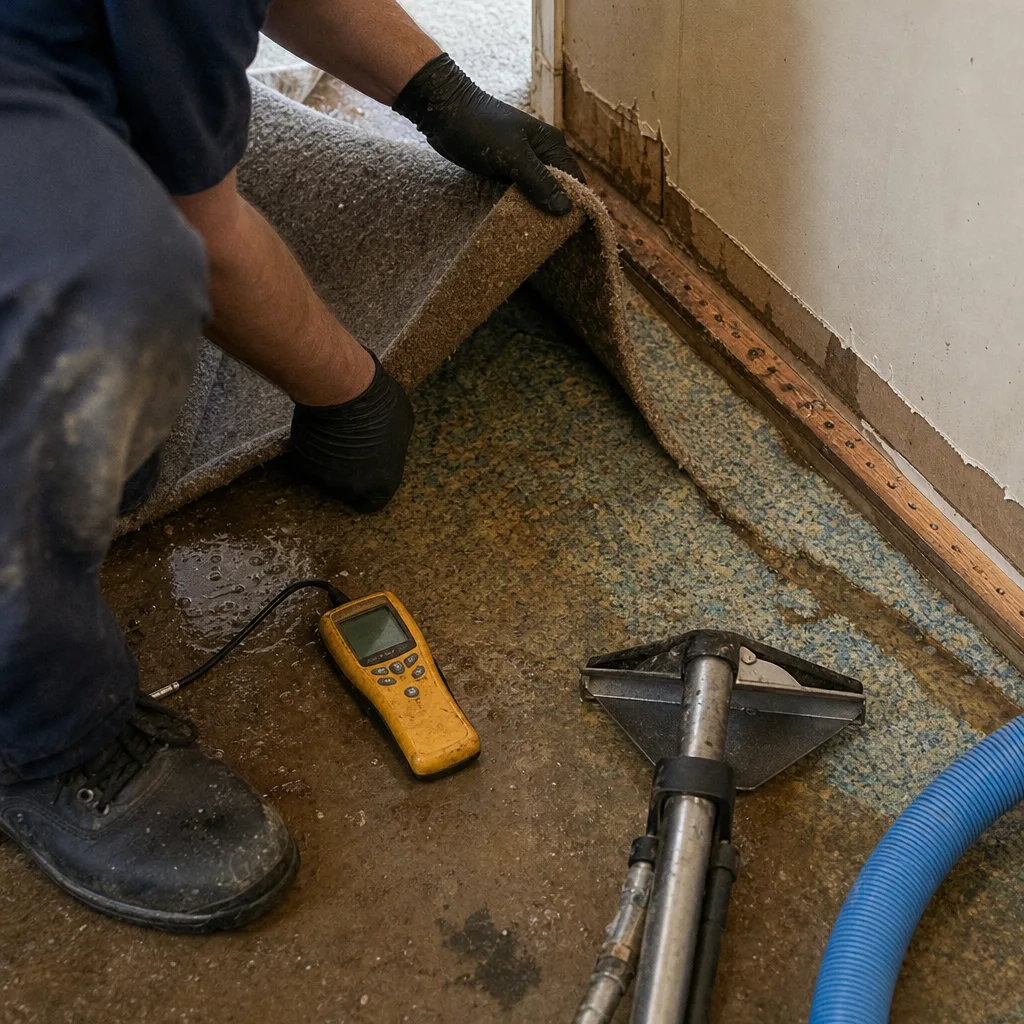
We arrive, we listen, we look. Thermal imaging and moisture meters tell us where the water went, not just where it started. In a West New York pre-war building, that means checking the unit below, the walls behind the kitchen, and the ceiling cavity.
Extraction & Stabilization
We pull standing water with truck-mounted and portable extraction units. In tight apartment kitchens and narrow stairwells, we use compact extractors that get into corners and behind appliances. If a ceiling is holding water, we drain it before it collapses.
Drying & Dehumidification
Professional Dri-Eaz and Phoenix dehumidifiers, plus XPOWER and B-Air air movers, run continuously with daily moisture readings logged. Injectidry systems let us dry lath-and-plaster ceilings in place rather than tearing them out, which matters when the plaster is original to a 1925 building.
Cleaning & Sanitization
Once dry, we clean, sanitize, and treat affected surfaces. For Category 3 water, that means HEPA air scrubbing and antimicrobial application. We protect the tenant’s belongings with care, not speed.
Built-In Specialty Treatment for Multi-Unit Spread
In a shared building, we set containment and negative air where the water crossed unit lines. We document each affected apartment separately for landlord and tenant carriers, in English and Spanish as needed.
Repairs & Restoration
We patch plaster, replace drywall, refinish floors, and repaint to match. On brick party walls, we ensure the masonry is dry to core before sealing. You get a moisture log and the 90-Day Done Right Promise in writing.
Need Emergency Water Damage Restoration in West New York Now?
Crews minutes away, answering live 24 hours a day. The sooner we start, the less it costs.
Working With Your Insurance Company
Water damage inside a West New York rental or condo almost always means multiple insurers at the table. The building owner’s policy might cover the common pipes. The tenant’s renters insurance covers their belongings. The condo association’s master policy may or may not cover the original plaster. We know how this works. From the first hour, we document everything: photos room by room, moisture readings, equipment logs, and a line-item scope of work written in the format carriers expect. We’ll coordinate directly with your adjuster, whether it’s one carrier or three. You don’t play messenger. Floodline Restoration Co. has handled multi-unit, multi-carrier claims in buildings along Boulevard East and throughout West New York and we’ll get yours through the same way. That documentation also protects you when a landlord or neighbor questions whether the drying was thorough enough.
What We Provide Your Insurer
- Thorough documentation of the loss
- Photos of all damage, room by room
- Moisture readings and drying logs
- A detailed, line-item scope of work
- Direct coordination with your carrier
Built for West New York’s Loss Calendar
West New York’s water damage follows a calendar, and we’ve seen every month on it. January and February freeze the original cast-iron and galvanized supply lines running through unheated stairwells and exterior walls, and a split pipe at 3 a.m. becomes a four-unit cascade by breakfast. March and April bring thaw and spring rain, which finds every crack in a flat roof and every failed mortar joint on a Palisades-facing facade. The nor’easter season from October through April sends wind-driven rain horizontally into brick, soaking walls that homeowners don’t know are wet until the plaster blisters in May. Summer thunderstorms dump an inch of rain in twenty minutes onto flat roofs and clogged drains, and the water has nowhere to go but down. Hudson County’s riverfront neighborhoods, including lower-lying blocks of West New York, also carry the memory of Superstorm Sandy’s surge, even if that specific flooding didn’t hit every block. When the weather turns, the calls start. We’re ready before you are.
Water Damage Restoration Across West New York’s Neighborhoods
West New York packs roughly 54,000 people into about one square mile on the Palisades, and the restoration work changes block by block. Along Boulevard East, the landmark view corridor above the Hudson, we’re often working in larger pre-war co-op buildings where roof failures and wind-driven rain on the exposed western face mean top-floor leaks that migrate down through original plaster. Over near Donnelly Memorial Park and the streets climbing west from Kennedy Boulevard, the housing is mostly 4-to-6-story brick walk-ups from the 1910s through 1930s. There, a burst pipe in one kitchen travels down through three or four apartments, and containment has to start in the hallway before the water spreads through shared electrical chases. Down along Park Avenue and the lower blocks near the former Palisades amusement site, we see older mixed-use buildings where a roof leak above a storefront becomes a ceiling problem for the apartment above it. Up on the western edge near Hudson Avenue and 60th Street, where the slope rises steeply toward North Hudson, surface runoff and basement seepage hit the walk-out lower floors hard after heavy rain. And in the dense rental grid between Bergenline and Palisade Avenues, our crews navigate narrow stairwells, occupied units, and property managers coordinating multiple claims at once. Each area has its own failure pattern, and that’s what makes local knowledge worth more than a national franchise’s phone number.
On 60th Street near Hudson Avenue, we responded to a burst galvanized supply line in a 1920s six-story walk-up. Our crew set up containment and negative air in the affected kitchen, then used moisture mapping to track water that had wicked through the original plaster and brick party walls into the unit below. Because the building’s manager needed documentation for multiple insurers, we used Injectidry systems to dry the lath-and-plaster ceiling in place and logged moisture readings daily for both English- and Spanish-speaking tenants. That’s a West New York job. A suburban flood-response crew would have torn out the ceiling by day two and left the owner with a reconstruction bill the insurers were never going to approve.
Specialized Water Damage Restoration Services We Offer in West New York
Emergency Water Extraction
Standing water in a West New York apartment can’t wait for morning. We run truck-mounted and portable extraction units into multi-story buildings, get water up out of kitchens, bathrooms, and hallways, and start drying the same visit. In occupied units, we work around tenants and protect their belongings as we go.
Structural Drying & Dehumidification
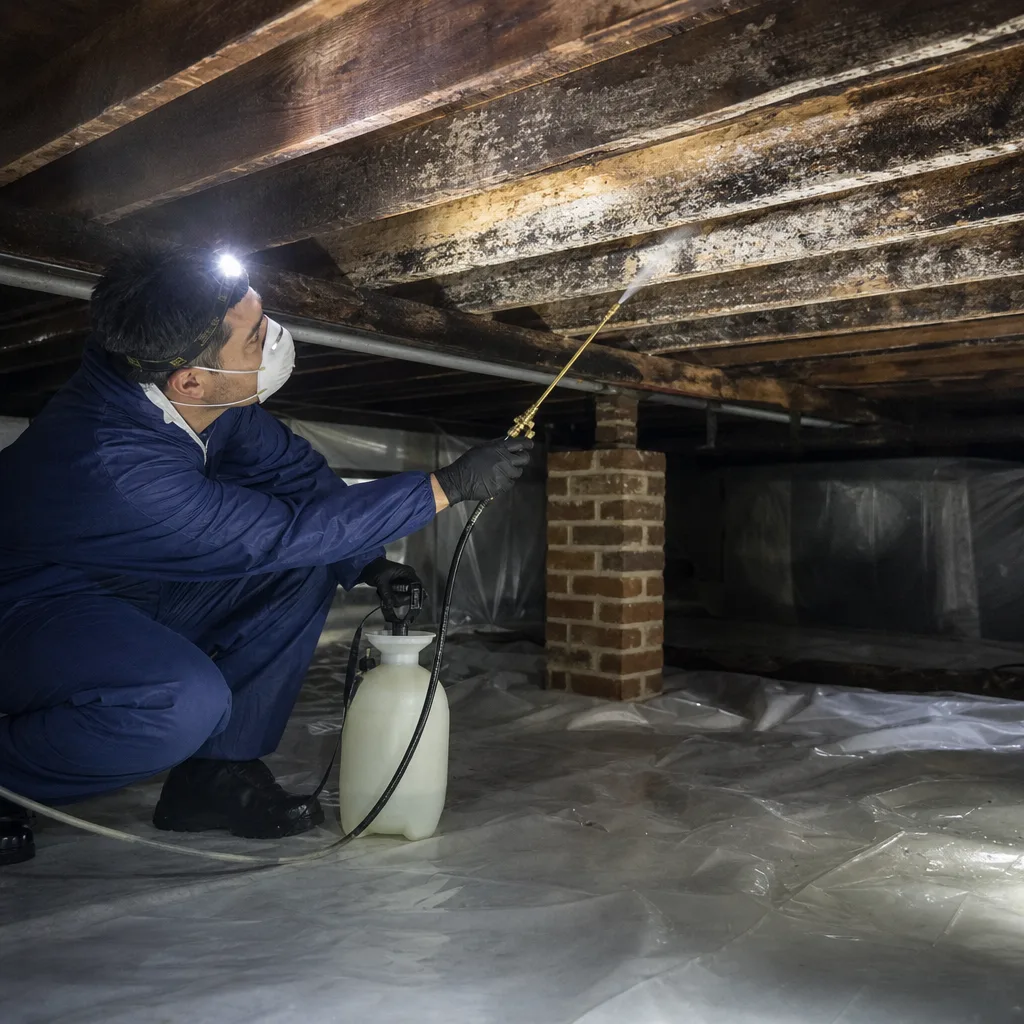
Pre-war brick and plaster wick moisture deep. That’s why we pound the area with professional Dri-Eaz and Phoenix dehumidifiers and XPOWER air movers, and we don’t stop until our daily moisture readings show dry-standard across cavities, not just on the surface. Hidden moisture in a brick party wall turns into mold four weeks later if you cut the drying short.
Flood Cleanup
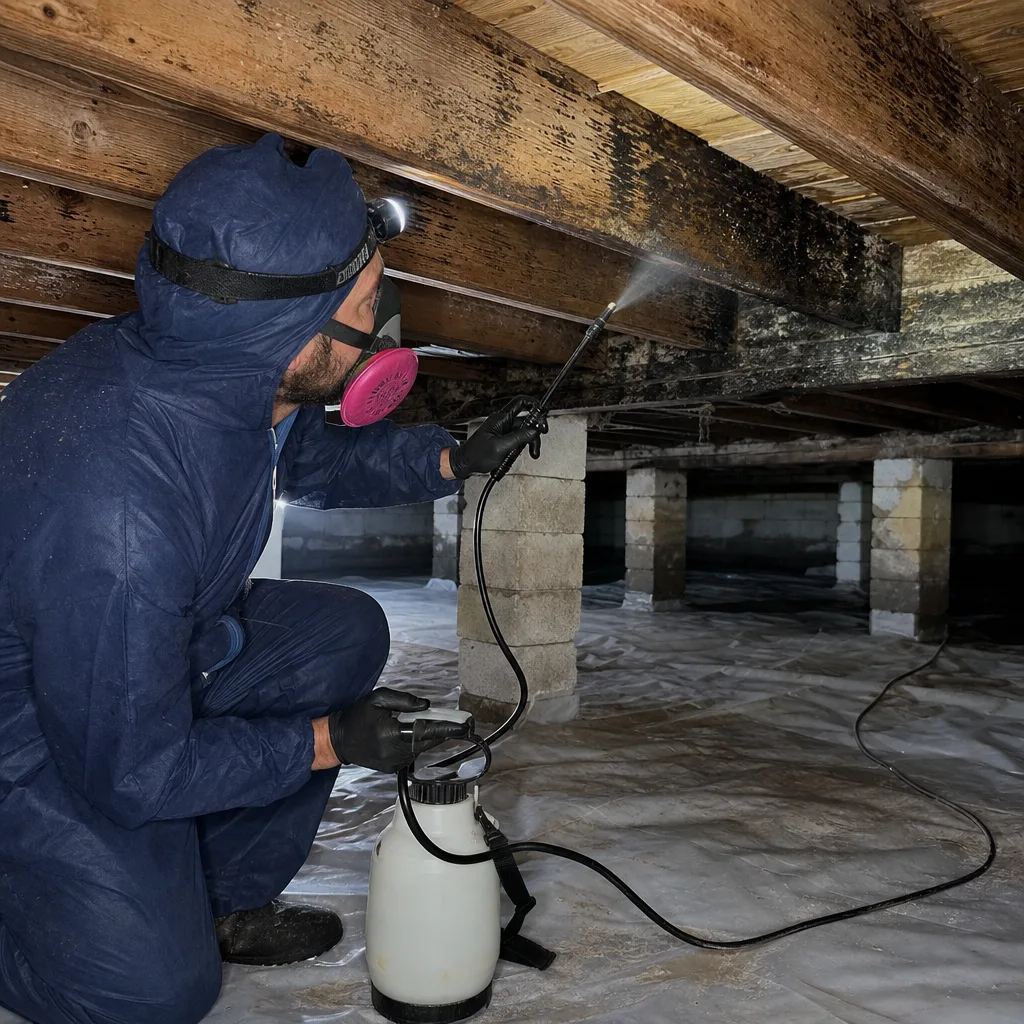
When heavy rain backs up drains or finds its way through a flat roof, the water that pools in a West New York basement is rarely Category 1. We extract it, sanitize, and dry, and we test for contamination. A basement that floods once will flood again, and we’ll tell you what to fix so the next storm doesn’t repeat the lesson.
Burst Pipe Restoration
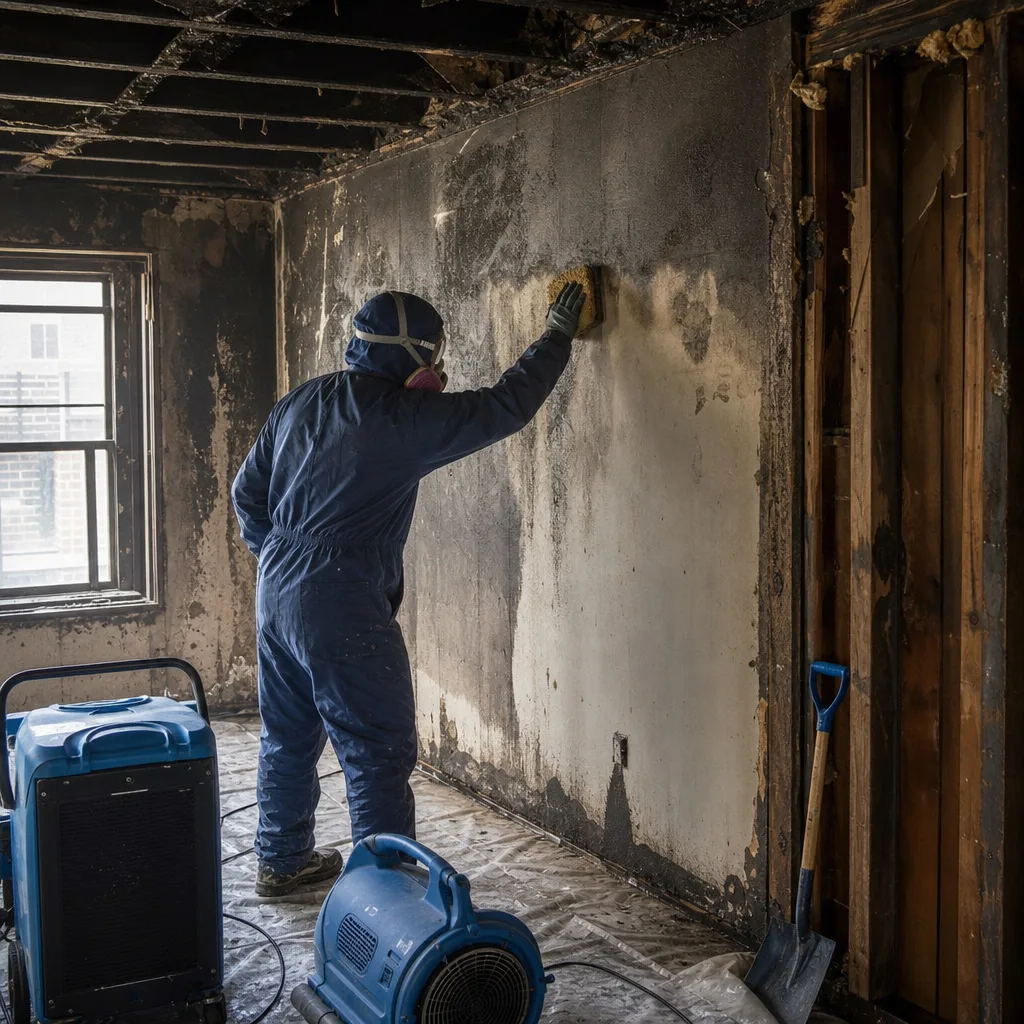
A frozen or corroded pipe in a 1920s riser line can flood four floors in twenty minutes. We stop the water at the source, map where it went, and dry in place wherever the plaster and framing are sound. When the pipe needs replacement, we do that too, and we document everything for the building owner’s carrier.
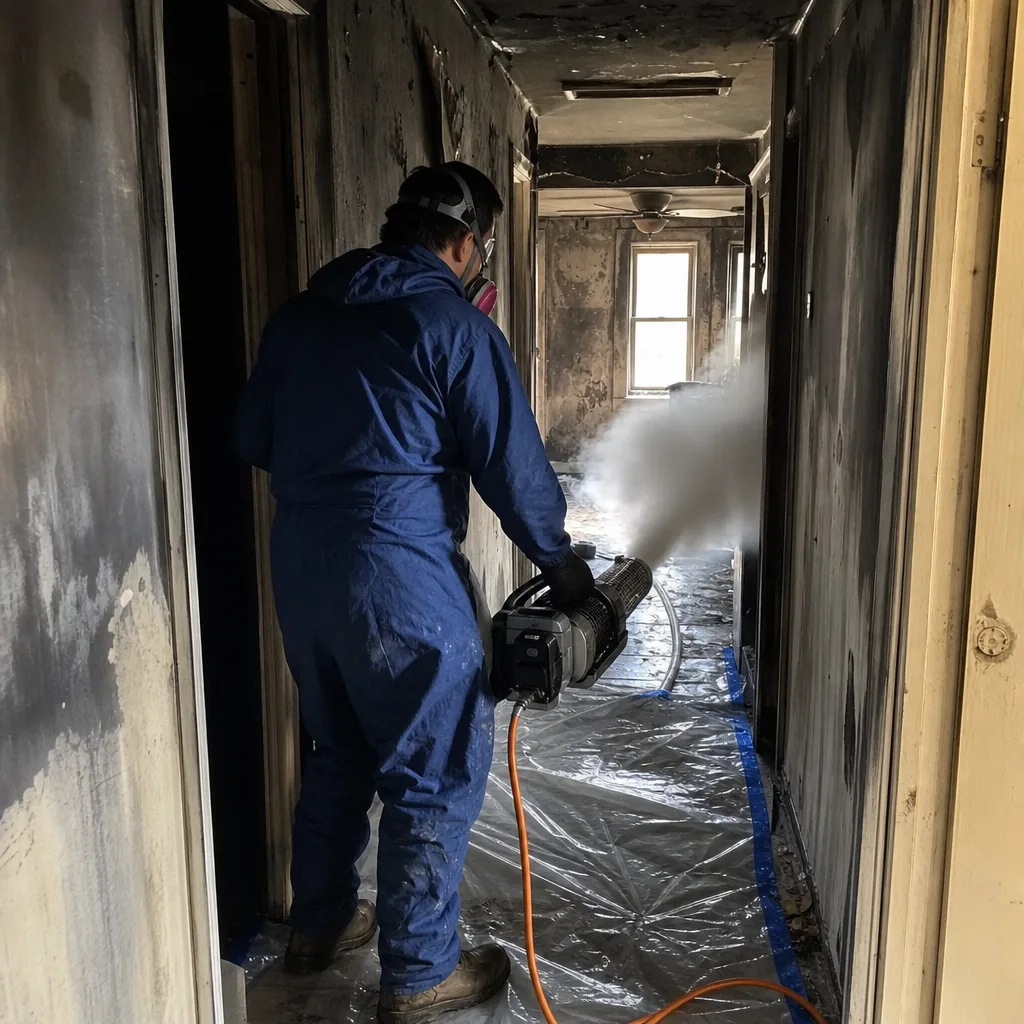
Basement Water Removal
West New York’s basements are often below grade against the Palisades slope, which means groundwater and storm runoff are constant threats. We pump, extract, and dry, then we tell you honestly whether the water came from a pipe, a drain, or the foundation, because the answer changes who pays for the damage.
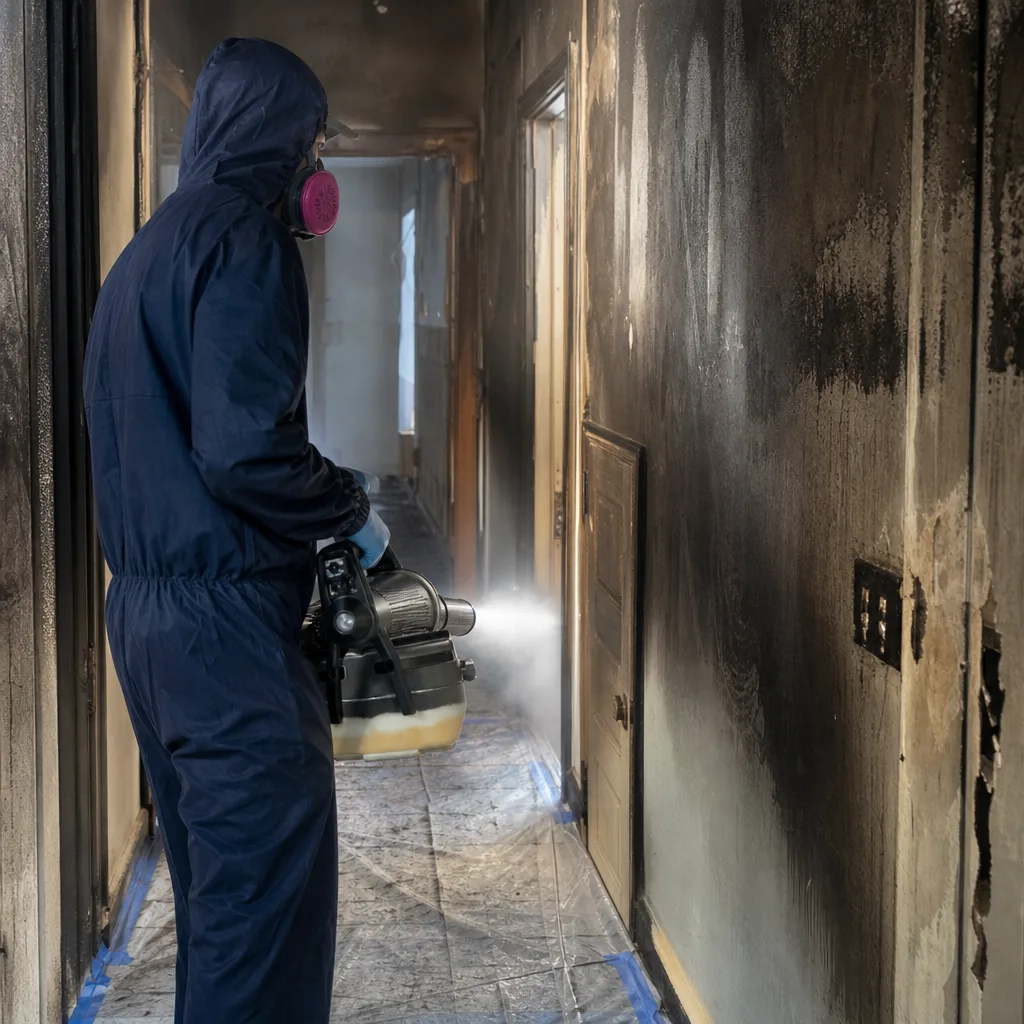
Ceiling & Roof Leak Water Damage
Flat and low-slope roofs on aging masonry buildings are the most common source of multi-floor water damage in West New York. A roof membrane failure over the top floor shows up as wetness three floors down, and by then the path through the building is long and hidden. We find the full path, not just the visible stain, and dry it in place whenever the original plaster is worth saving.
What happens when you call
- 1
A real person answersNo phone trees - you reach a local pro.
- 2
You get an upfront price rangeHonest numbers before anyone is dispatched.
- 3
A background-checked tech heads outLicensed & insured, dispatched right away.
- 4
You approve before work beginsNothing starts until you say go.
Water Damage Restoration Costs in West New York, NJ
Honest numbers, because you should know what you’re walking into before you call. A typical emergency water extraction in a West New York apartment runs $400 to $900, depending on how much water we’re pulling and how far it has traveled through the plaster. Structural drying with daily monitoring typically adds $1,200 to $3,000, and a multi-unit cascade in a pre-war building can push that higher because we’re drying cavities in multiple apartments, not one room. A burst pipe restoration with dry-in-place techniques and plaster repair usually lands between $1,800 and $5,000. A full Category 3 flood cleanup with containment, sanitization, and HEPA air scrubbing in a contaminated basement can run $3,000 to $8,000. The price moves on three things: how much water, what category it started as, and whether the building construction lets us dry in place or forces us to remove and rebuild. The right way to get a firm number is a free visual inspection. We look, we map, we write a scope with a line-item price before any work starts. No surprises. And we bill your insurer directly, so the number on the bill is the number on the carrier’s desk, not a figure you negotiate alone.
We Also Serve Cities Near West New York
Our crews cover the full Hudson County corridor. In addition to West New York, we routinely run water damage calls to Hoboken, Weehawken, Union City, and Jersey City. Same 45-minute response commitment, same live dispatch, same written 90-Day Done Right Promise on every job.
Serving West New York, NJ - Our Local Coverage Area
We’re based in the West New York area and know this community well. Use the map below to see our service coverage - if you’re nearby, we can almost certainly help.
West New York Water Damage Restoration Questions, Answered
How quickly can you respond to a burst pipe in a West New York walk-up before water spreads to the apartment below?
We commit to a 45-minute response for West New York addresses, and most nights we beat that. The faster we get extraction running, the less water reaches the unit below. Call (640) 500-3278 and a live dispatcher will tell you exactly which crew is rolling. In a pre-war building, every hour costs you ceilings, floors, and plaster you’d rather keep.
Will drying out a wet ceiling in my pre-war apartment require tearing out the original plaster?
Often no. With Injectidry systems and controlled drying, we can dry lath-and-plaster ceilings in place and save the original material. The decision depends on how long the plaster has been saturated and whether it’s still structurally sound. We’ll show you the moisture readings before anyone starts cutting.
How do you handle water damage that started on a roof but is showing up three floors down?
We map the full water path, starting at the roof failure and following it through every affected floor. Then we dry each cavity along that path, not just the visible stain on the lowest ceiling. If we only dried what you can see, the mold would come back in the walls you can’t.
My building manager wants one invoice for three affected apartments. Can you document and dry all units in one visit?
Yes, and this is standard for us in West New York’s multi-unit buildings. We document each unit separately for each insurer, in English and Spanish as needed, but we run one coordinated drying operation. That means the building manager gets clarity, the tenants get answers, and the carriers get the documentation they need without you acting as translator.
What is the risk from wind-driven rain on the Palisades side of West New York?
Nor’easters and winter storms drive rain horizontally into the exposed western facades along Boulevard East and the streets below. That rain saturates aging brick and mortar joints, and the water travels inward slowly, often showing up as interior damage weeks after the storm. We inspect for chronic water entry, not just the fresh stain.
Will my insurance cover water damage in a West New York rental or condo?
It depends on the source and your policy language, and that’s exactly the kind of question we answer every day. Burst pipes are typically covered. Flooding from outside is generally not, unless there’s a flood policy. We’ll document the loss from the first hour and work directly with your adjuster to make the claim as clear as possible. Call (640) 500-3278 and we’ll tell you what we’re seeing before you commit to anything.
How long does structural drying take in a West New York brick building?
Most drying jobs in this town’s masonry construction take 3 to 5 days to reach dry-standard. We log moisture readings daily and hand you the log when we finish. Pre-war brick holds water longer than modern drywall, and cutting drying short is how mold gets a foothold six weeks later.
What should I do in the first 30 minutes after discovering water damage?
Shut the water source if you can do so safely. Kill power to the affected area if water is near outlets or wiring. Move what you can. Then call (640) 500-3278. Don’t try to dry it with fans and open windows. A box fan cannot reach water inside a brick cavity, and every hour of saturation makes the restoration longer and more expensive. The line the water left is where we start, and the sooner we start, the better the outcome.
If you’ve got water where it shouldn’t be in West New York, call (640) 500-3278 for a free visual inspection and an honest scope of work. A live person answers, 24/7. Done right, and backed in writing.
Written by Curt Bowman, Owner at Floodline Restoration Co., serving West New York with certified water damage restoration, mold remediation, and full reconstruction.