
Last updated August 25, 2026
Free visual inspection and a written scope of work before any mitigation begins - photos, moisture readings, and drying logs go in your claim file
The scope we write is the scope we bill. Anything new gets shown to you, in writing, before we touch it.
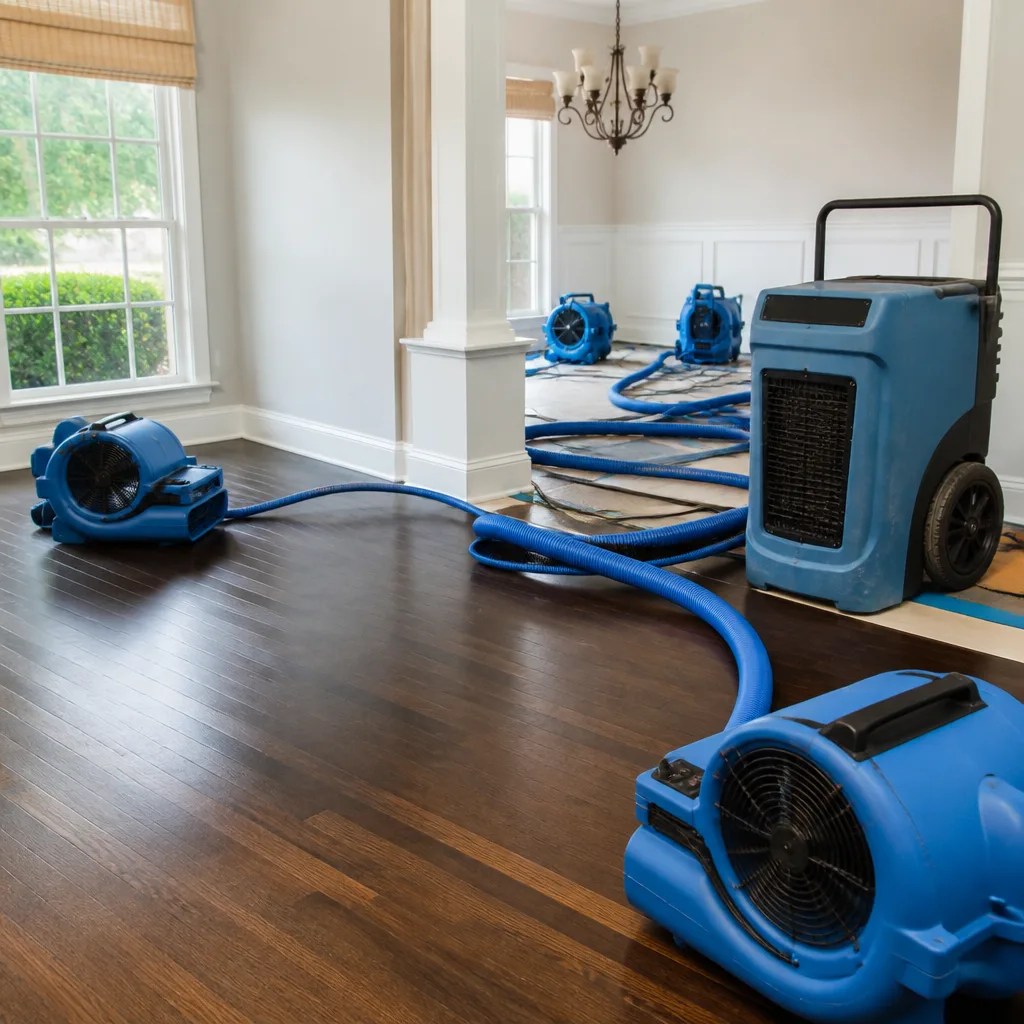



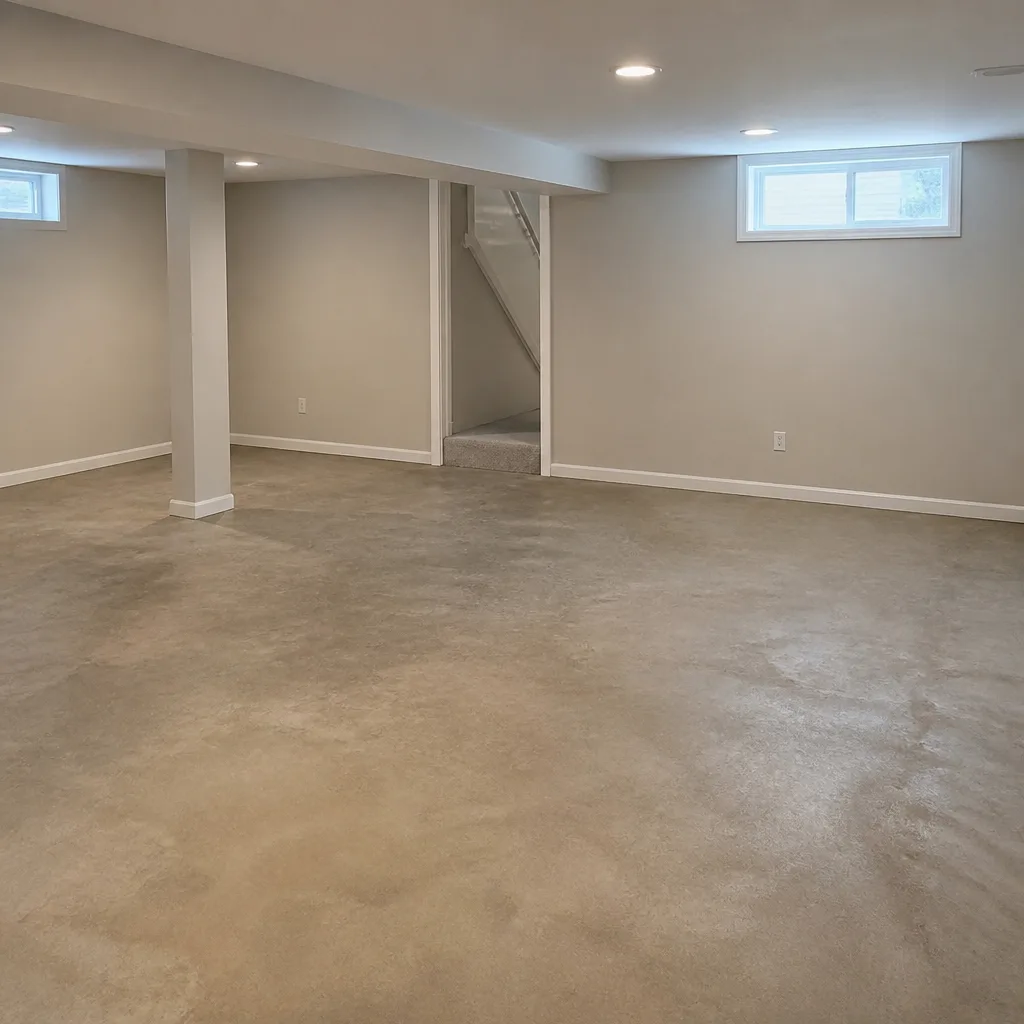

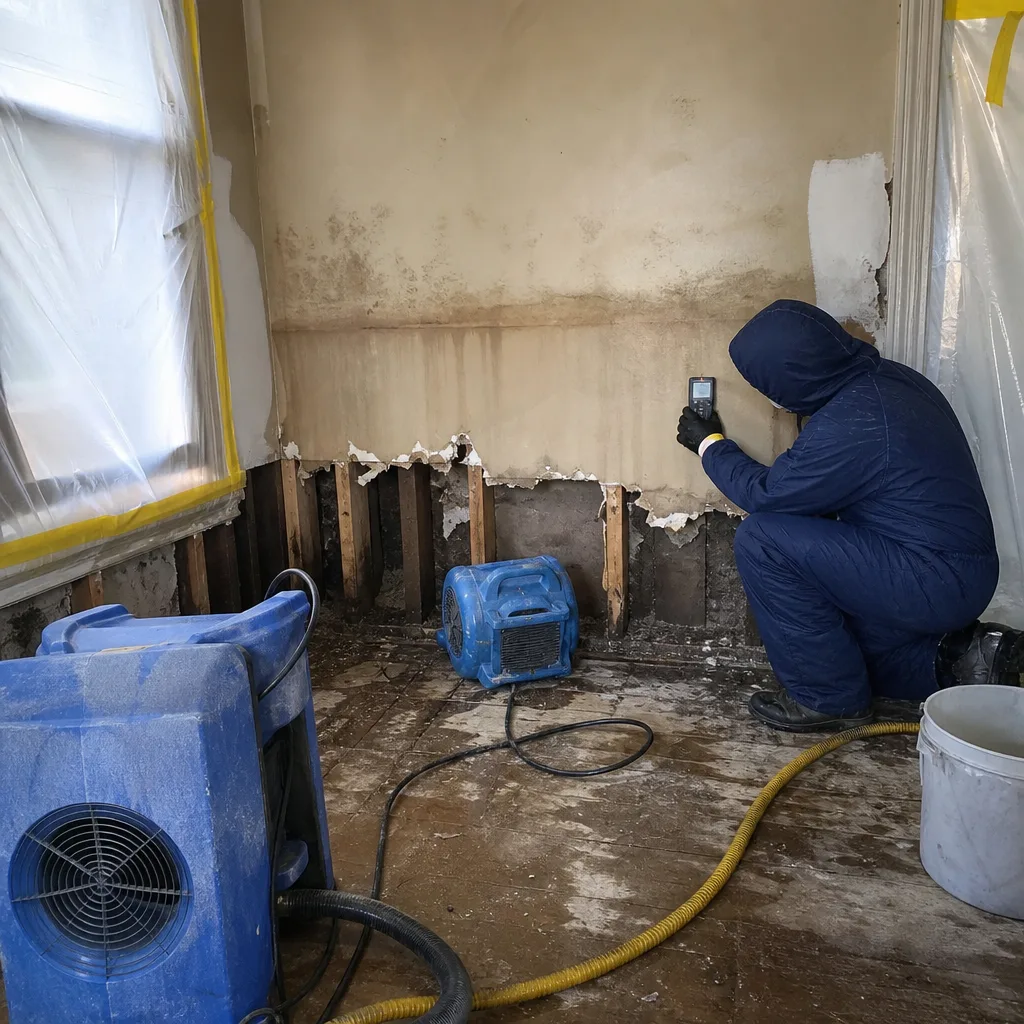 Before
 After
After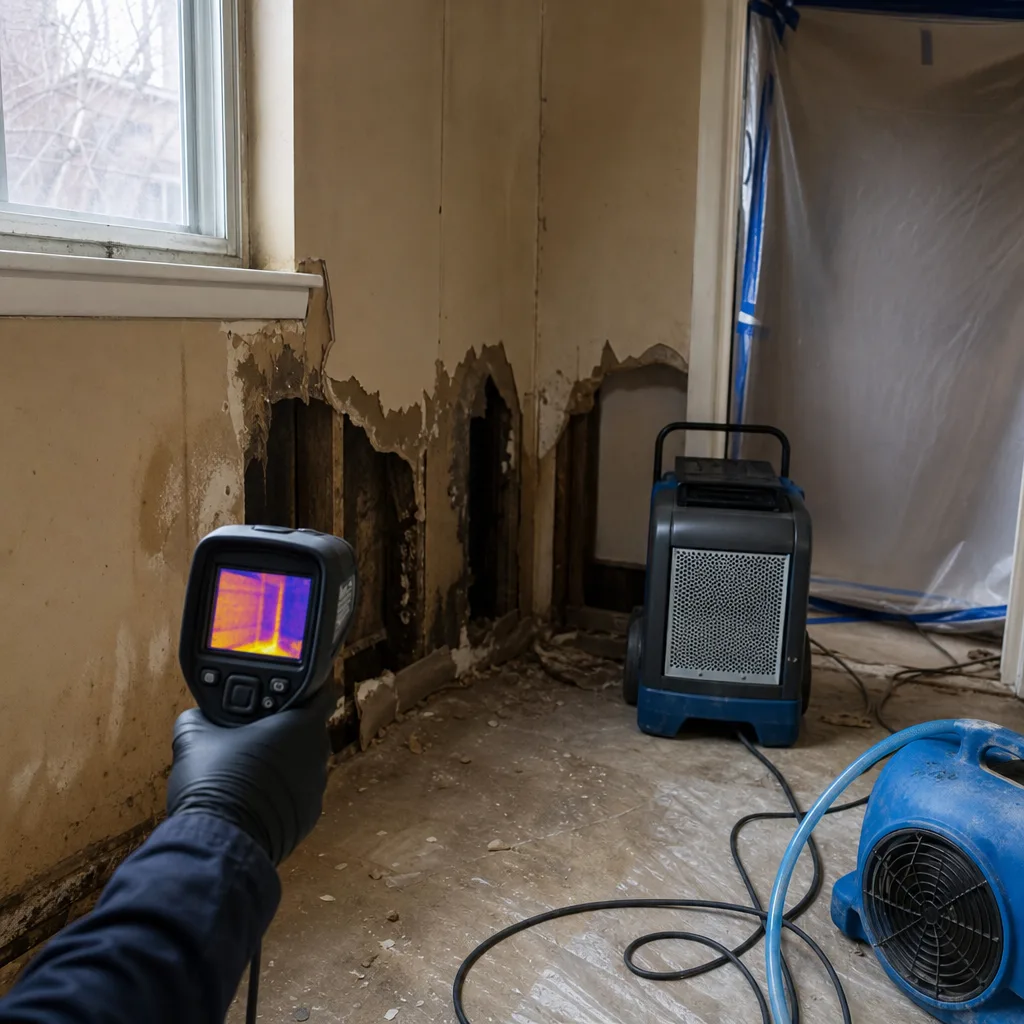 Before
 After
After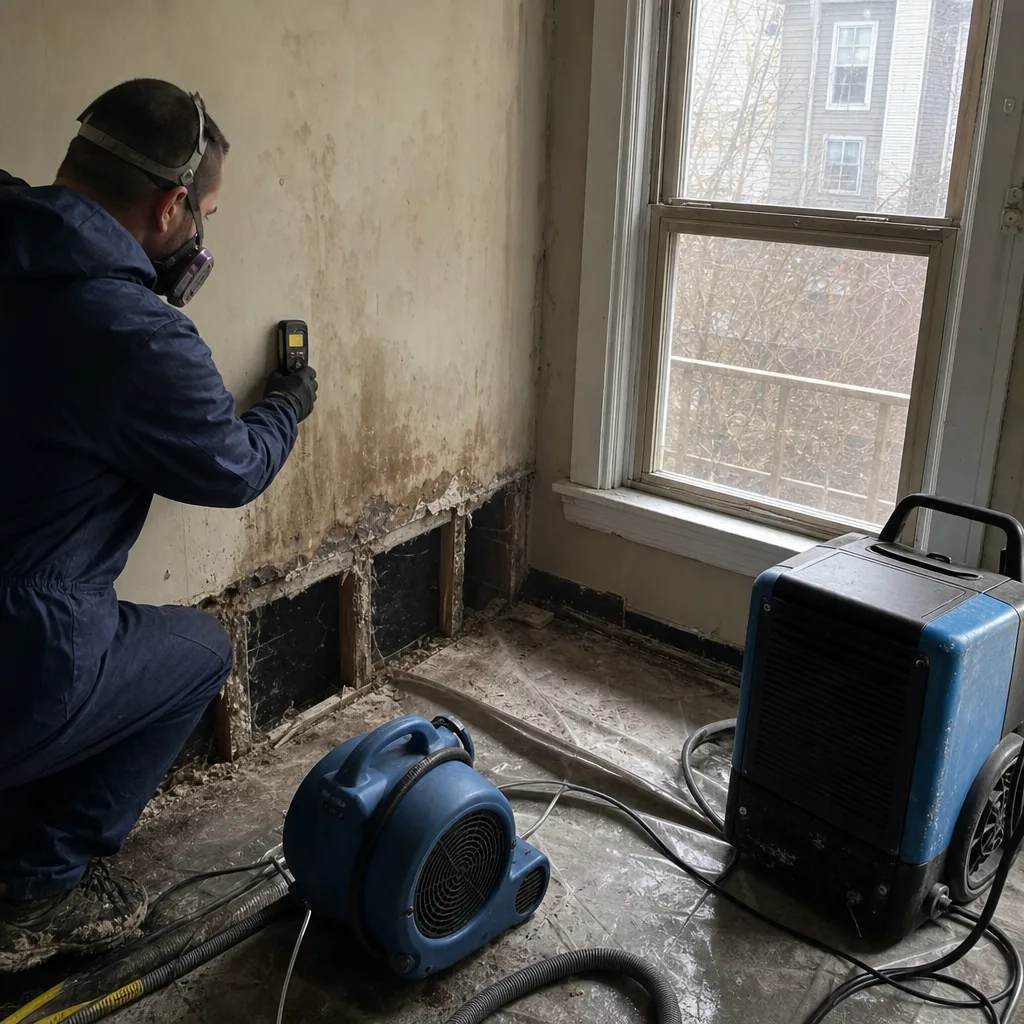 Before
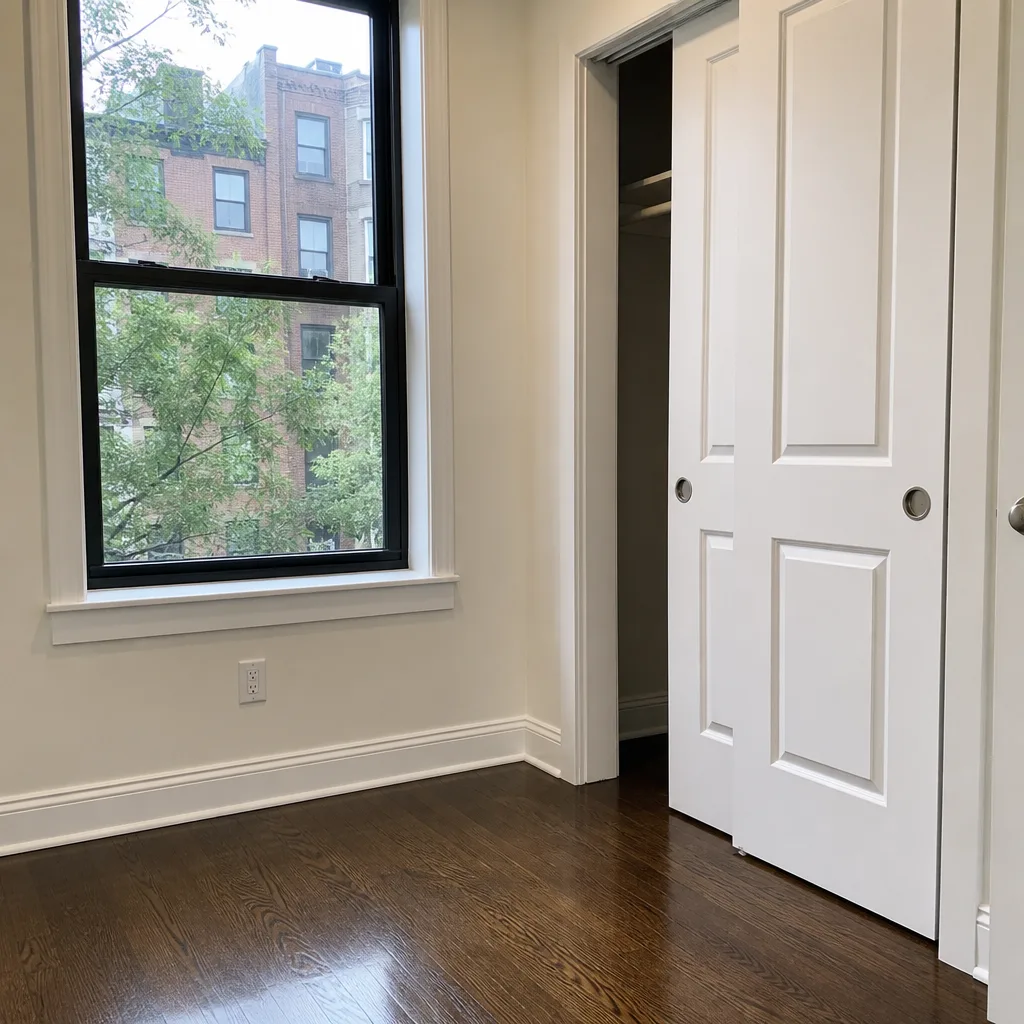 After
AfterWater Damage Restoration Maintenance Checklist for Hoboken Homeowners
Hoboken’s relationship with water is complicated. The city sits at sea level, built on a former tidal marsh, and nearly every block sits within a FEMA flood zone of some designation. But the water that damages most Hoboken homes doesn’t come from the Hudson River or a named storm. It comes from the inside: a slow drip behind a bathroom wall on Bloomfield Street, a water heater that finally gives out on a January night, or a radiator line that’s been quietly weeping into the hardwood for six months. The damage that costs the most is almost never the flood you see coming. It’s the one you don’t. This guide walks through the maintenance routine that catches those quiet failures before they become restoration projects.
Quick Answer
A Hoboken homeowner’s water damage prevention checklist comes down to seven recurring inspections: supply lines and valves, water heater, radiator system, bathrooms and grout, kitchen connections, basement and crawl space moisture, and the points where exterior drainage meets the foundation. Most of these take under ten minutes a month and cost nothing. What they prevent, on the other hand, is the single most expensive repair class in this city’s housing stock.
Table of Contents
- Why Hoboken’s Housing Stock Needs a Different Maintenance Approach
- The Seasonal Maintenance Calendar for Hoboken
- Monthly Interior Inspections That Catch Water Early
- Basement and Foundation: Hoboken’s Most Vulnerable Zone
- Radiator and Boiler Systems: The Overlooked Drip Sources
- Appliance and Fixture Connections: The Slow Leak Problem
- What to Check After Storms and Coastal Weather Events
- Moisture Meters and What the Numbers Actually Mean
- Common Mistakes to Avoid
- When to Call a Professional
- Frequently Asked Questions
- The Bottom Line
Why Hoboken’s Housing Stock Needs a Different Maintenance Approach
Hoboken has the highest density of pre-1940 housing in New Jersey. Walk any cross street between Washington Street and the Hudson River and you’re passing through rows of brownstones and brick walk-ups built before indoor plumbing was standardized, retrofitted for modern systems over several generations of renovation. Those retrofit points, where old joists meet new supply lines, are where we see the bulk of hidden water damage in this city. The copper, cast iron, and early galvanized steel in these buildings has been patched, spliced, and adapted for seventy-to-hundred-plus years. It’s not a matter of if a connection fails. It’s which one, and whether anyone notices before the ceiling below it opens up.
Add to that the groundwater reality. Hoboken’s water table sits roughly three to four feet below street level in many sections of town, which means basements here are not passive storage spaces. They are actively fighting hydrostatic pressure every day. Even a finished basement with drywall and carpet is a damp cavity waiting for an opening, a crack, a failed sump pump, a saturated foundation. Our crews have pulled finished basement flooring at addresses on Madison and Monroe Streets where the slab looked perfectly dry from above, but the moisture readings through the slab told the real story.
What this means for a maintenance routine is simple: Hoboken homeowners should inspect twice as often and trust visual dryness less than homeowners in, say, Bergen County. The materials here are older, the water table is higher, and the margin between “fine” and “full restoration project” is smaller.
The Seasonal Maintenance Calendar for Hoboken
Hoboken’s weather patterns follow the northeast coastal cycle: wet springs, humid summers, hurricane season that peaks in September and October, and freeze-thaw cycles from December through March. Each of those seasons stresses a different part of the home’s water defense. Here’s the calendar we give our Hoboken customers, the same one our technicians follow on their own homes.
Spring (March-May)
- Inspect all exterior drainage points: downspouts, splash blocks, and any drains near the foundation. Winter ice often shifts or cracks these, and a downspout pouring directly against the foundation wall in a spring rainstorm is a fast track to basement water.
- Check the sump pump, if the home has one. Pour a five-gallon bucket of water into the pit and watch it cycle. If it doesn’t kick on, that pump is dead and the next heavy rain finds out first.
- Walk the perimeter of the property and look for any grading that now slopes toward the house rather than away. Hoboken’s lots are tight, and neighboring construction or settling can change drainage patterns.
- Inspect any exterior hose bibs and shutoffs for freeze damage from the winter. Open them slowly and watch the connecting pipe inside the wall.
Summer (June-August)
- Run a dehumidifier in the basement and any below-grade room. Hoboken summer humidity routinely pushes basement relative humidity past 65%, and sustained levels above that are where mold gets a foothold. Empty the reservoir or, better, run a hose to a floor drain.
- Inspect window wells and basement windows for seal failure. Summer thunderstorms in Hoboken can dump an inch of rain in twenty minutes, and a failed window well seal sends that water straight into the finished basement.
- Check air conditioning condensate lines. Window units that drip into the wall cavity or central air handlers with clogged drain pans are some of the sneakiest slow leakers we deal with.
Fall (September-November)
- Clean gutters and roof drains before the hurricane season’s late-season storms. Hoboken’s mature street trees dump enormous leaf volume each October, and a clogged roof drain on a flat brownstone roof sends water pooling against the parapet and into the walls.
- Clear the sidewalk drains in front of the property if you’re in a garden-level or basement unit. The city keeps the mains clear, but the last two feet between street and drain is often the homeowner’s responsibility.
- Inspect the attic or top-floor ceiling for any early signs of moisture intrusion from roof flashing. Dark spots, bubbling paint, or a musty smell after fall rains are the early warning.
Winter (December-February)
- Test the water heater. Drain a gallon or two from the valve at the bottom to clear sediment, and check the fittings for corrosion. Hoboken’s hard city water accelerates scale buildup, and a water heater that fails in February means a flooded utility closet and a week without hot water.
- Protect exposed pipes in unheated spaces: basements, crawl voids, and any exterior-adjacent walls. In the bitterest cold snaps, a slow drip at the farthest faucet prevents a frozen supply line that bursts at 2 a.m.
- Watch for ice dams on any sloped roof sections. Hoboken’s mostly flat roofs don’t get ice dams the way suburban pitched roofs do, but the edges and parapets can still channel freeze-thaw water into the wall assembly.
Monthly Interior Inspections That Catch Water Early
We tell every Hoboken homeowner the same thing: the best restoration job is the one that never has to happen because someone looked under the sink once a month. It sounds too simple to matter. It isn’t. Over 42 years of answering calls in this city, we’ve seen the pattern repeat hundreds of times. A supply line fails under a kitchen sink on a Tuesday afternoon, no one notices until the ceiling below darkens on Thursday, and by Saturday the hardwood has cupped and the drywall is wicking water six feet up the wall. Ten minutes of inspection would have changed everything.
Here’s the monthly routine we recommend, room by room:
- Kitchen: Open the cabinet under the sink. Look for water stains on the cabinet floor, rust on the supply connections, or any softness in the wood. Run a hand along the trap and drain pipe while water is running. Check the dishwasher connection at the supply valve and the drain hose.
- Bathrooms: Check the toilet base for any shifting or staining at the wax ring. Inspect the tub and shower surrounds, especially the corners and the seam where the tile meets the tub deck. Look for any missing or cracked grout, any caulk that’s pulling away, any discoloration starting at the bottom rows of tile.
- Utility area: Look at the water heater once a month. The area around the base, the pressure relief valve, the inlet and outlet connections, any staining on the floor or platform beneath it. Check the washing machine supply hoses at both ends, and run a hand along them for any bulging or brittleness.
- Ceilings and walls under any plumbing: Once a month, glance at the ceiling directly below every upstairs bathroom, the kitchen, the radiator lines, and any laundry area. A water stain often starts as a faint yellow shadow before it turns brown. That faint shadow is the cheapest possible time to catch it.
- Around windows and doors: Look for peeling paint, bubbling drywall, stained trim, or any gap between the window frame and the wall that wasn’t there before. Hoboken’s older windows pull away from their openings as the building settles, and rain finds the gap.
None of these checks require tools or expertise. They require consistency. The homeowners who avoid major restoration work in Hoboken aren’t the ones with the newest homes. They’re the ones who look at the same five weak points every month, the way a pilot walks a preflight check.
Basement and Foundation: Hoboken’s Most Vulnerable Zone
In most of Hoboken, the basement is the lowest room in the house and the highest-risk square footage on the property. The water table doesn’t need a storm to press against the foundation; it does that every day. Add in the city’s aging sewer and stormwater infrastructure, and you have conditions where basement water isn’t an occasional disaster but a standing possibility.
The maintenance priorities for a Hoboken basement break down like this:
- Sump pump system: If you have one, it’s the single most important mechanical device in the house. Test it monthly by pouring water into the pit. Check that the discharge pipe carries water far enough away from the foundation, and that the check valve works so water doesn’t flow right back down. If the basement has ever taken water and the pump is more than seven years old, replacing it proactively is cheaper than finding out it’s dead at 3 a.m.
- Foundation walls and slab: Walk the perimeter with a flashlight twice a year. Look for new cracks, especially horizontal cracks or stair-step cracks in masonry. Look for efflorescence, that white chalky residue that tells you water is moving through the wall and evaporating. Look at the joint where the wall meets the slab. None of these are emergencies on their own. All of them tell you the water pressure out there is winning somewhere.
- Humidity control: Run a dehumidifier sized for the square footage from roughly May through October. Hoboken’s summer humidity stays high enough that an unconditioned basement will sit at 70%+ relative humidity for weeks at a time. That’s the environment where mold starts on sheetrock, on stored boxes, on the underside of the joists. Keep the space below 60%.
- Floor drains and any existing drainage system: Test floor drains by pouring water down them once a month. A trap that’s dried out lets sewer gas in, but a drain that’s become clogged or collapsed means the next water event has nowhere to go. If the basement has a French drain or perimeter drain system, its cleanout ports should be accessible and clear.
We’ve done full basement remediations in Hoboken that started as a hairline crack in a foundation wall and a single heavy rainstorm. The water found the crack, the pressure did the rest, and by the time the homeowner saw standing water, the finished basement had been absorbing it for hours. The maintenance question isn’t whether the water table will test your foundation. It’s whether you catch the test.
Radiator and Boiler Systems: The Overlooked Drip Sources
Hoboken’s older housing stock runs on steam and hot water radiator systems. They heat well. They also hide failures for months at a time. A small leak at a radiator valve or a pinhole in a supply line can drip for an entire heating season before the damage becomes visible, and by then it’s inside the wall or behind the baseboard.
The maintenance points that matter:
- Radiator valves and bleed points: Check each radiator’s valve body and the connection where the pipe enters the floor or wall. Look for rust, for water beading, for staining on the floor beneath. In steam systems, a hissing or clanging radiator is usually a vent or trap problem, but a wet floor is a leak.
- Boiler pressure and water lines: The boiler itself should sit at a stable pressure when cold. If the pressure drifts downward over days without bleeding radiators, water is leaving the system somewhere. The question is only where.
- Pipe runs in walls and ceilings: If a ceiling or wall shows a recurring damp or stained spot that comes back after painting, and there’s a radiator line running through that cavity, the line is the likely source. We’ve cut into Hoboken walls where a steam line had been leaking slowly for years, and the entire cavity needed drying, cleaning, and rebuilding.
- Expansion tank and relief piping: The expansion tank and pressure relief valve on a hot water boiler are safety components, and they’re also leak points. Any dripping from the relief valve means the system pressure is too high or the valve is failing.
Radiator leaks are dangerous to DIY in the sense that the systems operate under pressure and temperature, and a failed valve can release steam that causes serious burns. We don’t tell homeowners to repair these themselves. We tell them to inspect, note what they see, and call a qualified technician before a small leak becomes a wall cavity restoration. The same drywall that hides the leak also hides the damage, and by the time you see it, the repair is measured in feet, not drips.
Appliance and Fixture Connections: The Slow Leak Problem
The fastest-moving water damage events in Hoboken homes come from supply line failures: toilets, washing machines, water heaters, dishwashers. A supply line under full city water pressure can release several gallons per minute, and in an hour the water has gone through the floor, into the ceiling cavity below, and started spreading horizontally along the joists. The good news is that these are the failures most easily prevented by inspection and timed replacement.
The checklist we give our customers for appliance connections:
- Washing machine hoses: Rubber hoses fail predictably at the crimp fittings. If the hoses are more than five years old, replace them with braided stainless steel lines. Check both ends monthly for bulging, cracking, or rust at the crimp. A washing machine supply failure in a Hoboken brownstone with the laundry on the upper floor will run water through two stories before anyone notices.
- Water heater: The average tank water heater lasts 8 to 12 years in Hoboken’s water conditions. After about year eight, the tank itself becomes a risk as much as a convenience. Annual draining helps, but a tank that’s rusted through at the bottom fails catastrophically and releases 40 to 75 gallons into whatever floor it sits on. If the water heater sits in a finished space or above finished space, replace it proactively rather than reactively.
- Dishwasher supply and drain lines: The supply line on a dishwasher runs through the cabinet base, and leaks here often stay hidden until the kitchen floorboards swell. Check the connection under the sink at the shutoff valve, and look under the dishwasher kick plate for any moisture during a cycle.
- Toilet supply lines and fill valves: The flexible supply line connecting the toilet to the wall valve fails at the plastic nut or the braided sleeve. Check them quarterly. A toilet that runs intermittently, or a fill valve that cycles on its own, is telling you something is wrong before the visible leak starts.
- Ice maker lines: Refrigerator ice maker lines are among the thinnest, cheapest water lines in the home, and they run through the cabinet to the back of the unit. If the line is plastic, consider replacing it with a braided line. Inspect it monthly.
None of these replacements are expensive. A braided supply line costs under $20. The restoration that follows a failed line routinely runs into the thousands, once drying, flooring, drywall, and painting are counted. In Hoboken’s multi-unit buildings, the stakes are higher because the water rarely stays in the unit where it started. A failed line on the third floor is a problem for the second and first floors too, and the insurance conversation gets complicated fast.
What to Check After Storms and Coastal Weather Events
Hoboken’s geography means every storm season brings a few events that test the city’s drainage and the homeowner’s exterior envelope. What most people don’t realize is that the water intrusion from these events often announces itself subtly, days or even weeks after the rain stops. The walls dry on the surface, but the moisture that worked its way into the wall cavity stays there, feeding mold and slowly rotting the framing.
Here’s the post-storm inspection routine we recommend, in order:
- Within hours of the storm: Check the basement, any below-grade rooms, and the lowest rooms of the home. Move anything off the floor that can be damaged by water. Look for water entering at the cove joint, the seam where floor and wall meet, and at any basement windows or exterior doors.
- Within 24 hours: Check the attic and top-floor ceilings for any staining or water marks. Check the interior face of exterior walls, especially under windows and at any point where the wall meets the roof. Run a hand along the drywall for cool spots or softness.
- Over the following week: Watch for any new musty smell, any bubbling paint, any doors or windows that stick, any flooring that cups or crowns. All of these are signs that water got into a cavity and is now drying unevenly.
- After any sump pump cycle event: Confirm the pump actually removed the water it should have. Check the discharge point outdoors. If the pump ran continuously during the storm and the basement still got wet, the pump is undersized or the discharge line is clogged or the water is entering faster than the pump can handle.
One thing we see repeatedly in Hoboken after coastal storm events: homeowners assume that because the water didn’t rise to the visible level, it didn’t get in. That’s wrong. Water moves through foundation walls and along the underside of slabs in ways that never produce standing water. The visible water event is the tip of it. The hidden moisture is the part that causes mold and structural damage, and it’s the part that our moisture meters and daily drying logs exist to solve.
Moisture Meters and What the Numbers Actually Mean
Most Hoboken homeowners don’t own a moisture meter, and that’s fine. Most of the time, you don’t need one. But understanding what the numbers mean matters, because that’s the language a restoration company uses when it tells you your wall is dry or not dry, and it’s the difference between a job done right and a job that looks right but isn’t.
A moisture meter measures the moisture content of a material, or in some cases the relative humidity of a cavity. The key numbers:
- Wood and framing: Dry is generally under 12% moisture content. Between 12% and 16%, the wood is damp and in the danger zone for mold and rot. Above 16%, the wood is actively wet and the moisture is moving.
- Drywall: Drywall reads differently depending on the meter, but any reading that shows elevated moisture in drywall is a problem. Drywall wicks water and loses structural integrity quickly. It’s often removed rather than dried in place.
- Concrete and masonry: These always have some moisture. A slab that reads consistently high across a wide area, compared to a dry reference point, tells you water is entering from below or through the wall.
- Assuming a small stain is an old stain. In Hoboken’s older buildings, a ceiling stain under a bathroom or radiator often gets painted over and forgotten. The leak is usually still active, and the paint just hides it for another few months while the damage behind the wall grows.
- Not knowing where the main water shutoff is. Every homeowner should know where the main valve is and be able to reach it in the dark. A broken supply line releases water until someone shuts it off, and the difference between a mop job and a full restoration is measured in the minutes it takes to find the valve.
- Using a fan to “dry” a wet wall or floor instead of calling for proper extraction. A fan moves air. It doesn’t remove water from wall cavities, under flooring, or behind baseboards. The water that evaporates from a fan-dried surface usually condenses somewhere else in the room or stays in the wall cavity and feeds mold.
- Skipping the sump pump test because it’s inconvenient. The most common sump pump failure we find after Hoboken storms is a pump that hasn’t been tested in a year. It’s dead, the homeowner didn’t know, and the basement took water that it didn’t need to.
- Draining a water heater too late. Sediment builds up from Hoboken’s hard water, the tank overheats at the base, and the metal fatigues. The homeowner who drains the heater annually gets years more from the tank and, more importantly, avoids the day it splits and floods the utility room.
- Ignoring a musty smell because there’s no visible water. A musty smell is a moisture problem, even if the water isn’t visible. It’s the smell of mold or bacterial activity in a damp cavity, and it doesn’t go away on its own. The longer it’s ignored, the larger the remediation area becomes.
The number itself is less important than the trend. A professional restoration crew doesn’t just take a reading and walk away. We take baseline readings, set drying equipment, take daily readings, and document the trend until the structure hits the dry standard. That’s what the Floodline Restoration Co. home team does on every water damage job in Hoboken: moisture-mapped from day one, with the daily log handed to the homeowner and carrier so everyone is looking at the same numbers. Done right, the dry standard is reached, verified, and documented. Not guessed at.
If you’re a homeowner with a meter or considering buying one, a $30 pin-type meter is fine for checking whether a suspicious spot is actually wet. It won’t replace the professional-grade meters and the experience of knowing where to take readings, but it will tell you whether to make the call.
Common Mistakes to Avoid
When to Call a Professional
Some water problems are maintenance items. Others are restoration emergencies, and the difference matters. Call a professional when the water has gone into the wall cavity, when it came from a sewage source, when the area of wet material is larger than a few square feet, or when you can smell mold but can’t find the source. These are not Saturday projects. They’re the situations where time is working against you, and the damage is compounding every hour it stays wet.
Floodline Restoration Co. offers free estimates in Hoboken. Call (640) 500-3278 and a live person answers, any hour, every day. A certified crew reaches the job and starts extraction the same visit, with the equipment that does the job once: Dri-Eaz, Phoenix, and XPOWER systems that pull water from materials in hours, not days. The moisture log starts on day one and gets handed to you and your carrier, and the work is backed by the 90-Day Done Right Promise, in writing. If it’s not done right, we make it right.
Frequently Asked Questions
Monthly for the high-risk points: under sinks, around water heaters and washing machines, at toilet bases, and on ceilings below any plumbing fixtures. Seasonal checks for basements, foundations, drainage, and roof-related points. In Hoboken’s older housing stock, monthly inspection catches what annual inspection misses.
The first signs are usually visual or olfactory: a faint yellow-brown stain on a ceiling, bubbling or peeling paint, a musty smell with no apparent source, cupping or crowning hardwood, or a door that starts to stick. In a Hoboken brownstone, these signs often show up on the floor below the actual leak, since water travels along the joists before it finds an opening.
Most homeowners policies cover sudden and accidental water damage, like a burst pipe or an overflowing appliance. They generally don’t cover gradual leaks, water that entered through an unmaintained foundation crack, or flood water from outside. Sewage backup often requires a separate rider. Document everything with photos, and your restoration company should be able to work directly with your adjuster so you’re not the one running the claim.
Mold can begin to grow within 24 to 48 hours on damp organic materials in a Hoboken climate, especially during the humid months. That’s why the response time matters. Extraction that starts the same day, proper drying equipment running continuously, and daily monitoring keeps the job at the water damage stage instead of the mold remediation stage.
Drying it out means removing the visible water. Restoration means returning the structure to a documented dry standard, removing materials that can’t be salvaged, cleaning and treating what remains, and rebuilding what was removed. The difference matters because a wall that feels dry on the surface can still be wet inside, and that hidden moisture is where mold and structural damage live.
With the right combination of drainage, sump protection, humidity control, and maintenance, a Hoboken basement can be kept dry in the practical sense. The water table means it will always be in contact with moisture on the outside. The goal is to keep that moisture from crossing the envelope, and that requires maintenance as much as any permanent fix. A sump pump that works, a dehumidifier that runs, gutters and downspouts that discharge correctly, and a foundation that gets checked every season.
The Bottom Line
The homes in Hoboken are old, beautiful, and wet by nature. They reward the homeowner who looks, and they punish the homeowner who assumes. Ten minutes a month at the high-risk points, a seasonal walk of the exterior and basement, and the discipline to replace aging supply lines and water heaters before they fail will prevent most major restoration projects. When the water still finds a way, the response matters: a call answered by a live person, a crew on site the same day, professional-grade drying equipment from Dri-Eaz, Phoenix, and XPOWER, a documented moisture log, and a written guarantee. That’s the standard we’ve worked to in Hoboken since 2010, and that’s the standard we’ll stand behind.
Written by Curt Bowman, Owner at Floodline Restoration Co., serving Hoboken since 2010.