
Last updated August 25, 2026
Free visual inspection and a written scope of work before any mitigation begins - photos, moisture readings, and drying logs go in your claim file
The scope we write is the scope we bill. Anything new gets shown to you, in writing, before we touch it.
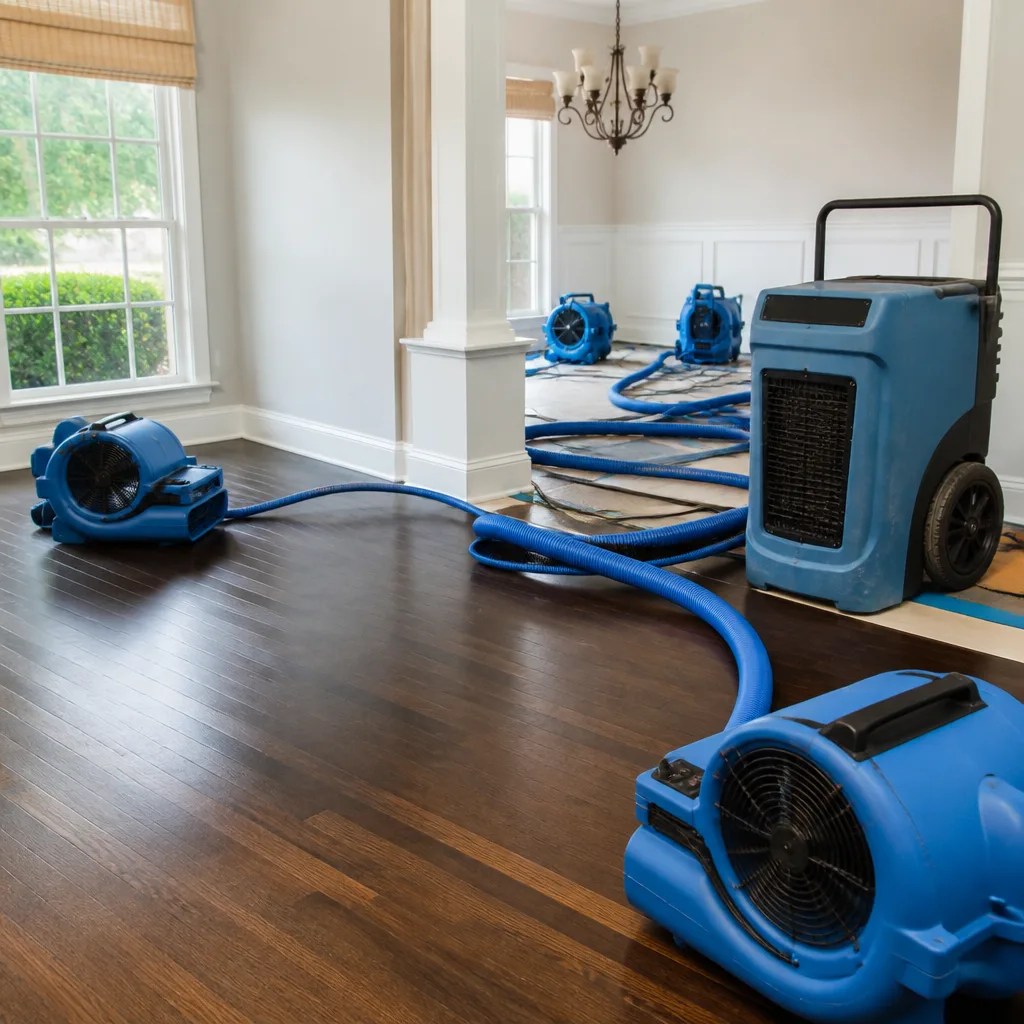
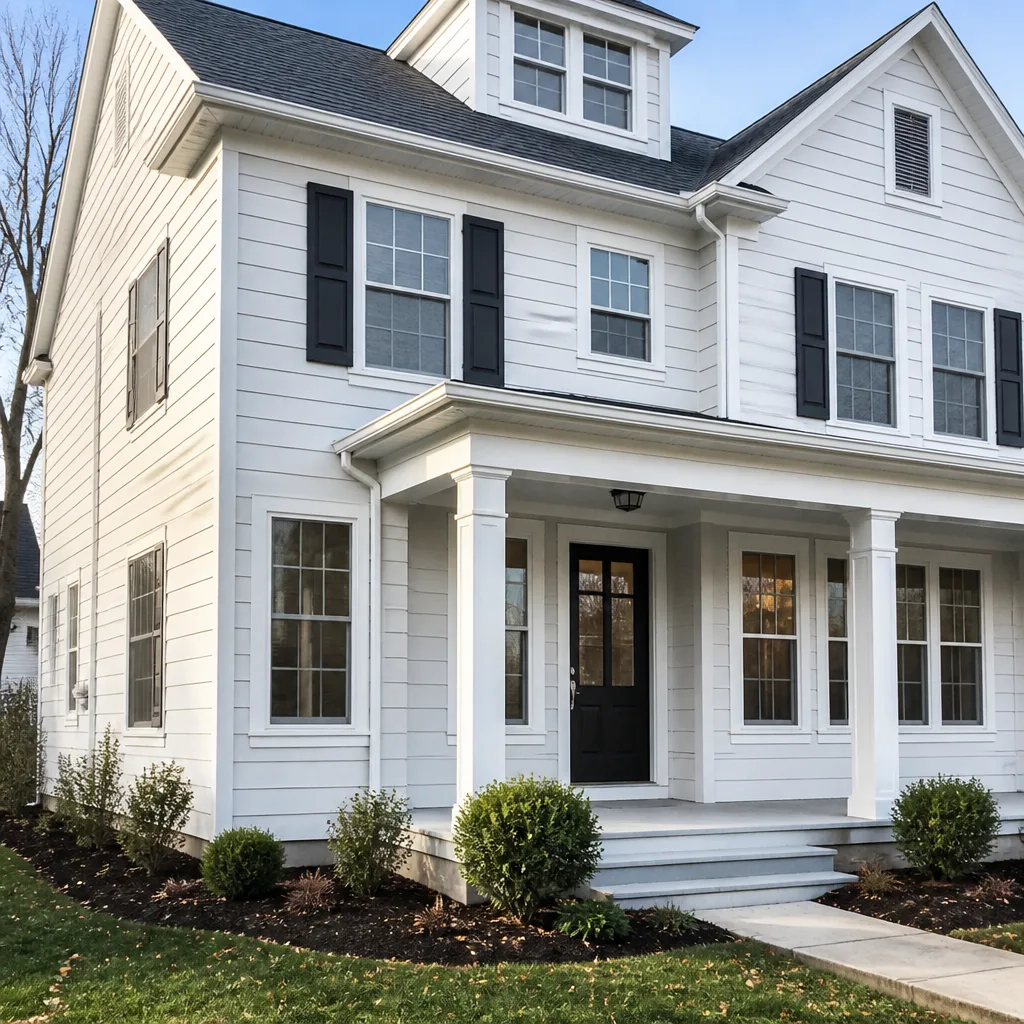
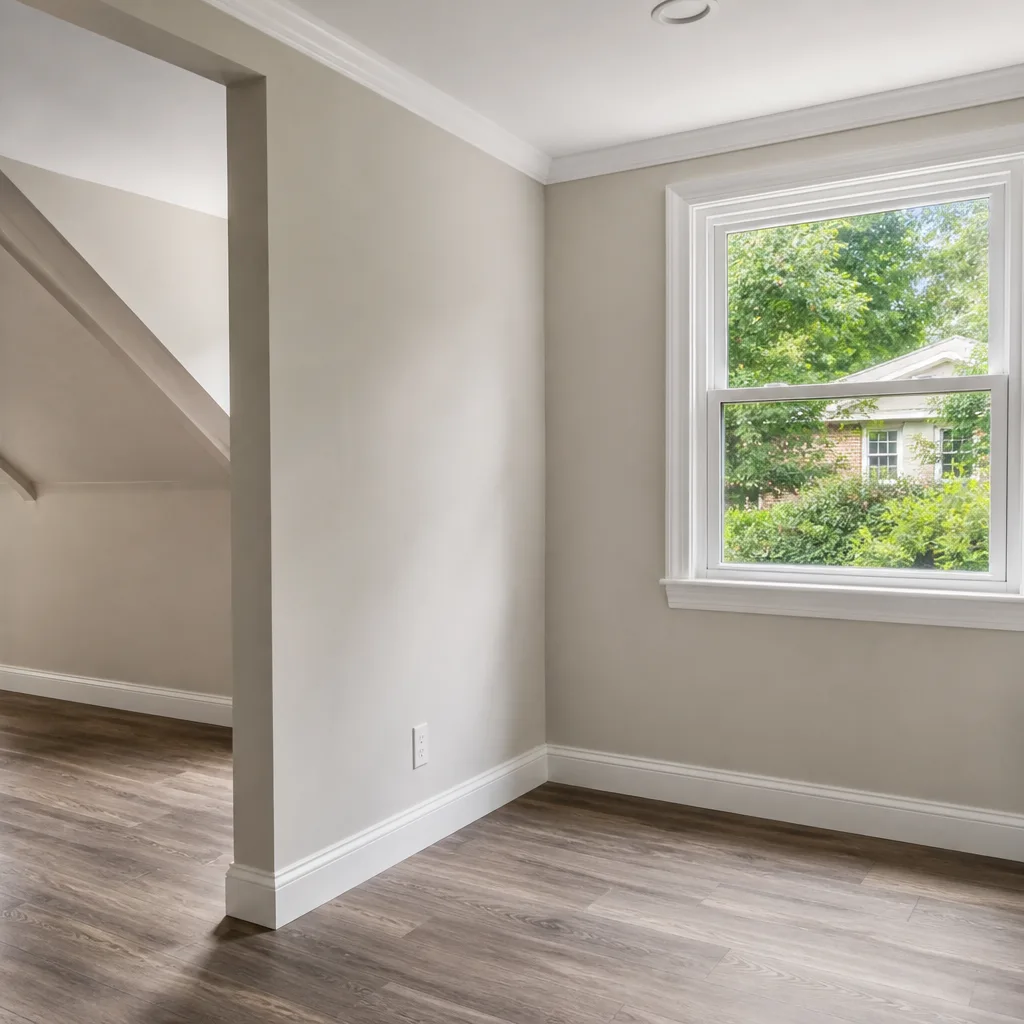
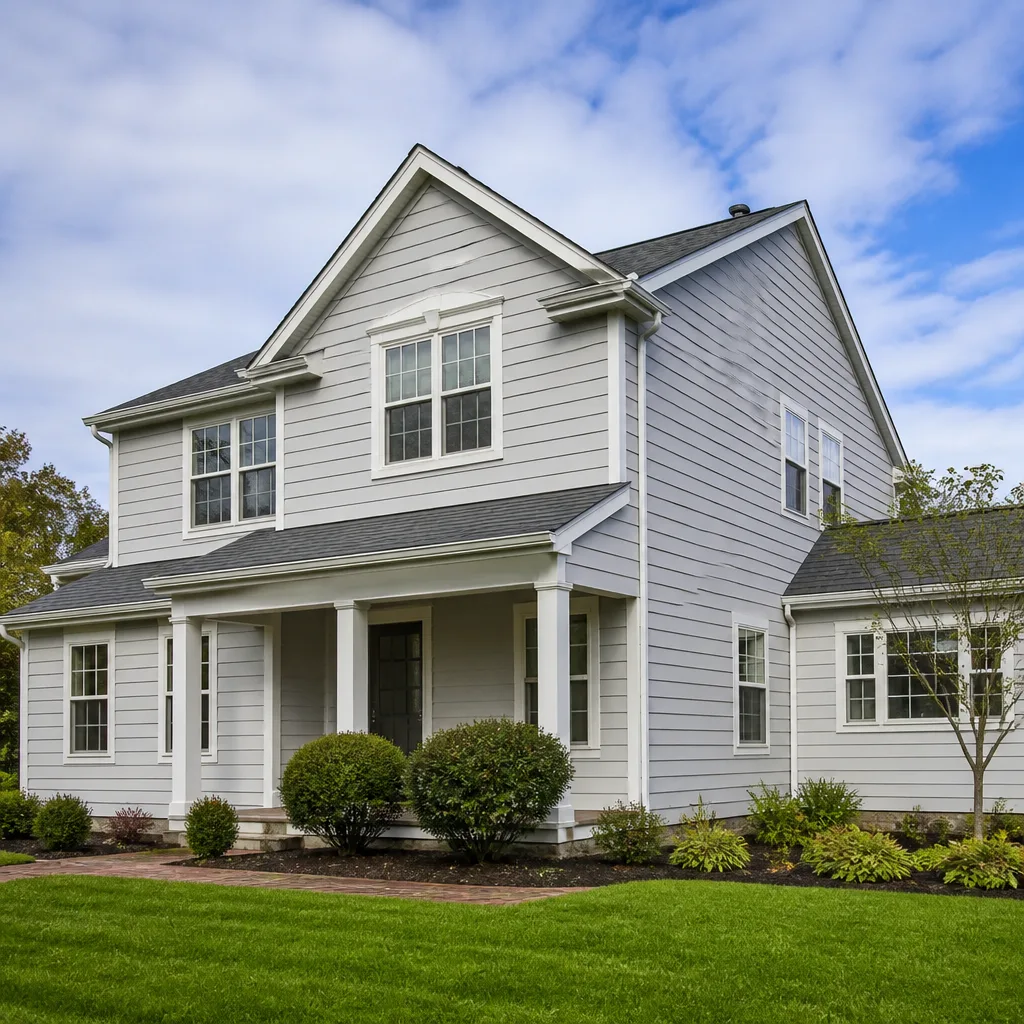
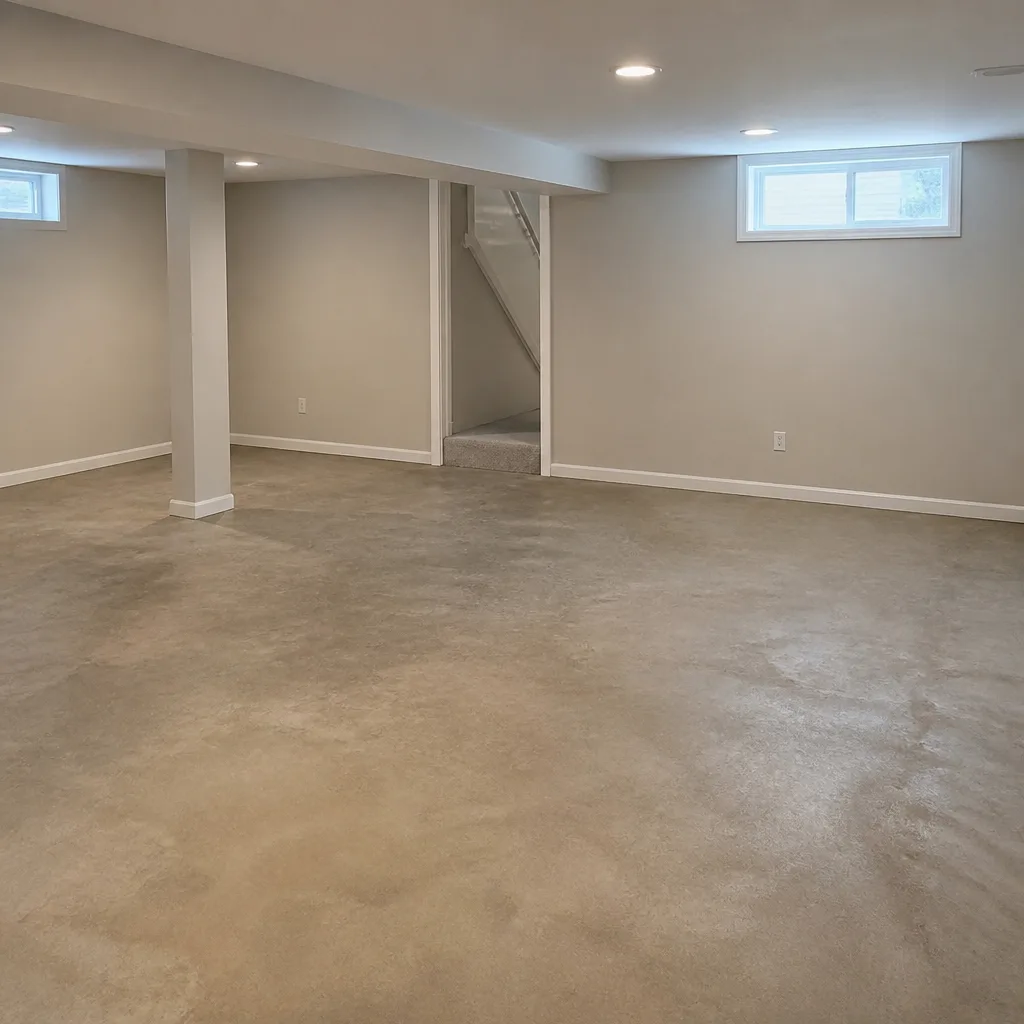

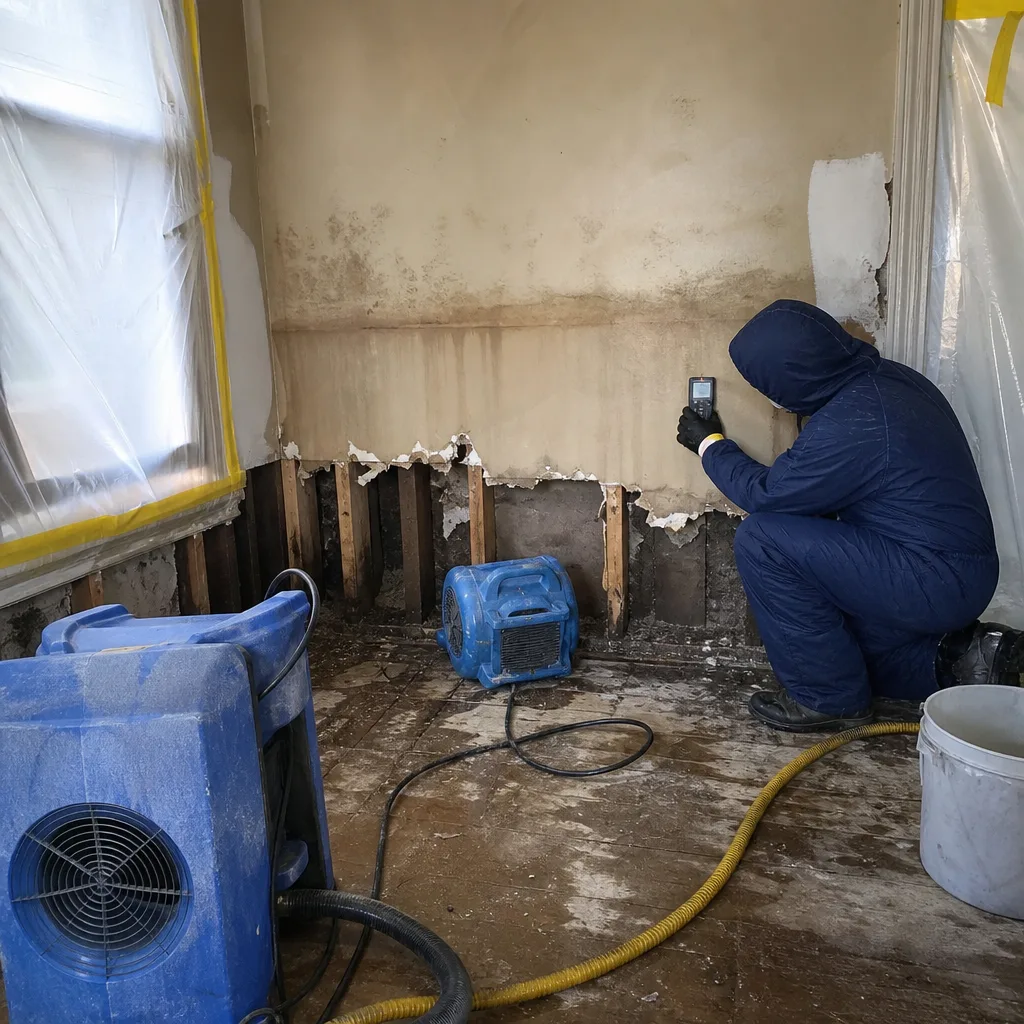 Before
 After
After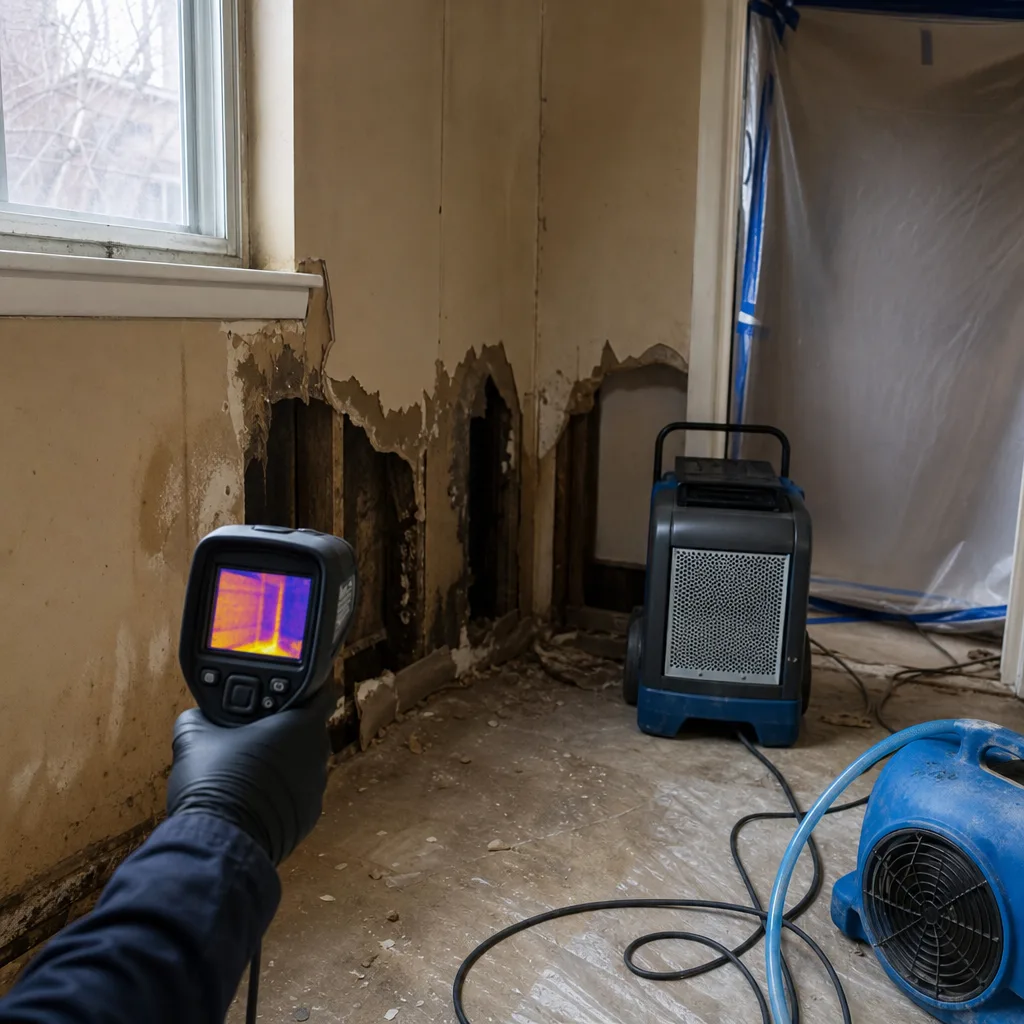 Before
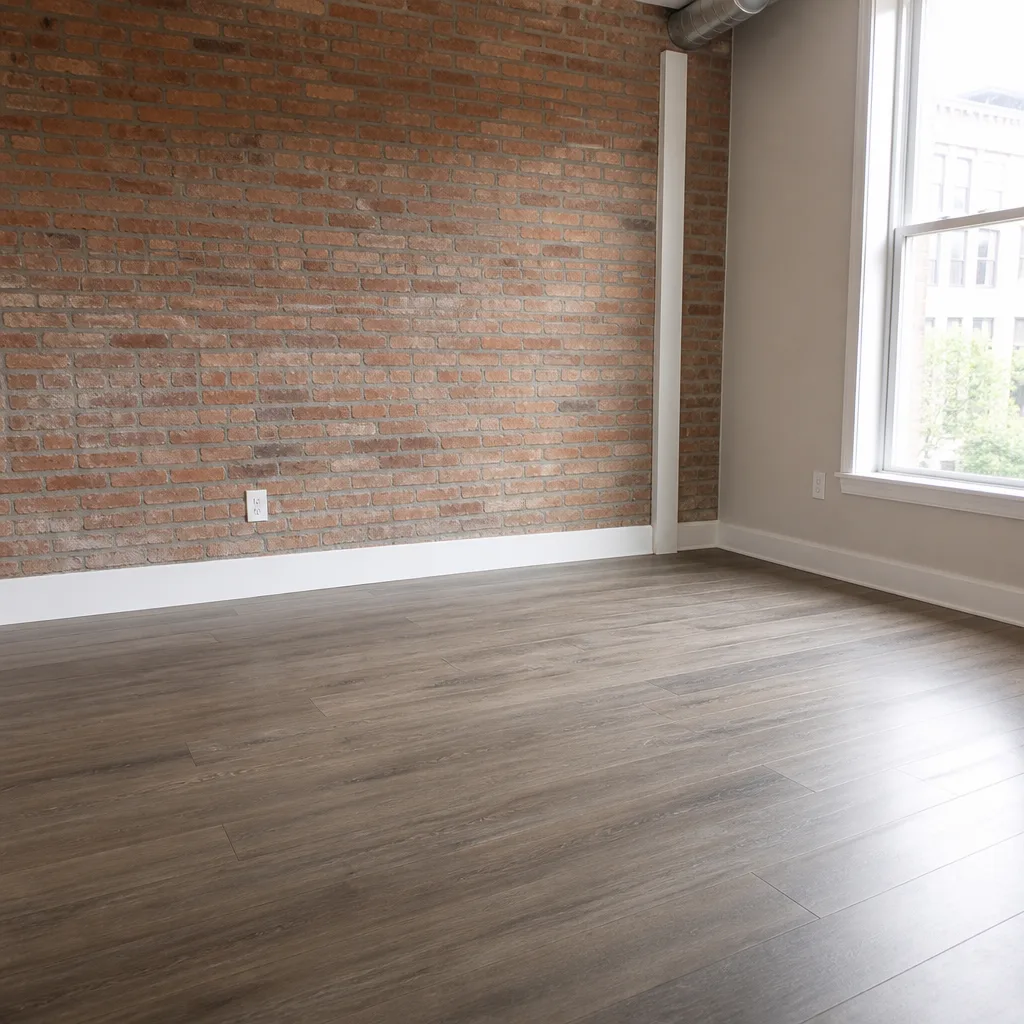 After
After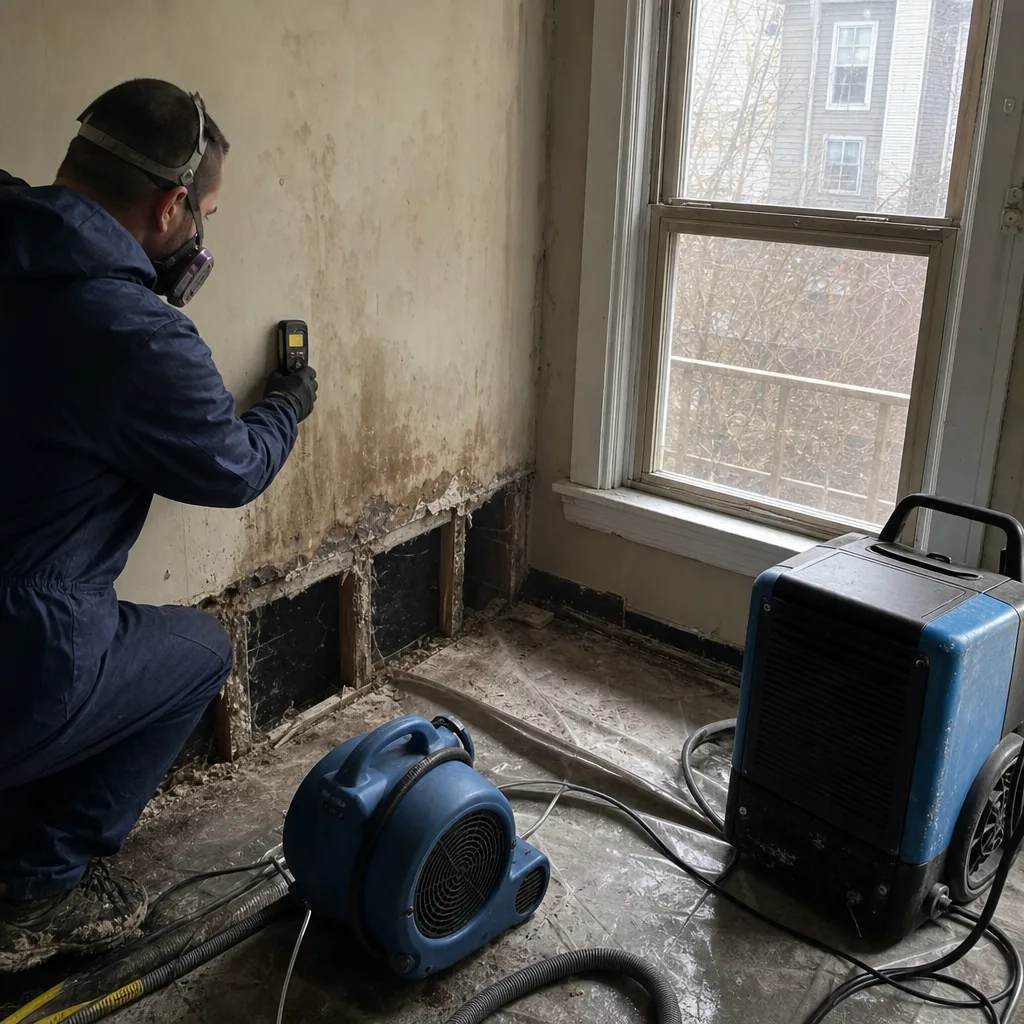 Before
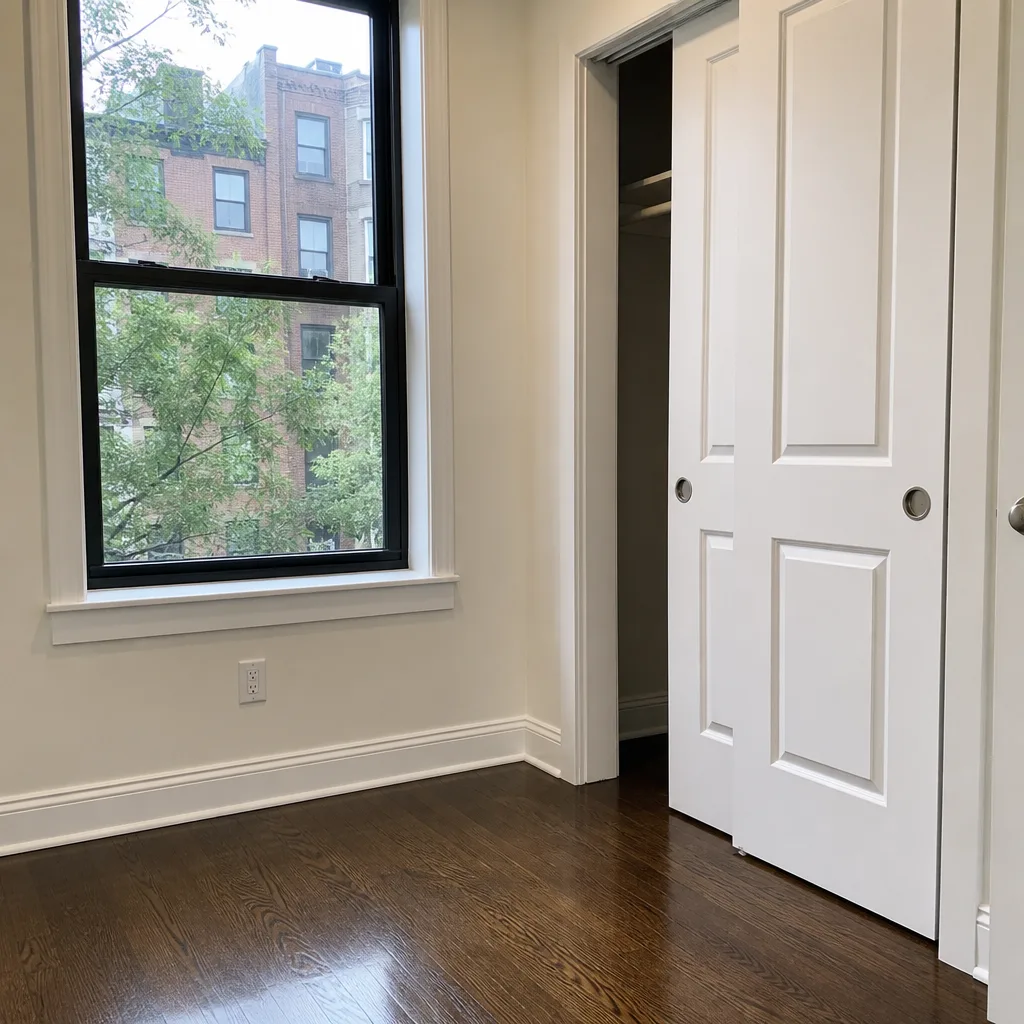 After
AfterDamage Restoration Cost Breakdown: The Hoboken Homeowner’s Reference for 2026
Water in Hoboken doesn’t behave the way it does in the suburbs. The Mile Square City sits at sea level, with a water table that sits just a few feet under the sidewalks and a sewer system that has been fighting the Hudson River since the 1800s. A water event that costs $3,000 in Montclair routinely runs $5,200 here, not because the labor is different, but because drying a brownstone on Hudson Street is not the same job as drying a split-level in the suburbs. This guide lays out what restoration actually costs in Hoboken in 2026, where those numbers come from, and how to keep a bad day from becoming a six-figure rebuild.
Quick Answer
Water damage restoration in Hoboken typically costs between $4,100 and $11,800 depending on the category of water, the square footage affected, and whether the structure is a brownstone, condo, or newer construction. Fire and smoke restoration runs $8,200 to $34,000. Mold remediation averages $2,300 to $6,700. The single biggest variable is how fast extraction and drying begin: a same-visit response usually knocks 40% to 60% off what the same job costs after a 48-hour delay.
Table of Contents
- Water Damage: What You’ll Pay Category by Category
- Why Hoboken’s Housing Stock Changes the Price
- Labor Rates and Material Costs in Hudson County
- Mold Remediation Costs in Hoboken
- Fire and Smoke Restoration: What to Expect
- Insurance Billing and Out-of-Pocket Reality
- Timeline: How Long Each Phase Takes
- Common Mistakes to Avoid
- When to Call a Professional
- Frequently Asked Questions
- The Bottom Line
Water Damage: What You’ll Pay Category by Category
The first number on any legitimate estimate is the water category. The IICRC splits water into three categories, and they have more effect on price than most homeowners realize. Category 1 is clean water from a supply line or broken pipe. Category 2 is gray water with some contamination, like dishwasher overflow or washing machine discharge. Category 3 is black water, which carries sewage, river water, or storm surge.
In Hoboken, Category 3 water is more common than people think. The city’s combined sewer system means a heavy rain can back up into basement drains and sump pits. When the Hudson tops the bulkhead, as it did during Sandy and does again in smaller ways most autumns, the water that floods a ground-level condo on Clinton Street is Category 3 by definition.
Here is what we see on typical Hoboken jobs in 2026:
- Category 1 water, 250-400 square feet (single room): $4,100-$6,300. This covers extraction, equipment placement for 3-5 days, daily moisture readings, and antimicrobial application.
- Category 1 water, full basement or ground floor (800-1,200 sq ft): $7,800-$11,500. More equipment, more days, more drywall removal.
- Category 2 water, 250-400 square feet: $5,600-$8,200. Includes sanitizing after extraction, longer dry times, and usually some baseboard and drywall removal.
- Category 3 water, any size: $9,000-$18,000 plus. Full PPE protocols, disposal of contaminated porous materials, and in many Hoboken basements, full gut to the studs and masonry.
- Storm surge or river flooding: $14,000-$40,000 plus. This is a gut-and-rebuild scenario in most cases. Drying is secondary to removing what the water contaminated.
These numbers assume a professionally equipped crew arrives within hours, not days. A delay of even 24 hours in a damp Hoboken basement can push a Category 1 job into Category 2 territory and add $2,000 to $4,000 to the final bill. That’s why a live dispatcher who sends a certified crew the same visit matters more than any line-item on the estimate. The Floodline Restoration Co. home outlines how we operate around the clock, and that operating schedule is honestly the biggest cost-control tool in this whole guide.
Why Hoboken’s Housing Stock Changes the Price
Hoboken has one of the highest densities of prewar housing in New Jersey. Roughly 70% of the residential buildings in the Mile Square City were built before 1939, and the construction methods in those buildings don’t respond to water the way a modern home does.
A brownstone, for example, typically has brick load-bearing walls, timber joists, plaster over lath, and a basement that was never designed to be dry living space. When water migrates into those materials, it doesn’t just sit on the surface. It works its way into the lime mortar, wicks up through the plaster, and settles into the joist pockets. Drying that properly requires access panels, injection drying through baseboards, and sometimes a week of daily moisture readings before the dry standard is met. That’s a different job than drying a modern condo on Jackson Street, where the gypsum board and steel studs dry in half the time.
Here is how the building type shifts the price on an otherwise identical water event:
- Prewar brownstone, ground floor: 30-50% higher than the baseline numbers above. More material removal, more equipment days, and more manual access work.
- Postwar brick condo (1950-1990): 10-20% below baseline. Concrete floors and metal studs dry faster, but shared walls mean coordination with neighbors and the building board.
- New construction (2000 and later, mostly on the waterfront): Baseline. Modern materials and open floor plans make for simpler drying.
- Basement apartment or finished cellar: 40% higher if it has drywall and insulation. The air movement in a below-grade Hoboken cellar is poor, and the humidity from the surrounding soil never stops pushing in.
Any restoration contractor who gives you a Hoboken quote without looking at the building construction is guessing. And a guess on a brownstone job can miss by five figures.
Labor Rates and Material Costs in Hudson County
Restoration labor in Hudson County runs higher than the national average. That’s not a markup; it’s a market. The prevailing rate for a certified water damage technician in the Hoboken area is $95 to $150 per hour. A certified mold remediation technician runs $110 to $175. A lead carpenter on reconstruction is $130 to $190 per hour. Commercial insurance and worker’s comp in New Jersey add another 35% to 45% on top of the base hourly.
Materials add up quickly too. Here is a working breakdown from a typical Hoboken basement water loss in 2026:
- Initial assessment and moisture mapping: $300-$550. Uses thermal imaging and penetrating moisture meters; takes 1-2 hours.
- Extraction: $450-$1,100. Professional truck-mounted extractors pull far more water than a shop vac. On a floor that has absorbed water into hardwood or laminate, extraction time doubles.
- Containment setup: $250-$700. Negative air containment for mold or sewage; less for clean water.
- Drying equipment (per unit per day): $65-$95 for air movers, $95-$140 for dehumidifiers. A 400-square-foot room typically needs 6-8 air movers and 2 dehumidifiers.
- Monitoring calls (daily): $125-$250 per visit. Yes, you can skip monitoring, but see the next section on why that costs more.
- Antimicrobial application: $400-$900. Required on any Category 2 or 3 water, recommended on all water exposure.
- Disposal of wet materials: $350-$800 plus dumpster fees. Hoboken’s disposal costs are higher than most of Hudson County because of hauling distance and weight limits on city streets.
In our experience, a homeowner who understands this breakdown is a better negotiator than one who just sees a lump sum. We hand over a line-item scope in writing before any work begins, because that’s the only honest way to quote a restoration job. Equipment brands matter here too. We run Dri-Eaz dehumidifiers and Phoenix air movers because they hold their output in the cool, damp conditions Hoboken basements have in March and November. A contractor running cheap box-store fans will run up more days and a bigger monitor bill, and the final dry standard may never be met.
Mold Remediation Costs in Hoboken
Mold costs in Hoboken start at $2,300 and run to $6,700 for a standard containment-and-removal job in a single room. Here is the flat truth: any remediation that promises full containment, HEPA air scrubbing, negative pressure, removal of affected materials, and a clearance test for under $2,000 is cutting corners or skipping steps. In a dense city where the humidity sits near 70% all summer, half-remediation is just a future invoice.
The breakdown looks like this:
- Small job (one closet, under-sink cabinet, or 40-square-foot patch): $2,300-$3,500. Full containment, PPE, HEPA vacuuming, HEPA air scrubber, antimicrobial, and a post-job spore-trap air sample.
- Medium job (one wall, a crawlspace, or a full bathroom, 40-150 sq ft): $3,500-$5,800. Adds drywall removal, framing treatment or replacement, and 2-3 air samples.
- Large job (full basement, attic, or multiple rooms, over 150 sq ft): $5,800-$12,000 plus. Often requires multiple containment chambers, duct cleaning, and temporary HVAC shutdown.
- Post-remediation clearance test: $250-$450. Third-party industrial hygienist collects samples and sends to a lab. Do not let the remediation company perform its own clearance test; that’s like a lawyer judging his own case.
Hoboken’s climate makes mold a year-round concern here, not a summer-only problem. Buildings that share party walls can transfer moisture horizontally between units. A slow leak in a third-floor condo on Washington Street often shows up as mold on the ceiling of the second-floor unit below it. When that happens, the remediation has to happen in both units, and the cost is shared according to the condo docs. We’ve cleaned up enough of those to say flatly: the day the stain shows up, call. Waiting a month turns a $2,900 job into a $6,800 job in this city’s humidity.
Fire and Smoke Restoration: What to Expect
Fire restoration in Hoboken is more complicated than in most New Jersey towns because of the building stock. A small kitchen fire in a modern high-rise on the waterfront can often be cleaned and repainted. The same fire in a brick row house on Garden Street means smoke has traveled through shared walls, up the lath and plaster, and into the neighbors’ units. The cost spreads accordingly.
Here are the ranges we see on Hoboken fire jobs in 2026:
- Small kitchen or electrical fire (confined to one room, no structural damage): $8,200-$14,500. Covers soot cleanup, ozone or hydroxyl deodorization, duct cleaning, and painting.
- Medium fire (two rooms affected, minor structural repair): $14,500-$26,000. Adds drywall replacement, partial insulation removal, and sealing before repaint.
- Large fire (significant structural damage, smoke throughout the building): $26,000-$60,000 plus. Multiple trades, structural repair, full rebuild of affected rooms, and often code upgrades required by Hoboken’s building department.
- Contents cleaning (off-site): $2,000-$8,000. Electronics, textiles, and furniture that survived the fire but not the smoke. Soft goods almost always go to a professional cleaning facility; smoke does not come out of a couch with a vacuum.
Fire restoration also comes with a timeline that water jobs don’t. Soot becomes acidic within days and pits chrome, metal, and stone. Every day a fire-scene is left without evaluation, the structural cleaning bill gets meaningfully larger. There is no version of this where waiting helps. We use XPOWER air scrubbers and B-Air filtration units for fire jobs, and the equipment stays on site until the air sample clears, not until the customer stops smelling smoke.
Insurance Billing and Out-of-Pocket Reality
Most restoration work in Hoboken is covered by property insurance, but the deductible and the policy limits shape the out-of-pocket reality. A typical homeowner’s policy in Hudson County carries a $1,000 to $5,000 deductible for water damage, and $2,500 to $10,000 for flood damage under a separate flood policy. Condo owners also need to know what the building’s master policy covers versus what falls on their HO-6 policy.
The biggest mistake we see is a homeowner accepting an insurance adjuster’s first line-item estimate without a restoration contractor in the room. Adjusters estimate based on software pricing that may not reflect Hoboken’s labor rates or the construction realities of a 1905 brownstone. When the contractor and the adjuster work directly from the same moisture map and the same written scope, the homeowner is not stuck arguing about a number they didn’t generate.
Here is what direct insurance billing looks like on a real Hoboken claim:
- Assessment and photo documentation: Every affected area gets photographed before, during, and after. The adjuster receives the photos with the moisture log.
- Written scope: The contractor lists every line item: what gets dried, what gets removed, what gets rebuilt. The adjuster approves or negotiates; the homeowner signs.
- Direct billing: The restoration company bills the carrier directly. The homeowner pays only their deductible.
- Supplement claims: If additional damage is found during the job, the contractor files a supplement with the carrier. This happens on roughly 40% of Hoboken water jobs because hidden damage in old construction is the rule, not the exception.
We have billed directly to carriers on thousands of claims since 2010, and the pattern holds: homeowners who never have to play messenger between the contractor and the claim get their homes dry and rebuilt faster, with fewer headaches, and with a final number that matches the scope they signed.
Timeline: How Long Each Phase Takes
Restoration is a process, not an event. Understanding the timeline helps separate legitimate contractors from the ones who promise a dry basement in 24 hours. Here is a realistic schedule for a standard water damage job in a Hoboken brownstone:
- Day 1 (arrival through extraction): 3-6 hours. Includes assessment, moisture mapping, extraction, and equipment setup. The extraction should be running the same visit the call is placed.
- Days 2-5 (drying and daily monitoring): Daily visits, daily moisture readings, daily log updates. Equipment gets repositioned as the water migrates and evaporates.
- Day 5-7 (dry standard and equipment removal): When the moisture meter confirms the dry standard, equipment comes out. The drying log is handed to the homeowner and carrier.
- Week 2-3 (rebuild estimate and planning): If drywall, flooring, or trim came out, the rebuild gets scoped, quoted, and scheduled. This is written work, priced like a remodel, not an emergency call.
- Week 3-6 (rebuild completion): Rebuild in Hoboken runs slower than average because of city permits, building board coordination for condos, and the constraints of working on narrow streets. A one-room drywall and paint rebuild is typically 5-8 working days of on-site labor.
Fire and smoke jobs add 1-2 weeks to the front end for structural evaluation and demolition. Sewage and black water jobs add time for full material removal and antimicrobial treatment before drying even starts. And every job ends with the 90-Day Done Right Promise in writing: if it wasn’t done right, we make it right, with no arguing and no paperwork battles. That promise has teeth because Curt Bowman built the company around it from day one.
Common Mistakes to Avoid
- Waiting to call because “it doesn’t look that bad.” In Hoboken’s humidity, the visible water is never the whole problem. The water you can’t see in a wall cavity or under a floor is doing the most expensive damage.
- Using a shop vac and box fans and calling it dry. Homeowner-grade equipment moves air; it doesn’t dry materials. The surface feels dry while the wall cavity sits at 40% moisture, and mold starts in 48 hours.
- Accepting a lump-sum quote with no line items. Any contractor who won’t write out the scope before starting is planning to bill you on his terms. A written scope is a legal shield.
- Letting the remediation company run its own clearance test. Pay the $250-$450 for a third-party industrial hygienist. The cost is trivial compared to re-remediating a whole basement.
- Forgetting to check the flood policy separately. Standard homeowners insurance does not cover storm surge or river flooding. Hoboken homeowners in flood zones need a separate NFIP or private flood policy, and the deductible hits hard.
- DIY-ing sewage cleanup. Black water carries pathogens that can hospitalize a healthy adult. The $9,000 you spend on professional sewage cleanup is not negotiable if you want the house safe to live in afterward.
- Hiring a contractor who doesn’t know Hoboken. A crew that doesn’t know the parking restrictions on Bloomfield, the building board rules in a waterfront tower, or the supply house on Newark Avenue loses days and charges you for them.
When to Call a Professional
Call a professional the day water stays where it shouldn’t. Call before you move the furniture, before you tear out the drywall, and especially before you try to dry it with household fans. The first hours of a water event determine whether you’re looking at a $4,000 drying job or a $30,000 rebuild, and in Hoboken’s rowhome-dense blocks, the water is never just yours: it goes through your floor and into the ceiling of the neighbor below you. Floodline Restoration Co. offers free estimates in Hoboken, with a live person on the phone at 2 a.m. and a certified crew on the road that same visit. Call (640) 500-3278 before the water gets a head start.
Frequently Asked Questions
Water damage restoration in Hoboken costs $4,100 to $11,800 for most residential jobs, with Category 3 sewage or storm water running $9,000 to $18,000 and up. A single room with clean water from a supply line typically lands at $4,100 to $6,300; a full basement gut after sewage backup can exceed $18,000.
Yes, if the damage is sudden and internal, like a burst pipe or an overflowed washing machine. Your policy covers the restoration less your deductible, which in Hudson County usually runs $1,000 to $5,000. Storm surge and river flooding are NOT covered by standard homeowners insurance; those require a separate flood policy.
Floodline Restoration Co. answers the phone with a live dispatcher around the clock, and a certified crew reaches a Hoboken job the same visit the call comes in. That speed is the single biggest factor in the final price because a 24-hour delay on a damp brownstone basement usually adds $2,000 to $4,000 to the bill.
If the water is Category 2 or 3, you need full remediation: containment, extraction, material removal, drying, and antimicrobial treatment. A surface cleaning on contaminated water leaves pathogens and mold spores in the wall cavities and under the flooring. In Hoboken’s humidity, that means mold within weeks.
Three to five days is typical for a standard water event in prewar construction. The materials in a brownstone absorb water deeply, so rushing the dry standard causes bigger problems later. Daily moisture readings confirm when the materials hit the dry standard, and the log goes to you and your carrier.
Your restoration contractor deals with the adjuster. Floodline Restoration Co. provides photo documentation, a written scope, and direct billing to the carrier. You sign the scope, you pay your deductible, and the company handles the claim paperwork from start to finish. Call (640) 500-3278 for an exact quote; estimates are free.
The Bottom Line
Damage restoration in Hoboken costs more than the national average because the city’s building stock, water table, humidity, and insurance landscape all push the numbers up. A water event runs $4,100 to $11,800 baseline; mold $2,300 to $6,700; fire $8,200 to $34,000. The biggest controllable factor in every one of those ranges is speed. A same-visit response from a certified crew with professional equipment cuts the final bill by 40% to 60% in most cases. Get a written scope before work starts, insist on direct insurance billing, and call a company that stands behind the result in writing. Done right and backed in writing beats done cheap and gone.
Written by Curt Bowman, Owner at Floodline Restoration Co., serving Hoboken since 2010.