
Last updated August 25, 2026
Free visual inspection and a written scope of work before any mitigation begins - photos, moisture readings, and drying logs go in your claim file
The scope we write is the scope we bill. Anything new gets shown to you, in writing, before we touch it.
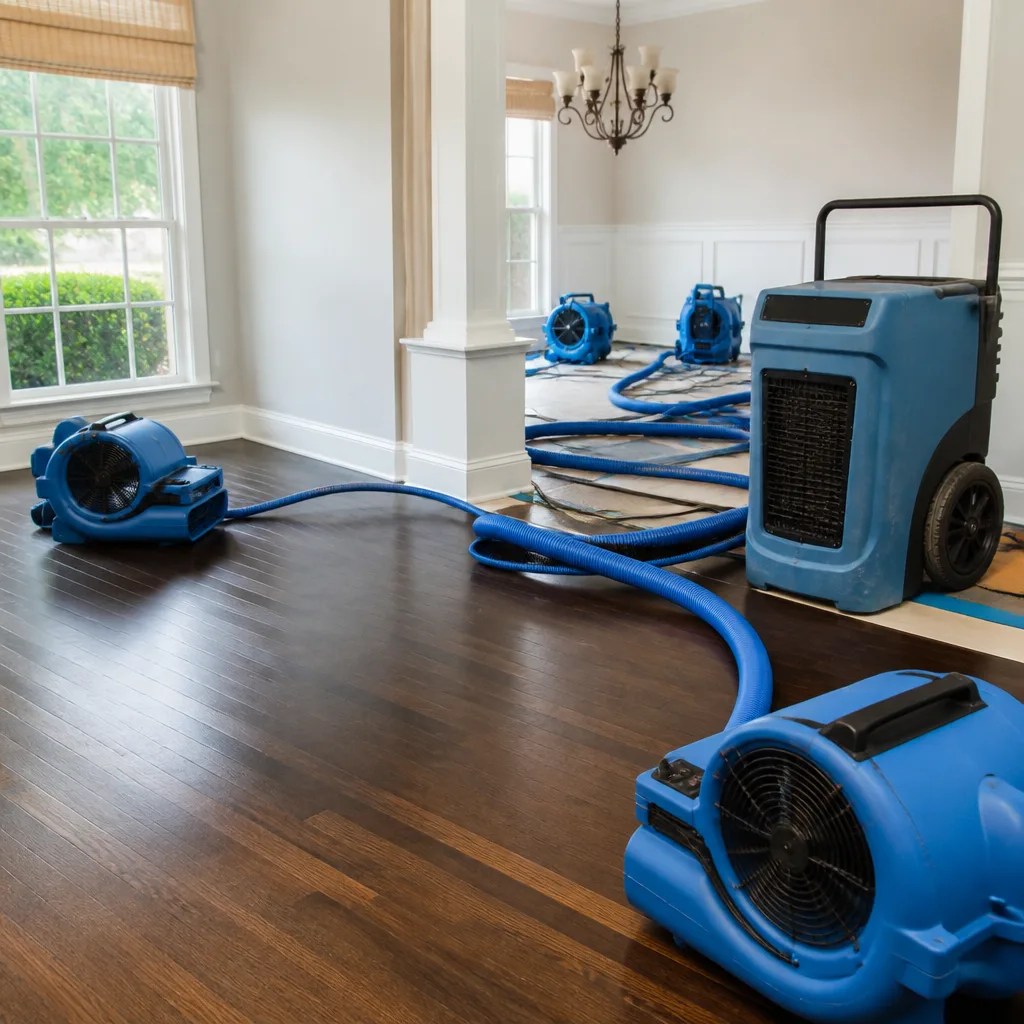

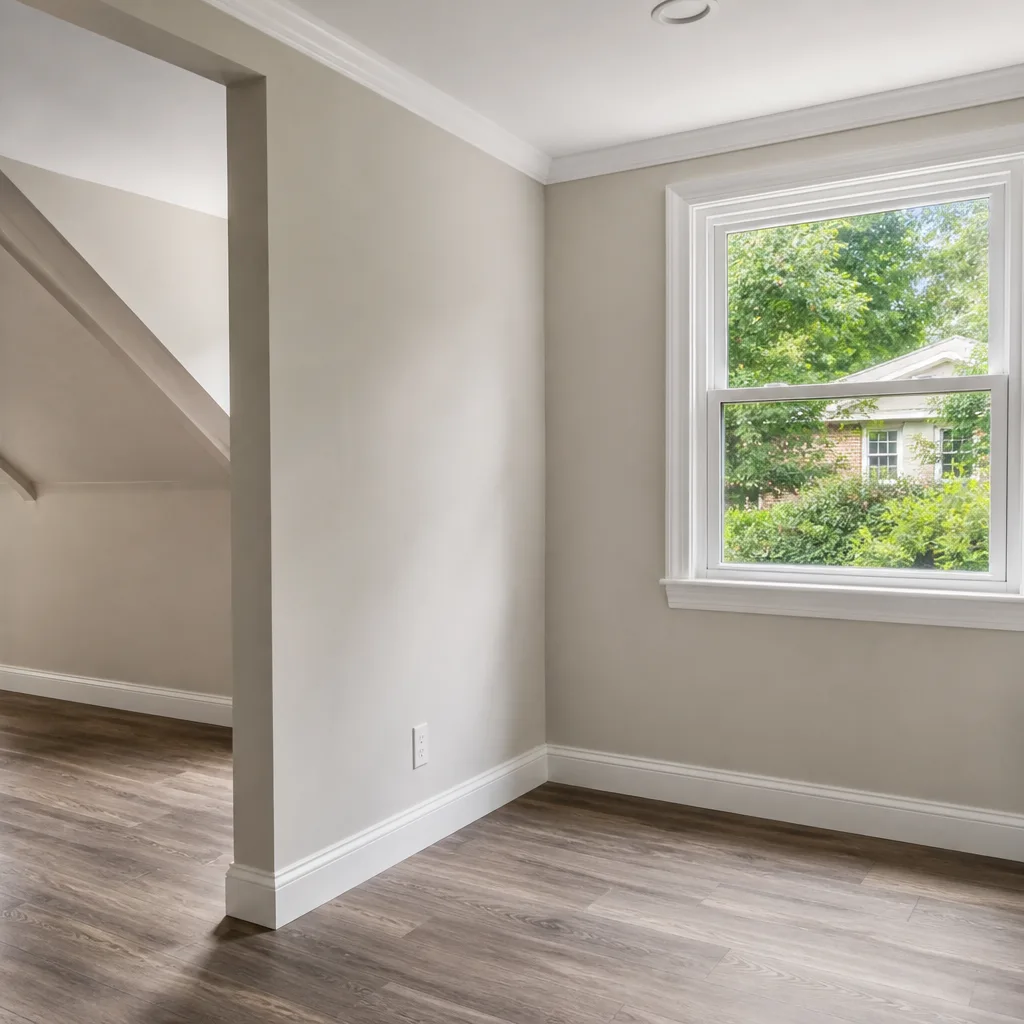


 Before
 After
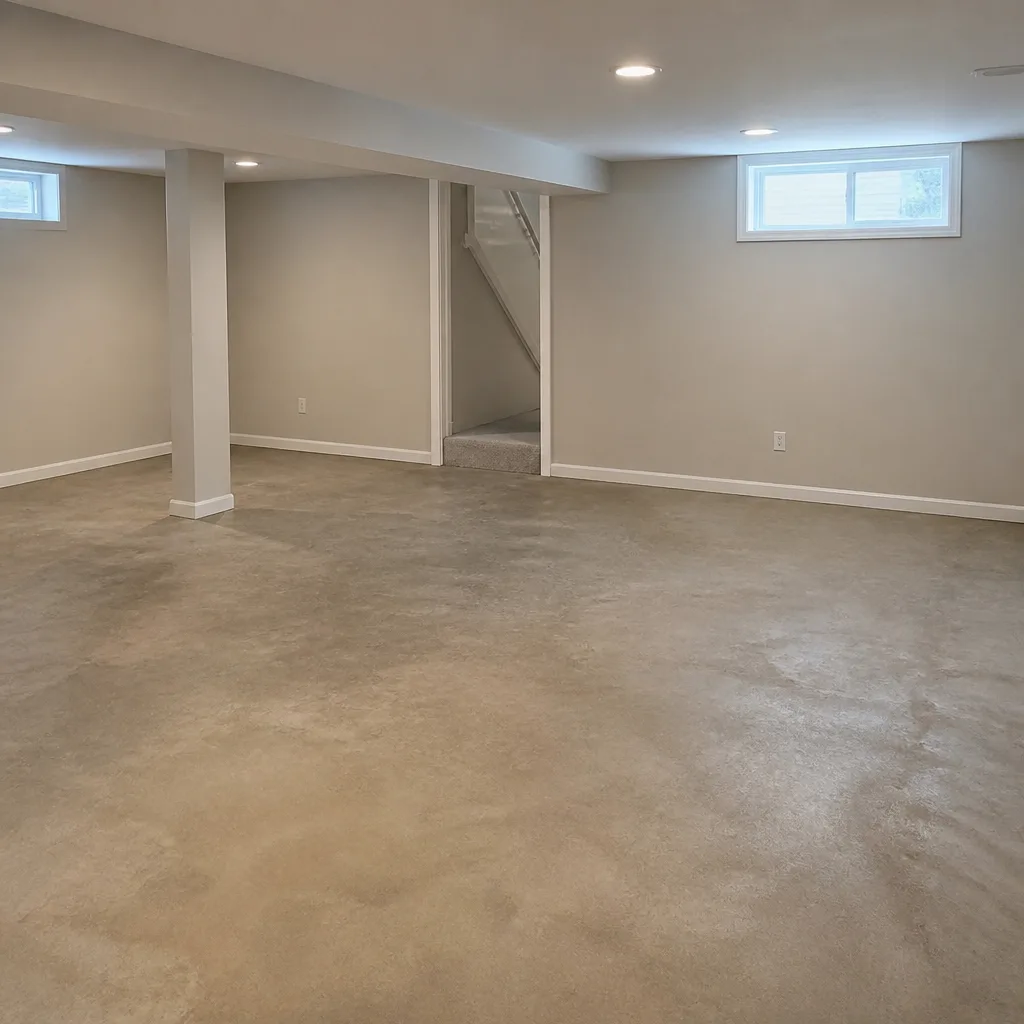
After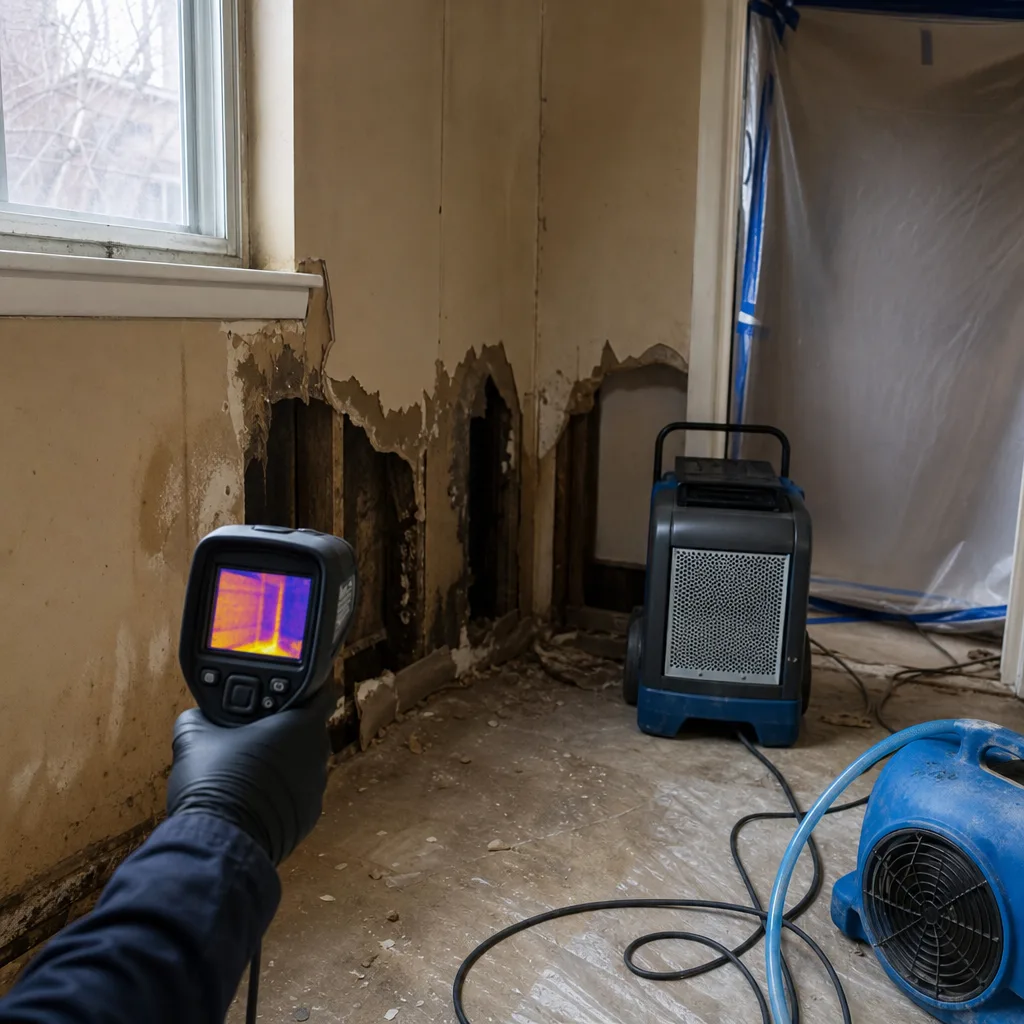 Before
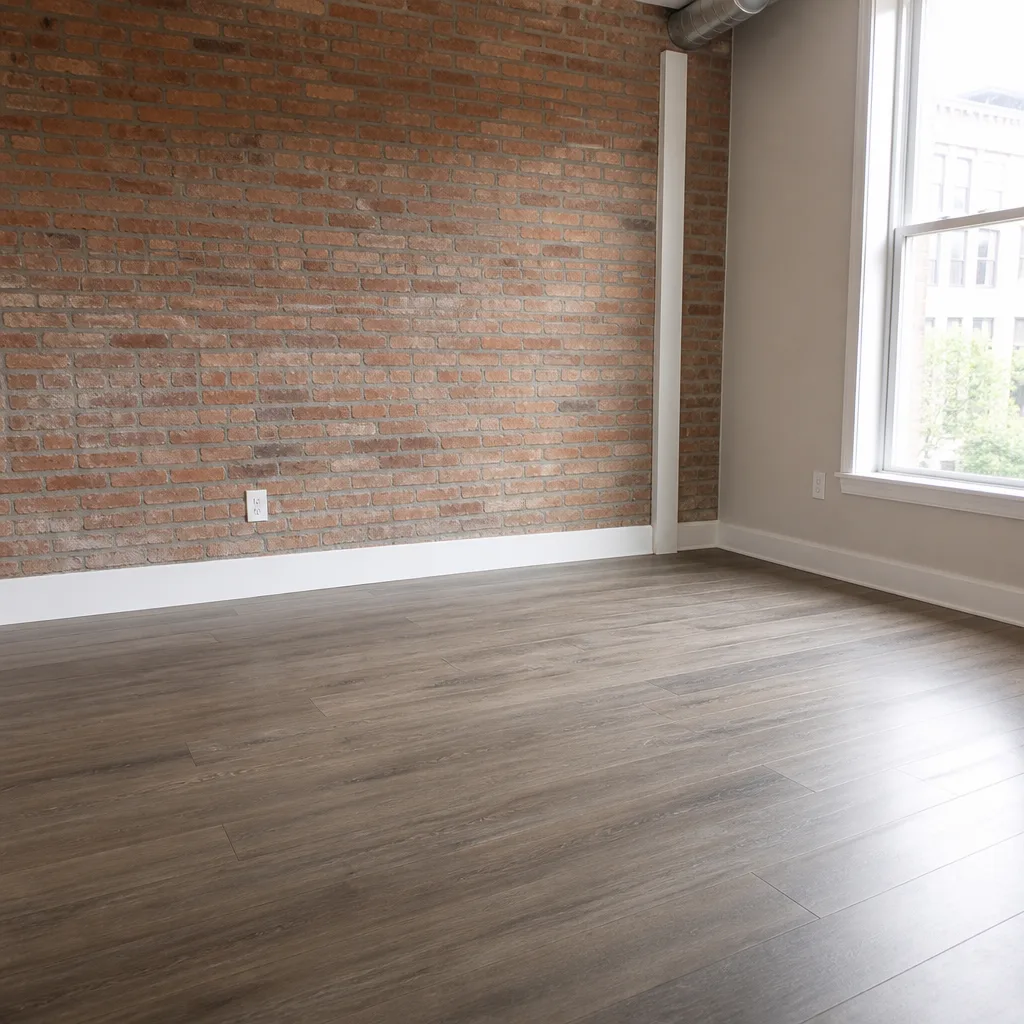 After
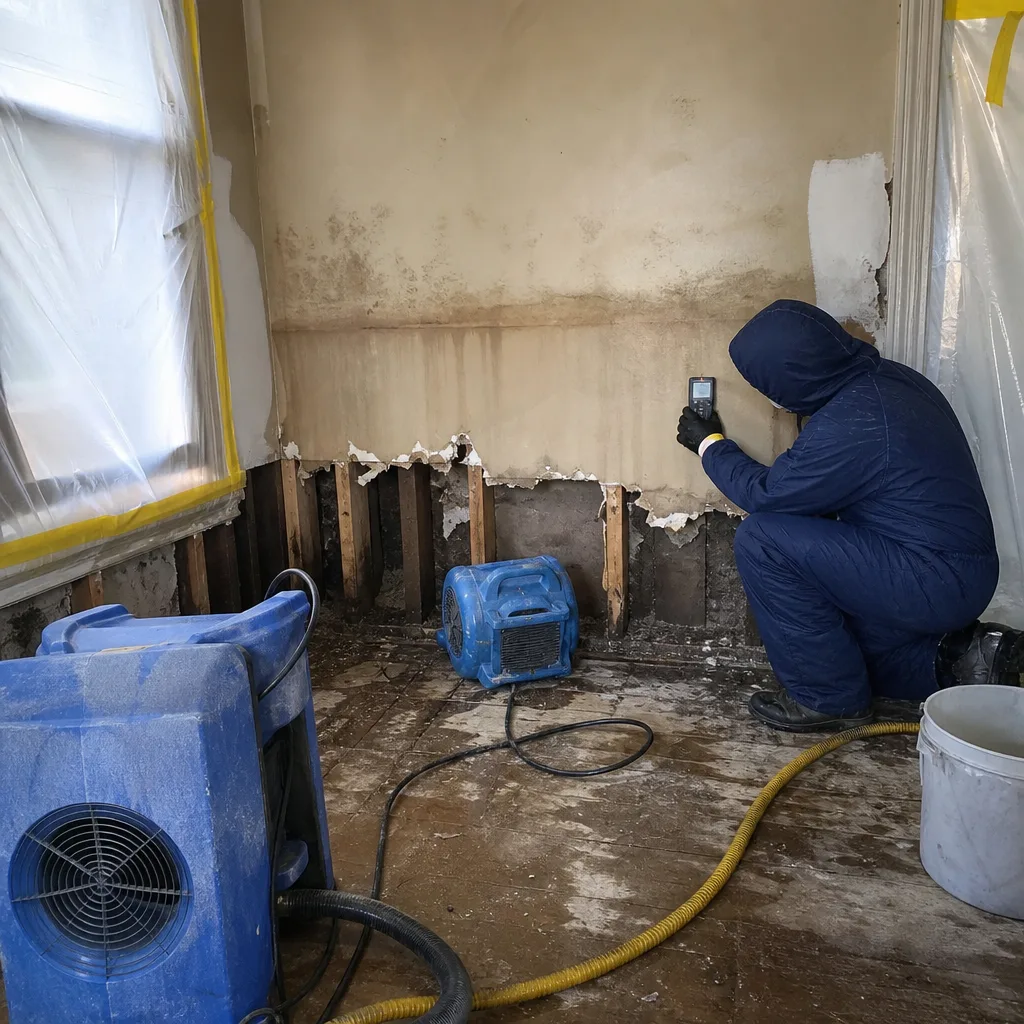
After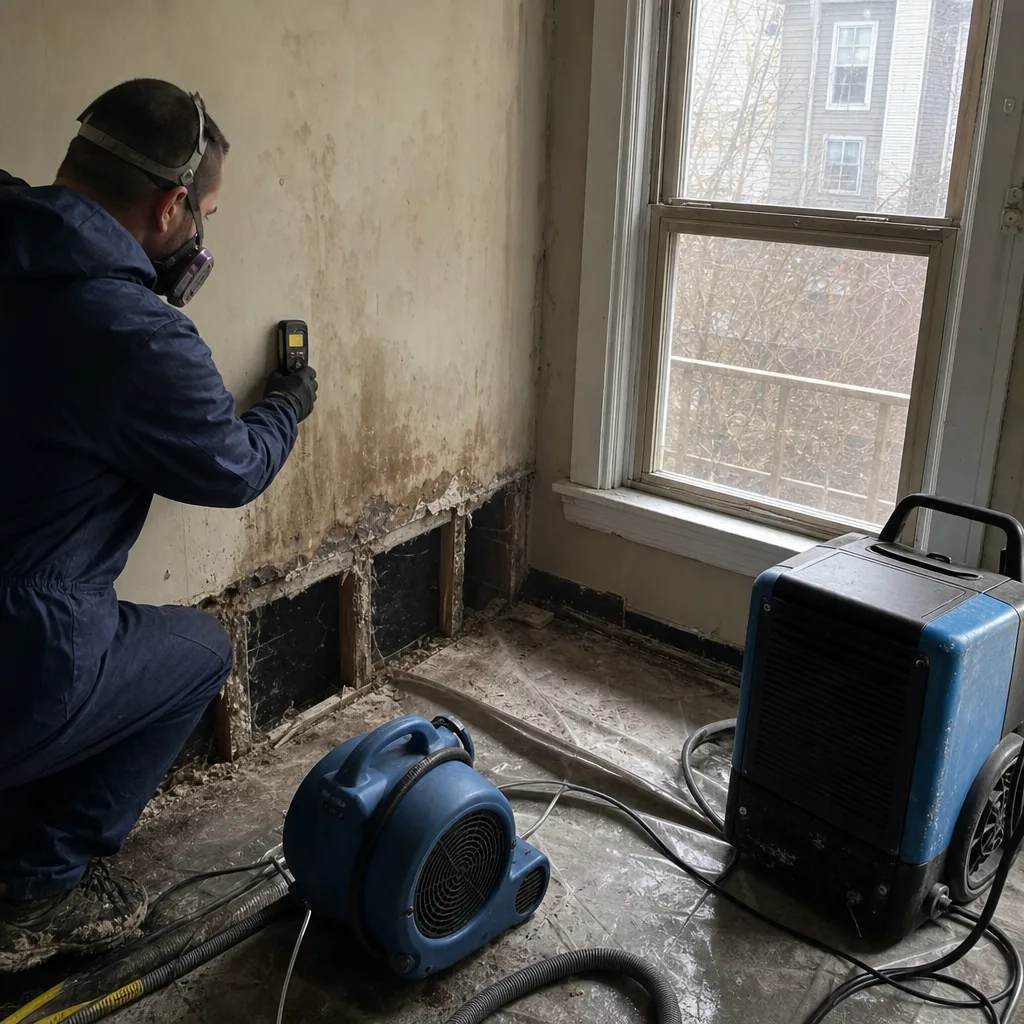 Before
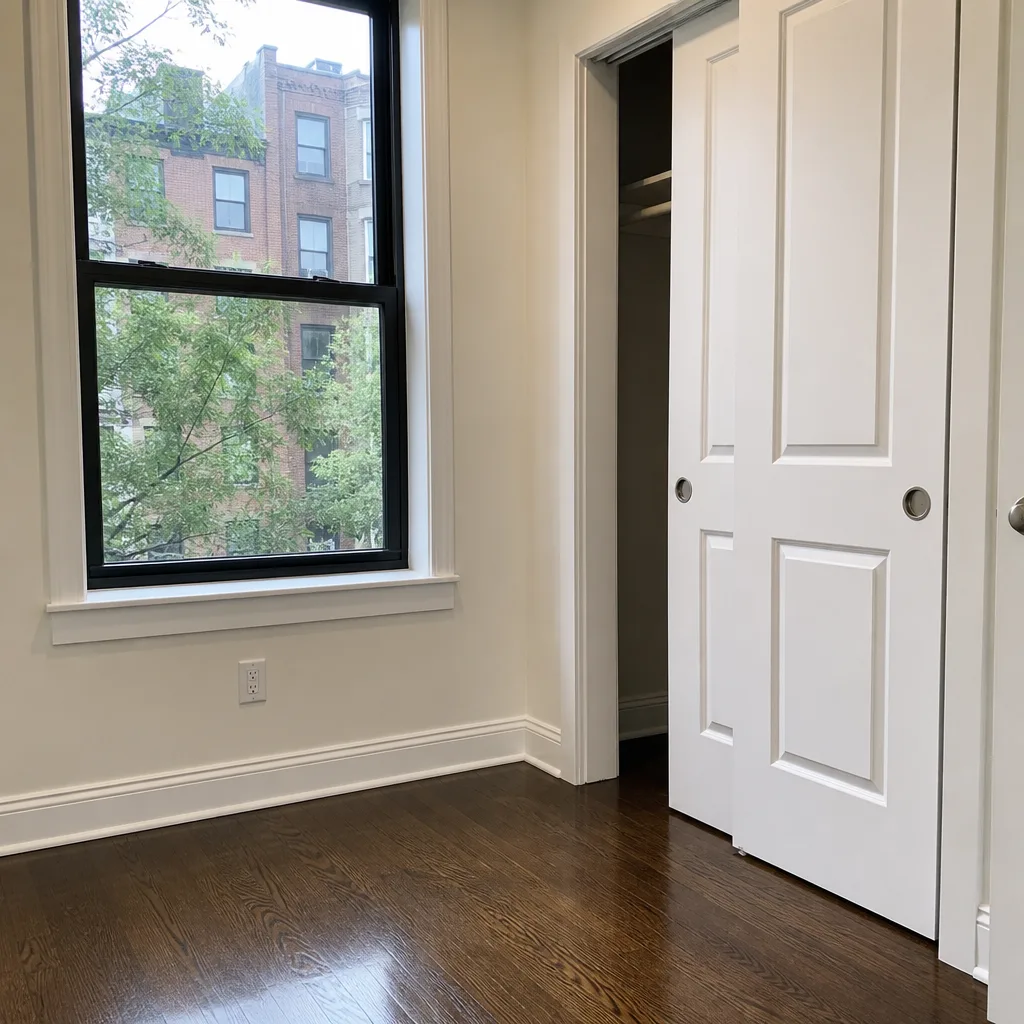 After
AfterDamage Restoration Warning Signs: A Hoboken Homeowner’s Reference Guide
Hoboken’s average home was built in 1938. That single fact shapes nearly every restoration call we take. Older brick and brownstone construction, shared party walls, slate roofs, aging cast-iron waste lines, and basements that sit below the high-water mark of the Hudson all mean one thing: damage rarely announces itself loudly. It accumulates quietly, behind walls and under floors, until the repair bill has doubled. This guide walks through the warning signs that matter in Hoboken specifically, what they mean, what happens if they’re ignored, and when a homeowner should act rather than wait.
Quick Answer
Damage restoration warning signs fall into five categories: water intrusion (staining, warping, efflorescence, persistent damp), mold (musty odor, visible growth, recurrent condensation), fire-related issues (linger ing smoke odor, soot residue, discolored wiring), structural stress (cracking, bowing, sagging, soft spots), and utility failures (sewage odor, slow drains, gas smells). In Hoboken, where most homes share walls and sit on high water tables, the most common early warning signs are basement efflorescence, window-frame softening, and brown ceiling rings under upstairs bathrooms. If you see any of these, the damage is already active, not hypothetical. Call (640) 500-3278 for an assessment; if a live person answers at 2 a.m., you’ve reached the right company.
Table of Contents
- Water Intrusion Warning Signs in Hoboken
- Mold Warning Signs: What Hoboken’s Climate Hides
- Fire and Smoke Warning Signs Long After the Flame Is Out
- Structural Warning Signs: When Hoboken’s Age Shows
- Sewage, Drain, and Utility Warning Signs
- Where Hidden Damage Lives in a Hoboken Rowhouse or Brownstone
- Common Mistakes to Avoid
- When to Call a Professional
- Frequently Asked Questions
- The Bottom Line
Water Intrusion Warning Signs in Hoboken
Water is the most patient force in homeownership. In Hoboken, where the water table sits high and storms push the Hudson against the city’s drainage system, water intrusion is less a question of “if” and more a question of “when.” The first signs are usually visible on the lowest level, but the source often sits two floors up. A brown ring on a first-floor ceiling with no obvious source overhead may trace back to a pinhole leak in a second-floor bathroom supply line. A damp patch on a basement wall may be groundwater, or it may be a cracked waste pipe from the kitchen above. We’ve seen both in every Hoboken neighborhood, from the brownstones near Church Square Park to the converted warehouses along the western edge.
Here are the specific water intrusion signs Hoboken homeowners should look for:
- Efflorescence on basement walls: A white, chalky powder on brick or concrete. This is salt left behind when groundwater moves through masonry and evaporates. It tells you water is entering the wall, even if the wall feels dry to the touch. In Hoboken basements, which sit at or below the water table, this is the single most common early warning sign we find during mold inspections and water damage calls.
- Brown or copper-toned ceiling rings: These indicate an active or past leak from above. A ring with a darker center and lighter edge is active. A uniform ring may be old, but the drywall behind it still holds moisture. Do not paint over a ceiling ring in Hoboken without first determining whether the leak is fixed. Paint seals moisture in; it does not stop the leak.
- Warped or softened window sills and door frames: Hoboken’s brick facades and older wood windows fail slowly. Water works into the mortar joints or the sill, wets the wood, and over years the wood rots. If a window won’t close easily or a sill feels soft when you press it, the surrounding wall likely holds moisture. This is common on the northeastern exposures that bear the brunt of coastal storms.
- Cupping or buckling wood floors near exterior walls: Hardwood that cups along the long edge, or lifts from the subfloor, has absorbed water. In Hoboken townhomes, we often find this near parapet walls, under radiators, or along the base of shared party walls where roof runoff penetrates.
- Persistent condensation on interior walls: Not just bathroom walls. If interior walls in a hallway or bedroom sweat during cold months, there is either a ventilation problem or hidden moisture in the wall cavity. In older Hoboken buildings with brick party walls and limited insulation, condensation is a reliable early signal of trapped moisture.
The line the water left is where we start. If you find any of these signs, mark the boundary of the dampness with painter’s tape and check it again in 24 hours. If the damp area has grown, the source is active and the repair cannot wait.
Mold Warning Signs: What Hoboken’s Climate Hides
Hoboken’s climate is a mold incubator. Summer humidity routinely sits above 70%. Winters bring coastal damp that holds against brick walls. Homes below street level stay cool and damp year-round. The result is that mold grows faster here than in drier inland towns, and it often grows where no one looks: behind baseboards, inside ceiling cavities under bathrooms, behind kitchen cabinets along exterior walls, and in the dark space between a party wall and a neighbor’s wall. By the time visible mold appears, the colony has usually been active for weeks.
The warning signs are not always visual. In our experience, most Hoboken mold discoveries begin with one of these:
- Musty or earthy odor in a specific room: This is the most reliable early warning sign of mold. The odor is caused by microbial volatile organic compounds, and it does not dissipate with open windows. If one room smells different from the rest of the house, particularly after rain or during humid weeks, investigate before the smell spreads. A musty basement in Hoboken is not normal; it is a signal.
- Visible staining that is not water-colored: Mold appears as black, green, gray, or brown speckling, often in a circular pattern. On basement walls, it may look like dirt. On ceiling tile, it may look like a shadow. If a stain on a wall grows over the course of a week, it is likely biological, not mineral.
- Allergic symptoms that improve when you leave the house: Congestion, coughing, itchy eyes, or skin irritation that clears up at work and returns at home points to an indoor air quality problem. In Hoboken’s dense housing, where air exchange is limited, mold spores concentrate faster than in freestanding homes with open yards.
- Peeling paint or wallpaper on an interior wall: If paint bubbles or wallpaper loosens on a wall not exposed to steam, the substrate is wet. Wet drywall or plaster is a mold waiting to grow. In Hoboken brownstones, where original plaster walls meet modern renovations, this is one of the most overlooked warning signs.
- Chronic dampness in closed spaces: Closets, under-sink cabinets, storage rooms, and the space under interior stairs. These areas have limited air movement. If a closet smells stale even when empty, or if boxes stored on the floor feel cool and damp, moisture is present.
Mold remediation in Hoboken requires more than bleach and a repaint. If the moisture source is not resolved, the mold returns. A written scope of work before any remediation starts is the only responsible way to handle a mold problem. We hold to that standard on every job, and we put it in writing before we open a wall.
Fire and Smoke Warning Signs Long After the Flame Is Out
Not every fire warning sign comes from a fire you can see. Hoboken’s housing stock includes converted industrial buildings, old wiring, and shared walls that allow smoke to travel between units. A small kitchen fire or an electrical short in a neighboring unit can leave smoke residue, soot, and odor inside your home without ever setting off your own smoke alarm. Those signs should not be ignored; smoke damage continues to work on materials long after the source is extinguished.
Here are the fire and smoke warning signs we tell Hoboken homeowners to watch for:
- Lingering smoke odor with no visible source: Smoke odor that persists for more than a week points to embedded soot in porous materials: drywall, carpet, upholstery, insulation. Surface cleaning will not remove it. The materials need professional treatment or replacement. In multifamily Hoboken buildings, this odor often arrives through shared wall cavities or ceiling plenums.
- Yellowing on walls and ceilings near light fixtures or baseboards: Soot deposits migrate with air currents and accumulate on the coldest surfaces. Yellow or gray film around ceiling fixtures, above baseboard heaters, or on window frames can be a sign of a past fire elsewhere in the building, or of recurring particulate from a furnace or boiler.
- Discolored or warm electrical outlets and switches: A brown or blackened outlet plate, a switch that feels warm to the touch, or a faint burning smell when a circuit is in use is an electrical fire risk. This is a genuinely dangerous condition. Do not attempt to inspect wiring yourself. Turn the circuit off at the panel and call a licensed professional, then call for restoration if smoke residue is already visible.
- Soot granules on horizontal surfaces: Fine black particles on window sills, bookshelves, or countertops, particularly near exterior walls or shared walls, indicate particulate penetration. In Hoboken, where homes are attached, soot can enter through gaps in the framing between buildings.
- Furnace or boiler odors at start of heating season: A brief dusty smell when the heat first comes on is normal. A persistent oily, acrid, or burning smell is not. Have the system inspected before running it further.
Floodline Restoration Co. home handles fire and smoke restoration from the first assessment through final rebuild, with the same crew throughout. That continuity matters when the damage runs from a burned kitchen into a smoke-damaged living room and a water-damaged floor from the firefighter’s hose.
Structural Warning Signs: When Hoboken’s Age Shows
Hoboken’s housing stock is among the oldest in New Jersey. Original joists in an 1880s brownstone have held weight for 140 years. That is not a problem in itself; old wood is often stronger than new growth lumber. The problem is what happens when water, movement, or previous renovations compromise that timber. Structural warning signs in Hoboken generally come from one of three sources: long-term water damage to framing, foundation settlement or hydraulic pressure, and past renovations that cut or notched load-bearing members. None of these repair themselves.
Here are the signs that demand a structural assessment:
- Sagging or bowing floors: A floor that dips noticeably toward the center of a room, or a floor that feels springy underfoot in one area, indicates weakened or compromised joists. In Hoboken row houses, this is often the result of years of slow water damage from an upstairs bathroom or a leaking radiator.
- Doors and windows that stick or no longer latch: Seasonal movement is normal in old houses. Progressive movement is not. If a door that latched fine in June will not close in September, and the problem worsens month by month, the frame has shifted. That shift has a cause, and the cause is usually water or foundation movement.
- Stair-step cracks in brick or plaster: Cracks that follow the mortar joints in a diagonal or stair-step pattern indicate differential movement in the masonry. In Hoboken, this appears on party walls, foundation walls, and around window openings on brick facades. A hairline crack that stays the same width for a decade is less concerning than one that widens a quarter-inch in a year.
- Soft spots in floors near exterior walls or radiators: Press on the floor where it meets an exterior wall. If the wood gives, the rim joist or subfloor is rotted. This is a common finding in Hoboken buildings where roof leaders discharge against the foundation, or where original radiators have leaked slowly over decades.
- Bowing or bulging basement walls: The weight of saturated soil pushes against foundation walls. In Hoboken, with high water tables and dense building, that pressure is constant. A basement wall that bows inward, or shows horizontal cracking, needs professional evaluation. This is not a cosmetic issue.
We approach structural damage the same way we approach water damage: find the source, stop the source, rebuild what was compromised, and document every step so the homeowner and the insurance carrier see the same report. A moisture log is part of every structural drying job, with daily readings until the dry standard is met.
Sewage, Drain, and Utility Warning Signs
Hoboken’s sewer system is old, undersized for the modern population, and under water table pressure during heavy rain. Combined storm and sanitary sewers mean that a heavy downpour can push sewage back through floor drains and basement fixtures. Homeowners sometimes assume a backed-up drain is a plumber’s problem and stop there. It is often a restoration problem too. Sewage water is Category 3 water under IICRC standards, which means it carries pathogens and requires professional extraction, disinfection, and drying, not just mopping.
Here are the utility warning signs that should not be ignored:
- Sewage odor in a basement or lower level: A sulphur or rotten smell that intensifies after rain or when a washing machine drains. This indicates a drain backup, a broken waste line, or a failed trap. In Hoboken, where waste lines in older homes are often original cast iron, internal corrosion collapses pipes slowly. The odor arrives before the backup.
- Multiple slow drains at once: One slow sink is a clog. Every sink and shower in the house draining slowly at the same time is a main line problem. This is common in Hoboken basements and garden-level units, where drainage slopes are shallow and the city connection sits close to the water table.
- Bubbling or gurgling from a floor drain or toilet when another fixture drains: This means air is being pulled through the drain because the main line is restricted. In Hoboken, this frequently happens during heavy rain, when city mains are overloaded and water backs toward the house.
- Gas odor anywhere in the home: Natural gas has an additive that smells like rotten eggs. If you smell gas, leave the house immediately and call the utility company from outside. Do not flip switches, use a phone inside, or open windows. After the utility resolves the leak, restoration may be needed for any resulting damage. Gas-related damage is a serious matter and should never be treated as a DIY project.
- Dampness around a water heater or boiler with rust at the base: A tank that is weeping will fail completely. In Hoboken basements, we see this regularly in older mechanical rooms where the floor drain is not nearby, and the water spreads across the floor to the nearest wall. The warning sign is not the puddle; it is the rust ring forming at the bottom of the tank before the puddle appears.
Sewage cleanup and biohazard work require containment, disinfection, and proper disposal. We handle the full job from extraction through rebuild, so the same crew that removes the waste is the crew that replaces the flooring and baseboards. That is the only way to ensure the contamination does not linger behind a patch.
Where Hidden Damage Lives in a Hoboken Rowhouse or Brownstone
If you live in a Hoboken row house or brownstone, the damage you can see is rarely the full extent of the problem. The construction of these buildings creates cavities and pathways that hide water and mold for years. Here are the places we find hidden damage most often, based on more than a decade of restoration work in this city:
- Behind kitchen cabinets on exterior walls: The back of a cabinet against a cold brick wall is a condensation point. Pinhole leaks in supply lines behind the cabinet are also common. The first visible sign is usually a musty smell when the cabinet is opened or swollen cabinet bases.
- Under bathtubs and shower pans: The space under a tub is inaccessible without opening the ceiling below or the tub surround. Slow leaks from drains, cracked grout, and failed seals collect there. In Hoboken, where many bathrooms have been renovated multiple times over the building’s life, we often find multiple generations of water damage in this one location.
- Inside the party wall cavity: The wall you share with a neighbor is a continuous open cavity in many older Hoboken buildings. Water from your neighbor’s roof, window, or plumbing can travel through that cavity and enter your home at a completely different location. If a smell or stain in your home cannot be explained from within your own systems, look next door.
- Behind radiators and steam pipes: Steam systems operate at high temperatures and produce constant expansion and contraction. Leaks at union joints and valves drip onto floors and into wall cavities. The radiator cover hides the evidence. We find rotted flooring under radiators in nearly every older Hoboken home we restore for water damage.
- In the joist bays under a bathroom or kitchen: The space between floor joists is a channel. Water released at one point travels along the joist and pools at a low point, which may be several feet from the original leak. When we open a ceiling in Hoboken, the water stain on the surface is usually not where the source is located.
This is why we use moisture mapping equipment on every water damage call, not just a visual inspection. Dri-Eaz and Phoenix meters let our technicians read moisture content in wall cavities, under flooring, and behind finishes without opening every surface blind. That means the first cut is made in the right place, not the first place that looks wet.
Common Mistakes to Avoid
- Painting over a ceiling stain before finding the leak. Paint hides the stain but seals moisture inside the drywall, where it feeds mold growth. In Hoboken’s humid climate, a painted-over ceiling stain will usually reappear within months, this time with mold behind it.
- Running a dehumidifier and calling it done. A dehumidifier reduces surface humidity but does not dry water trapped inside wall cavities, under flooring, or behind baseboards. Professional drying requires air movement, targeted extraction, and moisture readings that confirm the wall cavity is actually dry. We take daily readings and hand the log to the homeowner and the carrier on every job.
- Bleaching visible mold without fixing the moisture source. Bleach does not penetrate porous materials. It kills surface mold but leaves the roots behind. More importantly, if the moisture source remains, the mold colony returns within weeks. Mold remediation in Hoboken requires source correction, containment, removal, and drying, in that order.
- Ignoring a musty smell because you cannot see mold. A persistent odor is a biological signal, not a housekeeping problem. By the time mold becomes visible on a wall in Hoboken, the colony behind that wall is well established. Odor is the early warning; use it.
- Assuming a backed-up drain is just a plumbing problem. A backup that brings sewage into the home creates a contamination event, not just a clog. Category 3 water requires professional extraction, disinfection, and disposal of affected porous materials. Mopping and airing out the basement is not sufficient.
- Waiting for insurance approval before starting mitigation. Most policies require the homeowner to mitigate damage promptly to prevent further loss. Waiting for an adjuster to visit before extracting water or drying the structure can worsen the damage and may reduce coverage. We bill the carrier directly and provide photo documentation so the claim moves forward while the work begins.
When to Call a Professional
Call a professional when the warning sign involves hidden moisture, sewage, mold growth larger than a few square feet, electrical damage, gas odor, or any structural concern. These are not weekend projects. They require professional equipment, containment, and documentation. In Hoboken, where homes are dense and old, the cost of delay is measured in weeks of added drying time and thousands of dollars in avoidable rebuild work. Floodline Restoration Co. offers free estimates in Hoboken, call (640) 500-3278. A live dispatcher answers at any hour, and a certified crew reaches the job the same visit. The estimate is written and clear before any work begins, with direct insurance billing available.
Frequently Asked Questions
A live dispatcher answers Floodline Restoration Co.’s phone 24 hours a day, 7 days a week, and crews are dispatched the same visit for water, sewage, and storm damage. In Hoboken, where parking and narrow streets can slow response, our crews know the building layouts and block access patterns. For water damage, extraction usually begins the same visit, not the next morning. Call (640) 500-3278 day or night; you will speak to a person, not a recording.
Most homeowner policies cover sudden and accidental water damage, such as a burst supply line or a storm-driven leak, but exclude long-term seepage or neglect. The difference is usually determined by the wording of your policy and the documentation of the damage. We bill the carrier directly on covered claims and provide photo documentation, moisture logs, and a written scope so the adjuster sees exactly what our technicians see. You should still call your carrier to open the claim; we handle the paperwork that follows.
An active leak produces a stain with a darker center that grows over the course of days or weeks. An old, dried stain is uniform in color and does not change. The reliable test is to mark the stain’s edge with a pencil, check it after 24 hours, and again after a rainstorm. If the mark is no longer at the edge, the leak is active. In Hoboken brownstones with plaster ceilings, active leaks may also soften the plaster, which will feel damp or crumbly when pressed.
No. Sewage carries pathogens including E. coli, salmonella, and hepatitis. Proper cleanup requires protective equipment, containment to prevent cross-contamination, professional-grade disinfectants, and disposal of contaminated porous materials like carpet, padding, and drywall. This is Category 3 water under IICRC standards. The health risk from improper sewage cleanup in an enclosed Hoboken basement is not worth the money saved. A professional crew handles this work with the right equipment and documentation every time.
A musty basement without visible water usually means moisture is entering through the foundation walls or the floor slab and evaporating into the basement air. Hoboken’s high water table pushes groundwater against basement walls, and older foundations were not built with modern waterproofing. The moisture may never form a puddle, but it keeps the basement humidity high enough for mold to grow on stored items, wood framing, and wall finishes. A moisture reading of the walls and slab will confirm the source.
Cost depends on the size of the affected area, the category of water, and how long the water has been present. In Hoboken, where basements and garden-level units are common, a typical basement water extraction with drying usually starts in the low thousands and increases with the extent of tear-out and rebuild. Sewage or Category 3 water adds containment and disinfection costs. Call (640) 500-3278 for an exact quote; estimates are free, and we provide a written scope before work begins so there are no surprises on the bill.
The Bottom Line
Hoboken homes warn you before they fail. The warning signs are consistent: efflorescence on basement walls, musty odors in closed rooms, ceiling rings that grow after rain, sticking doors that never stuck before, and drains that gurgle when the weather turns. The discipline is to act on the first sign, not the first flood. Restoration done early costs less, takes less time, and preserves more of the original home. Done right, and backed in writing, it also ends with a moisture log in your hand and a 90-Day Done Right Promise behind the work. That is the Keystone Standard, and it is the only way we work.
Written by Curt Bowman, Owner at Floodline Restoration Co., serving Hoboken since 2010.