
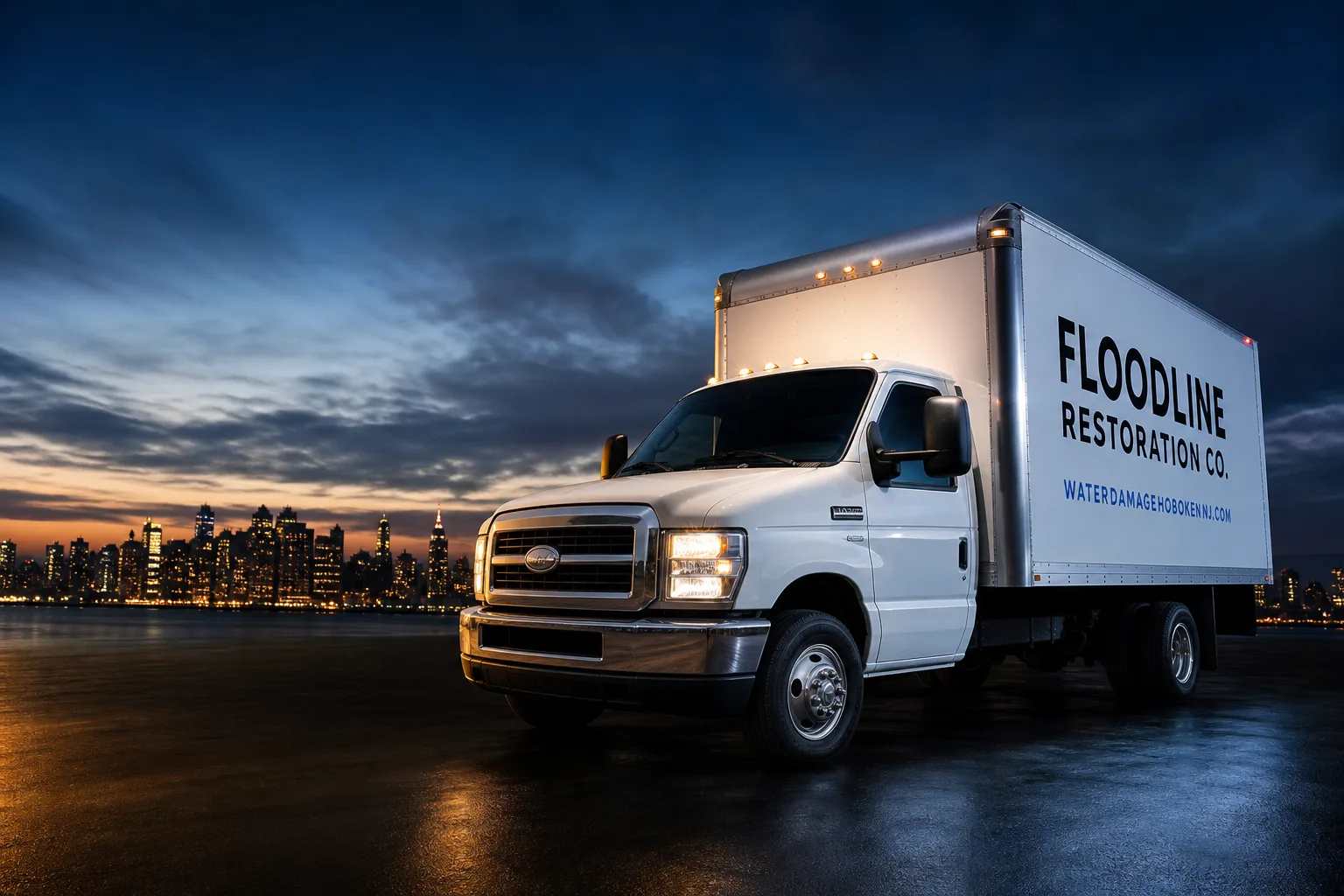
Free visual inspection and a written scope of work before any mitigation begins - photos, moisture readings, and drying logs go in your claim file
The scope we write is the scope we bill. Anything new gets shown to you, in writing, before we touch it.
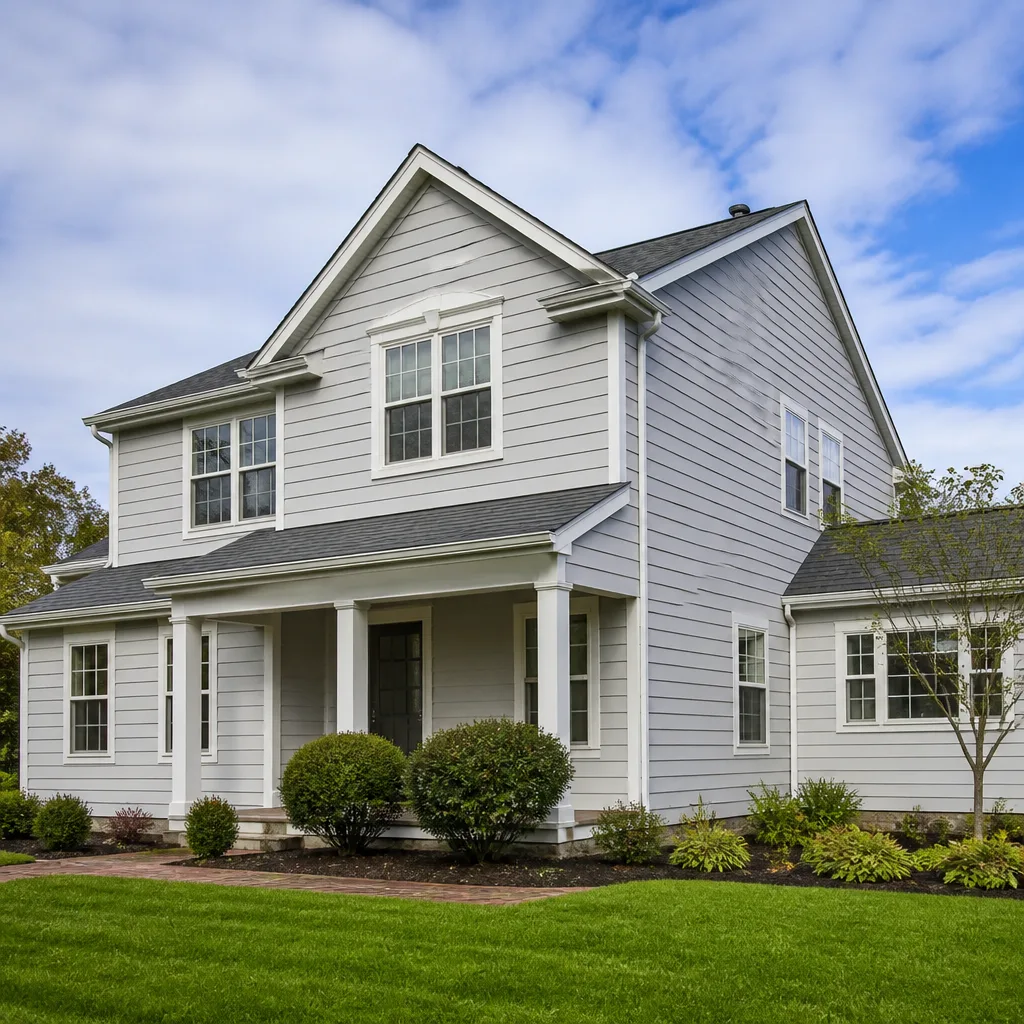
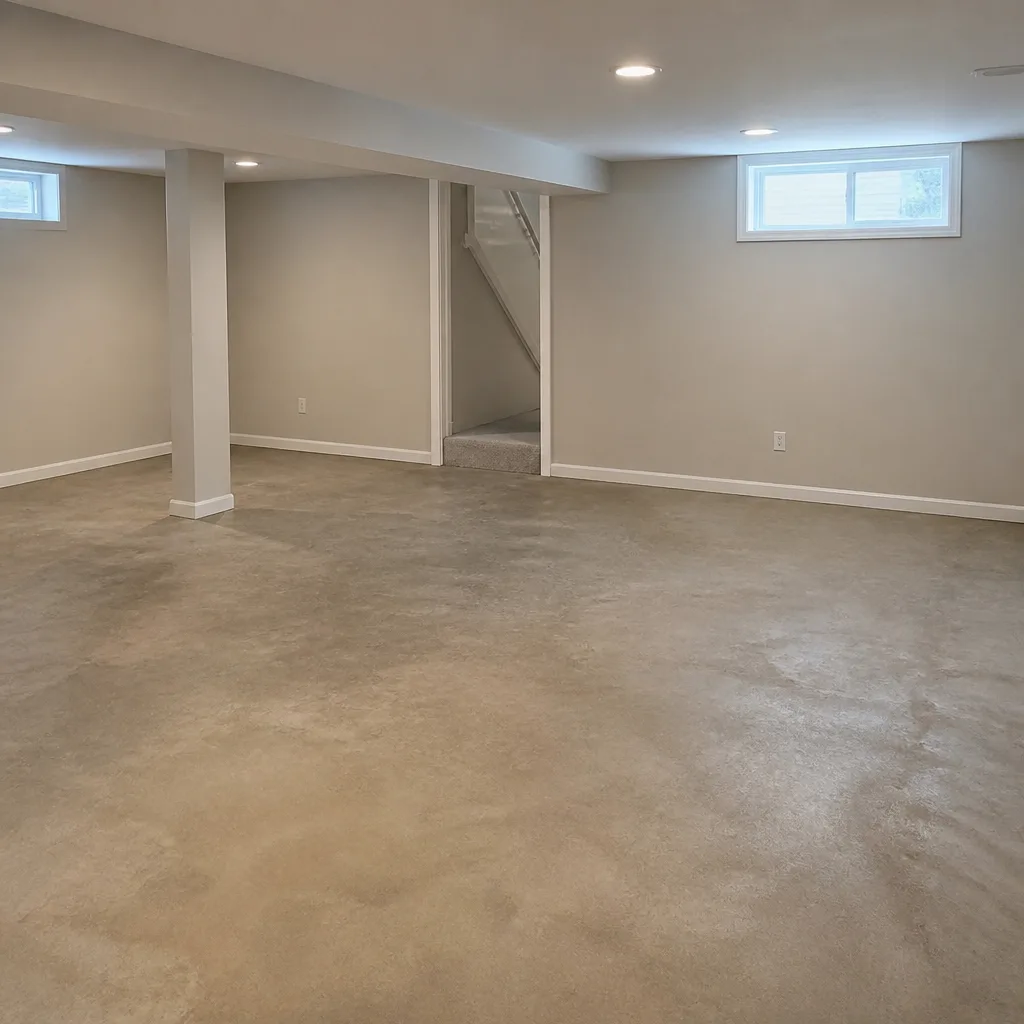
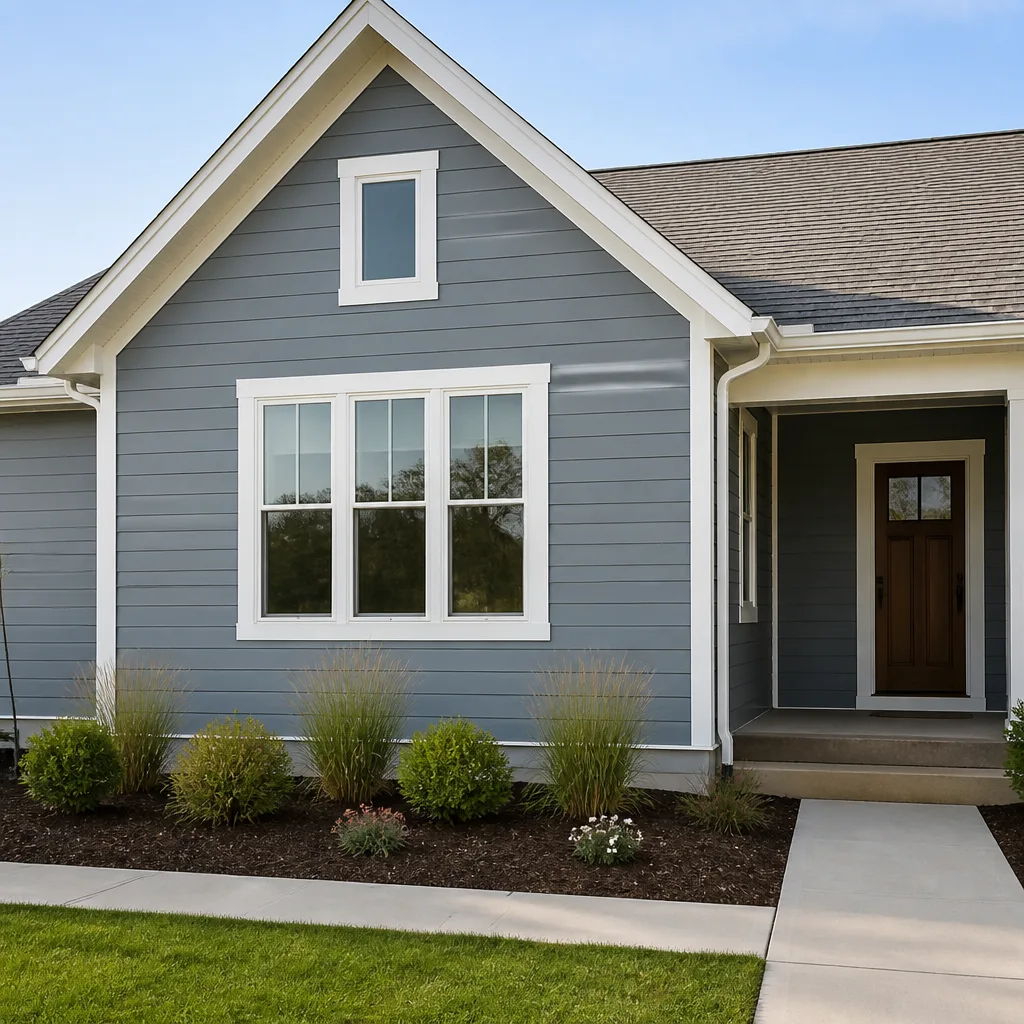
 Before
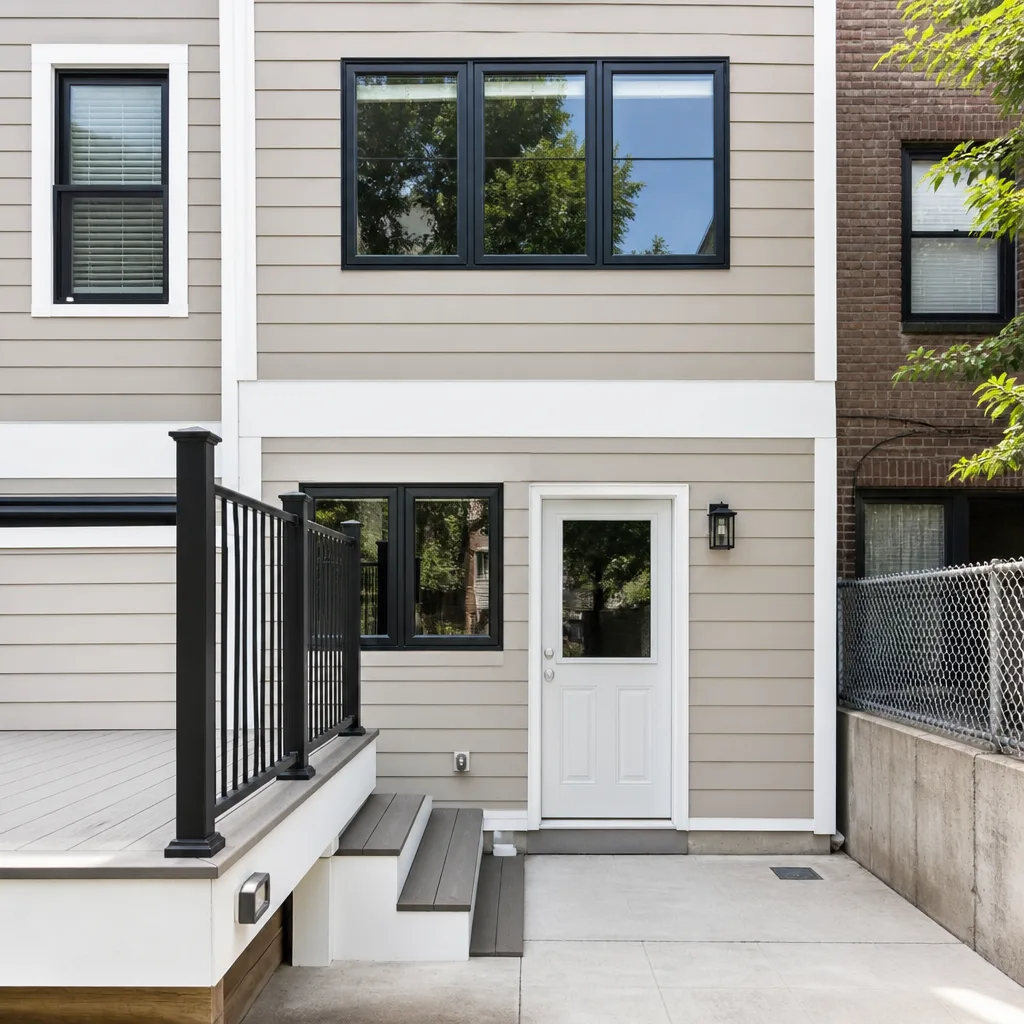 After
After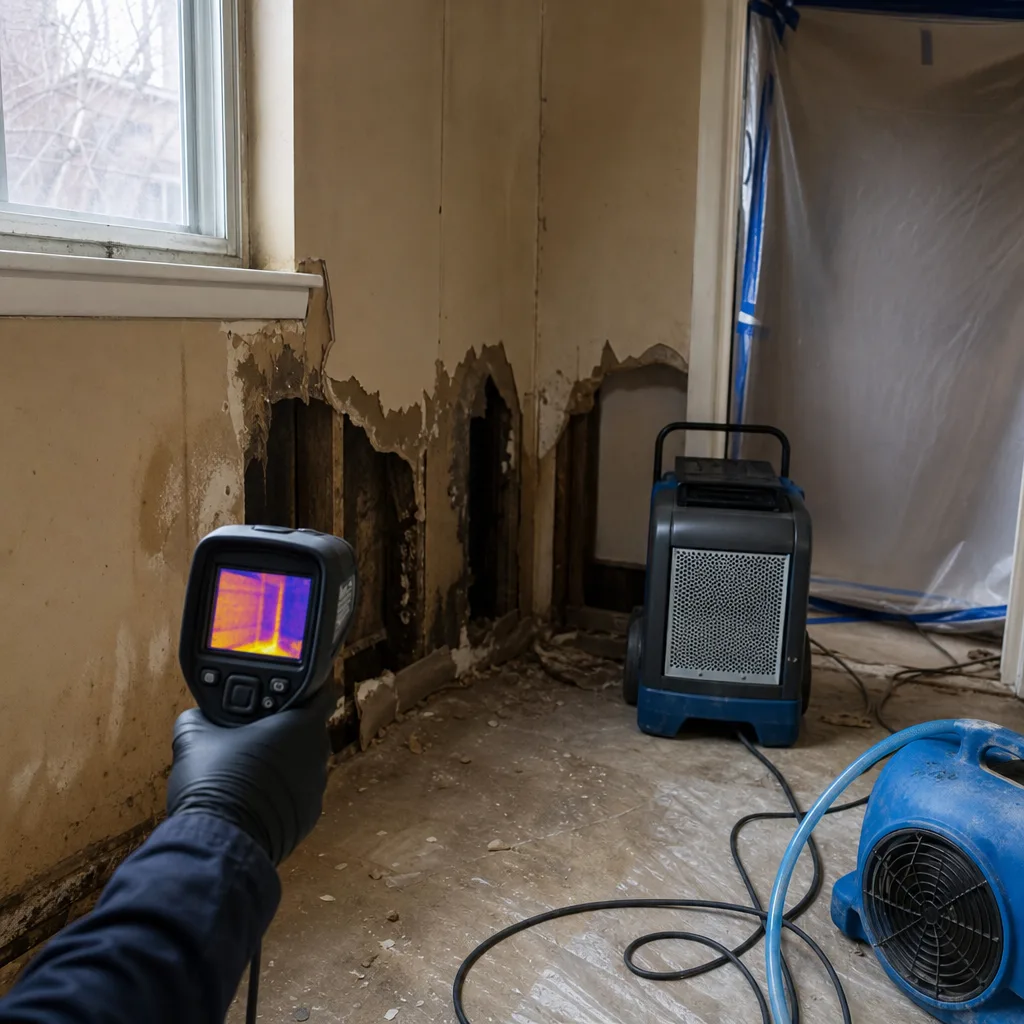 Before
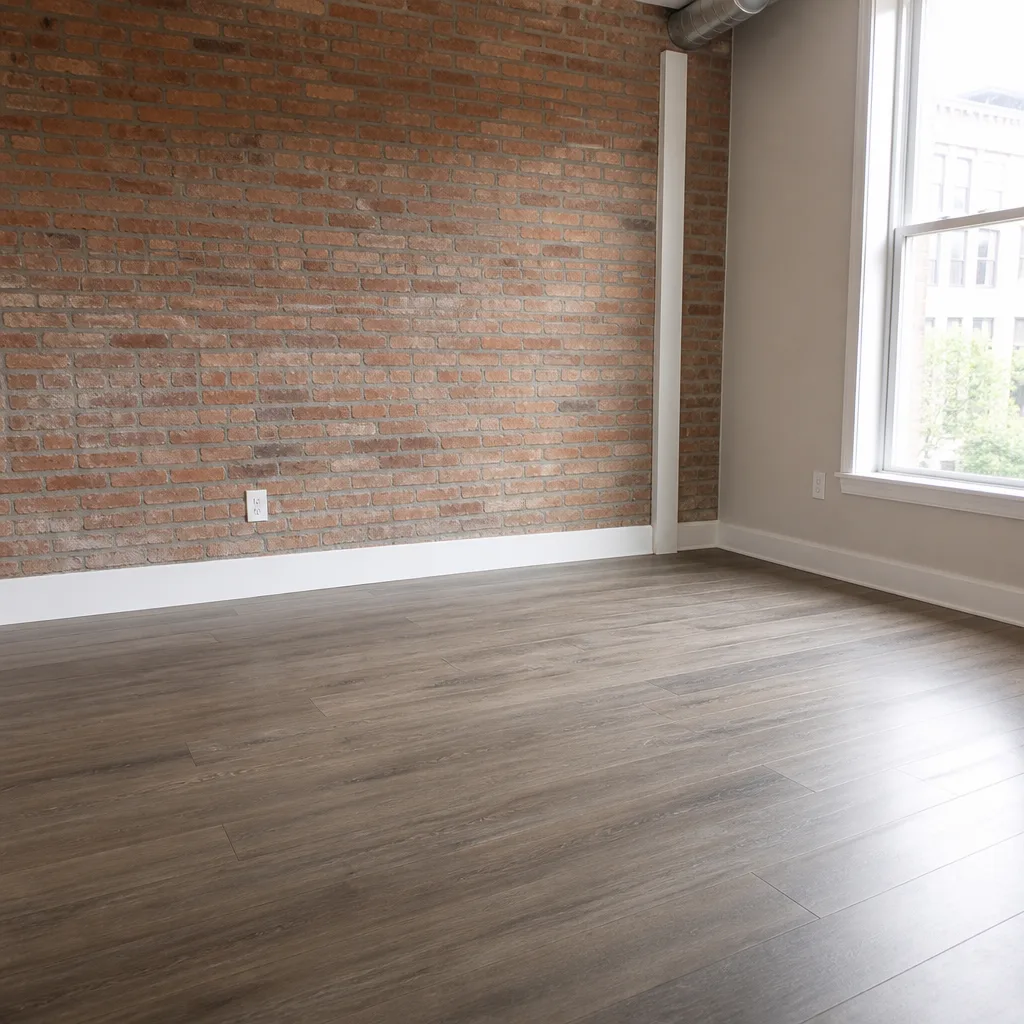 After
After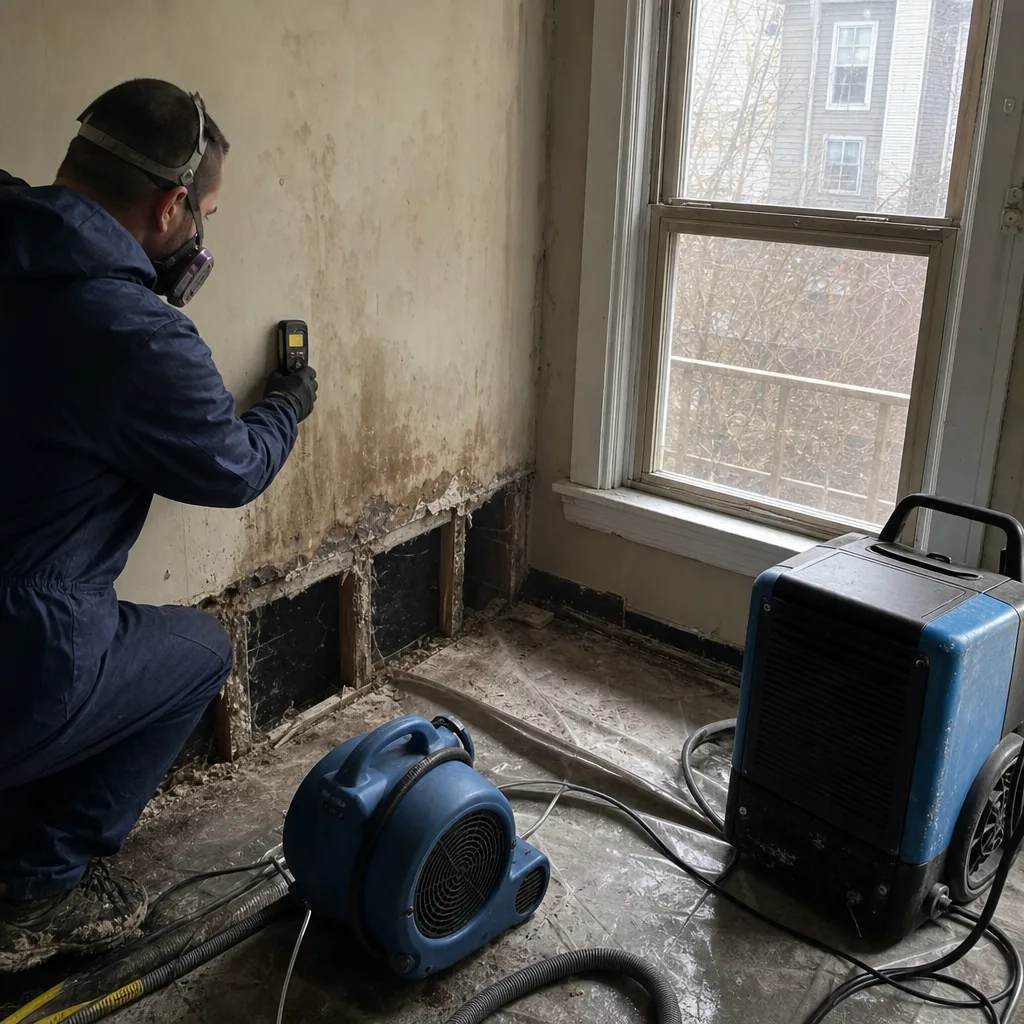 Before
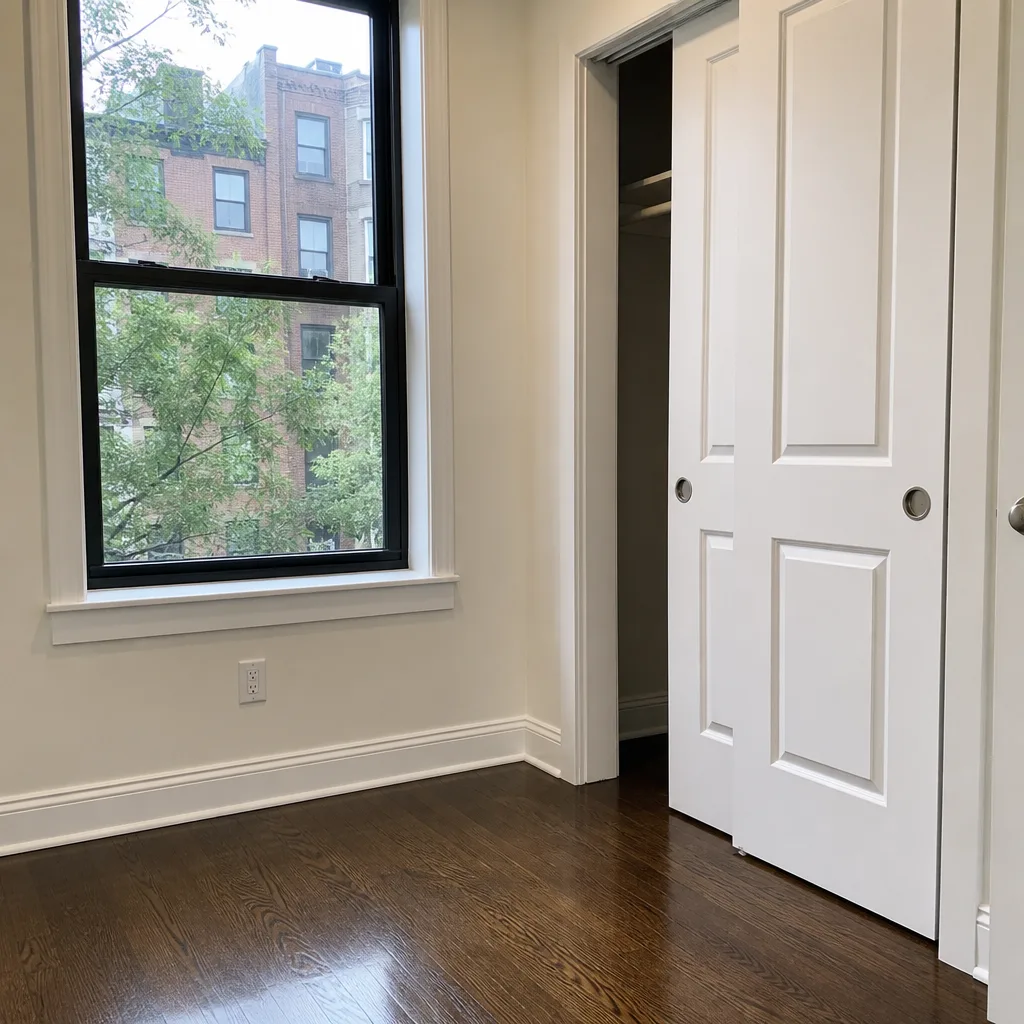 After
After24/7 Emergency Mold Remediation in West New York
Mold remediation in West New York typically runs $1,800 to $6,500 depending on square footage, containment needs, and how far moisture has wicked into the old masonry. A live person answers at (640) 500-3278 around the clock, and a certified crew can be on site in West New York the same day for a free visual inspection. The first few hours matter because mold in pre-war brick buildings doesn’t wait: it moves through shared walls, floor assemblies, and forced-air risers faster than most landlords or homeowners expect. Don’t let a small patch behind the baseboard become a multi-unit claim. Call us now and we’ll start with containment before it spreads further.
Understanding Mold Remediation Severity in West New York Properties
Not all mold is the same job. In West New York, most of what we see falls into three tiers. First, surface colonization: mold on bathroom ceilings, window returns, or closet walls where condensation has been feeding spores for months. That’s often a containment and cleaning job with air scrubbing. Second, moisture-driven growth inside wall cavities: here’s where West New York’s aging brick masonry changes the math. Water that gets behind original plaster in a 1920s walk-up doesn’t dry the way it does in a sheetrock-and-stud suburban house. The brick absorbs it, the mortar joints hold it, and daily moisture readings on a Dri-Eaz meter can stay elevated for a week or more. Third, systemic contamination: this is when a supply line failure or roof leak has run through multiple floors, the framing is saturated, and airborne spore counts show the HVAC risers carried mold into apartments that never got wet on the surface. In that tier, we’re running full negative-air containment with HEPA air scrubbers, sealing doorways into shared hallways, and pulling daily clearance testing until the numbers come back clean. West New York’s building stock makes containment harder: hallways are narrow, stairwells are shared, and there is nowhere for the dust to go except into a neighbor’s unit. We plan for that from the first visit.
Why West New York Property Owners Choose Floodline Restoration Co.
- Our crews reach West New York fast: live dispatch routes technicians from the metro office, and we commit to having a certified team on site within 45 minutes of your call for emergency water and mold response.
- A real person answers, day or night: call (640) 500-3278 at 2 a.m. and a live dispatcher picks up. No recordings, no call-back queue.
- IICRC-certified technicians: our crews train to IICRC, RIA, and IFA standards, including AMRT (Applied Microbial Remediation Technician) certification for mold work.
- Free visual inspection: we’ll walk the affected area, run initial moisture readings with thermal imaging and hygrometers, and tell you plainly what needs doing before you spend a dollar.
- Direct insurance billing: we document everything, bill your carrier directly, and communicate with your adjuster so you don’t play messenger.
- One crew from first cut to final clear: the same Floodline team that sets containment handles drying, remediation, and rebuild. No mid-job handoff to a subcontractor you never met.
Our Mold Remediation Process
Inspection & Assessment
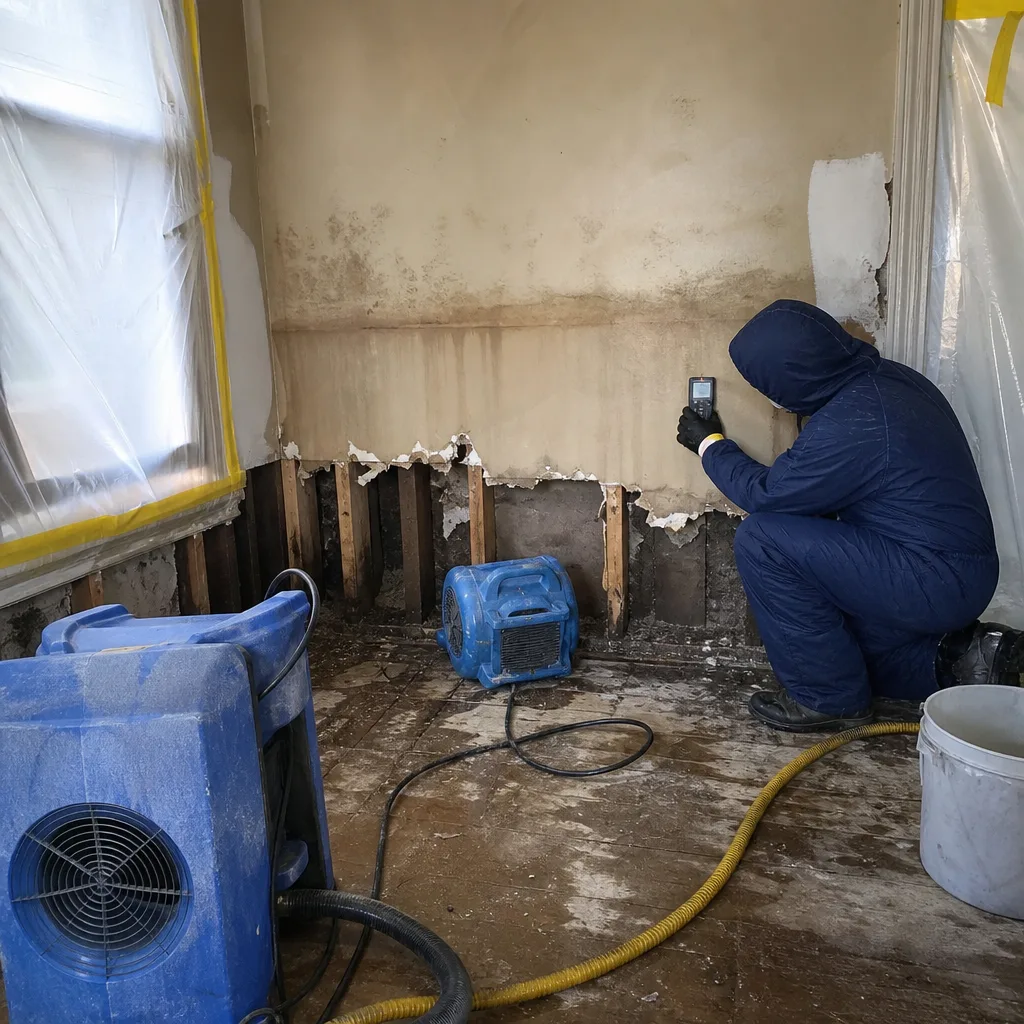
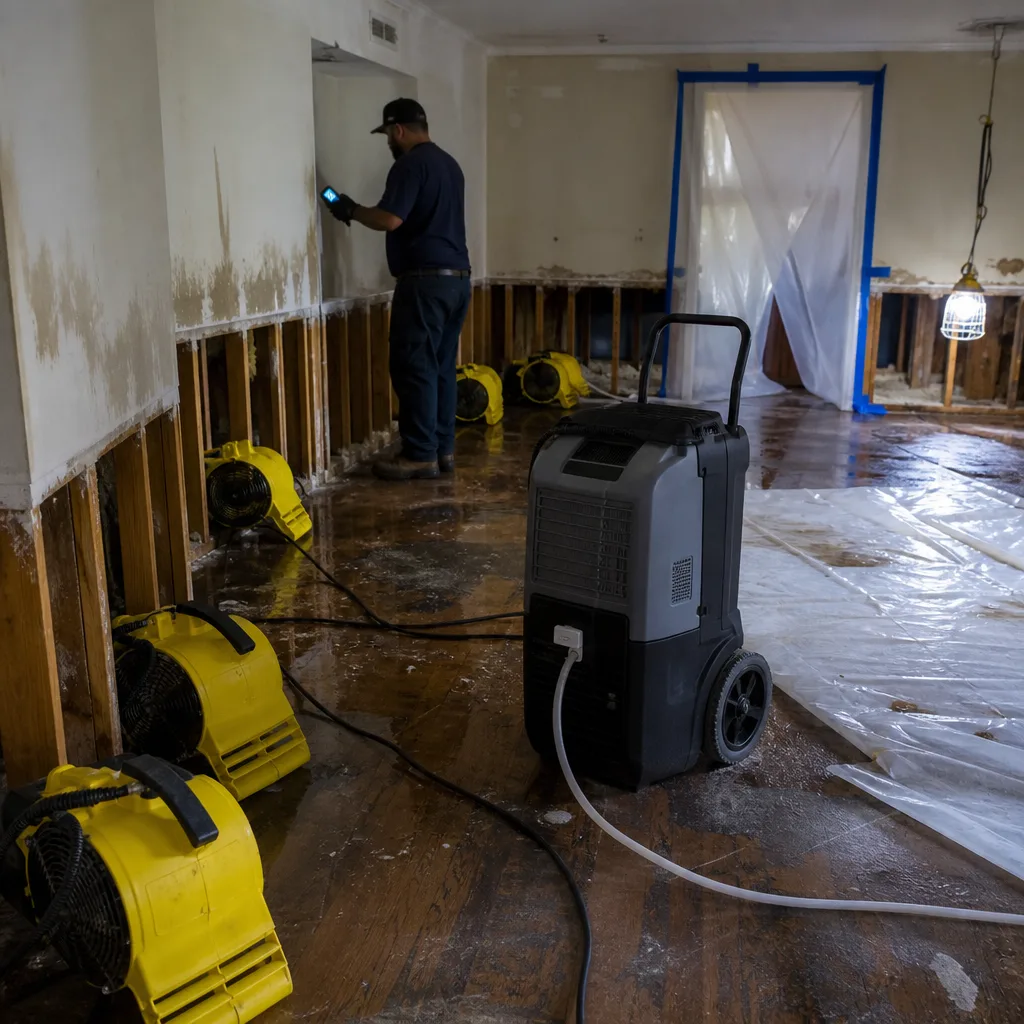
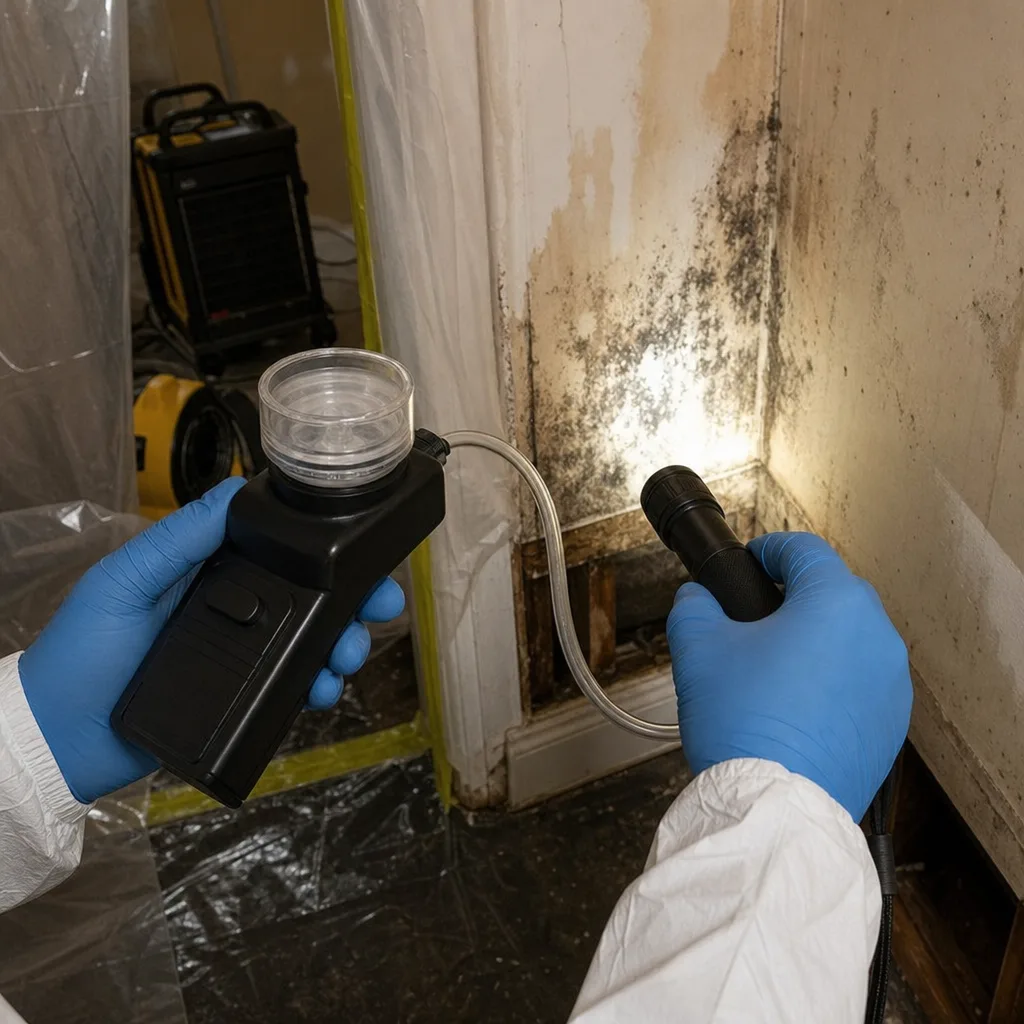
We start with moisture mapping: Dri-Eaz probes and thermal imaging to find where water is hiding behind plaster, under cabinets, in floor cavities. In West New York multi-unit buildings, we check adjacent units early, because what looks like one apartment’s problem is often shared.
Containment & Stabilization
We seal the work area with 6-mil poly sheeting and negative-air pressure, usually a HEPA-filtered air scrubber running 24 hours until clearance. In a 4-story walk-up, containment goes under doorways and around risers so spores don’t travel into shared hallways.
Drying & Dehumidification
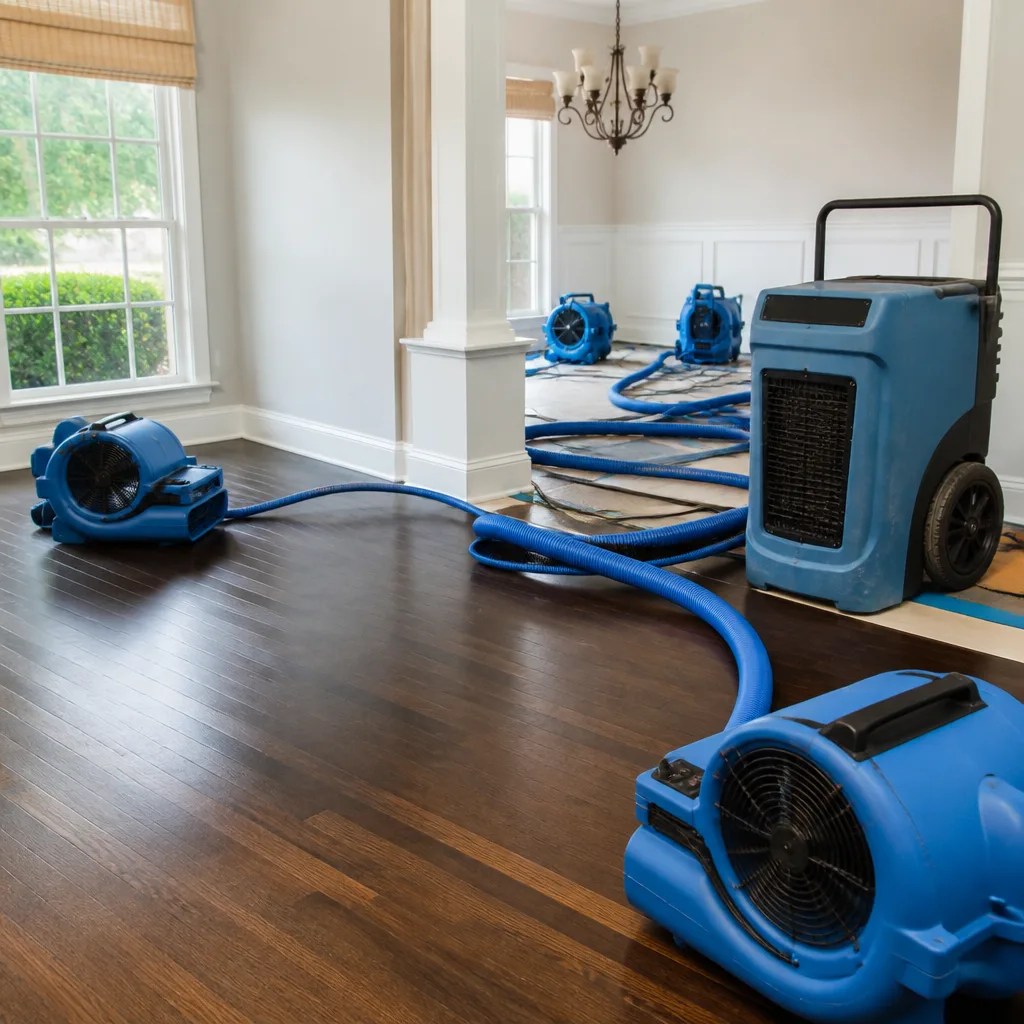
Phoenix air movers and dehumidifiers run continuously, with daily moisture readings logged on every affected surface. Masonry wicks differently than drywall, so we keep drying until the meter says pre-loss condition, not just until the surface feels dry.
Cleaning & Sanitization
HEPA vacuuming of all surfaces, antimicrobial treatment on affected framing, and air scrubbing until spore counts clear. We remove unsalvageable drywall, plaster, insulation, and carpet; anything salvageable gets cleaned and treated.
Mold Specialty Treatment
For Black Mold Remediation and Air Quality Restoration, we add clearance testing by a third-party hygienist where your carrier requires it, and we run air scrubbers through final clear. For crawl spaces, we address vapor barriers and failed drainage that caused the problem in the first place.
Repairs & Restoration
Because Floodline is a full-cycle restoration company, the same crew rebuilds what came out: base cabinets, plaster repair, flooring, paint. You don’t call a separate contractor. We hand you the moisture log and the 90-Day Done Right Promise in writing when the job closes.
Need Emergency Mold Remediation in West New York Now?
Crews minutes away, answering live 24 hours a day. The sooner we start, the less it costs.
Working With Your Insurance Company
West New York mold claims almost always involve at least two parties: the unit owner and the landlord, often a third and fourth policy when adjacent units are damaged. We’ve been doing direct insurance billing long enough to know what adjusters need to approve a scope without stalling. From the first hour, we photograph every affected surface room by room, log daily moisture readings, and write a line-item scope of work that matches industry-standard estimating software. We talk to your adjuster directly, send documentation as we go, and push for approval of containment, drying, and remediation in one submission so the job doesn’t stall halfway. The 90-Day Done Right Promise means if something comes back after we clear the job, we come back and make it right at no charge, no argument.
What We Provide Your Insurer
- Thorough documentation of the loss
- Photos of all damage, room by room
- Moisture readings and drying logs
- A detailed, line-item scope of work
- Direct coordination with your carrier
Built for West New York’s Loss Calendar
West New York’s mold problems follow a seasonal rhythm, and the old brick buildings amplify every one of them. January and February deep freezes rupture cast-iron and galvanized supply lines that were installed when Calvin Coolidge was president; when a fourth-floor line lets go, water finds every path down through three apartments before anyone notices wet plaster in the ceiling. That’s why West New York Storm & Disaster Restoration crews treat these as emergency calls. Spring thaw brings seepage through foundation walls and basement slabs in the lower blocks closer to the river, where the water table rises and old sump pumps fail under load. Summer thunderstorms dump an inch an hour on flat and low-slope roofs; ponding water degrades membranes and finds pinholes that drip into top-floor ceilings for weeks before mold shows. Nor’easters hit the Palisades-facing facades with wind-driven rain that saturates aging mortar joints, and the west walls of buildings from Bergenline Avenue east to the river take the worst of it. In every season, the pattern holds: West New York’s unreinforced brick absorbs moisture deeply, and the mold that follows is almost always worse than the stain on the wall suggests. We’ve been responding to these buildings long enough to expect it.
Mold Remediation Across West New York’s Neighborhoods
Bergenline Avenue runs the length of West New York like a spine, and the mixed-use buildings along it throw a particular kind of job our way: commercial storefronts on the first floor, apartments above, and a single roof leak that affects the bodega’s stockroom, the second-floor tenant’s bedroom wall, and the third-floor bathroom ceiling all at once. We schedule those jobs around business hours, set containment at the rear entrance, and run drying equipment in shifts that don’t shut the store down. The blocks east of Park Avenue toward Boulevard East sit on the Palisades edge, where wind-driven rain from nor’easters hammers the western exposures of pre-war apartment buildings; those facades wick moisture into party walls, and we routinely find mold growth behind radiators and inside interior closets that never got wet on the surface. Down toward the river on the lower streets, residual storm-surge risk from Sandy-era flooding means basements and first-floor units with slab-on-grade construction need extra attention to vapor barriers and humidity control. Over by Miller Park and the blocks around it, the older multi-unit walk-ups with original cast-iron stacks are the repeat offenders for kitchen and bath supply line failures. In each area, we know the building type before we park the truck, and that changes how we stage equipment: a Phoenix air mover in a galley kitchen off a narrow stairwell needs a power plan that doesn’t trip the building’s old breaker panel.
Specialized Mold Remediation Services We Offer in West New York
Mold Inspection & Testing
Before we take a wall apart, we run moisture mapping and visual inspection, often with air and surface sampling when your insurer or property manager requires it. In West New York apartment buildings, we check the unit above and below early, because shared plumbing and risers mean the source is rarely contained to one apartment.
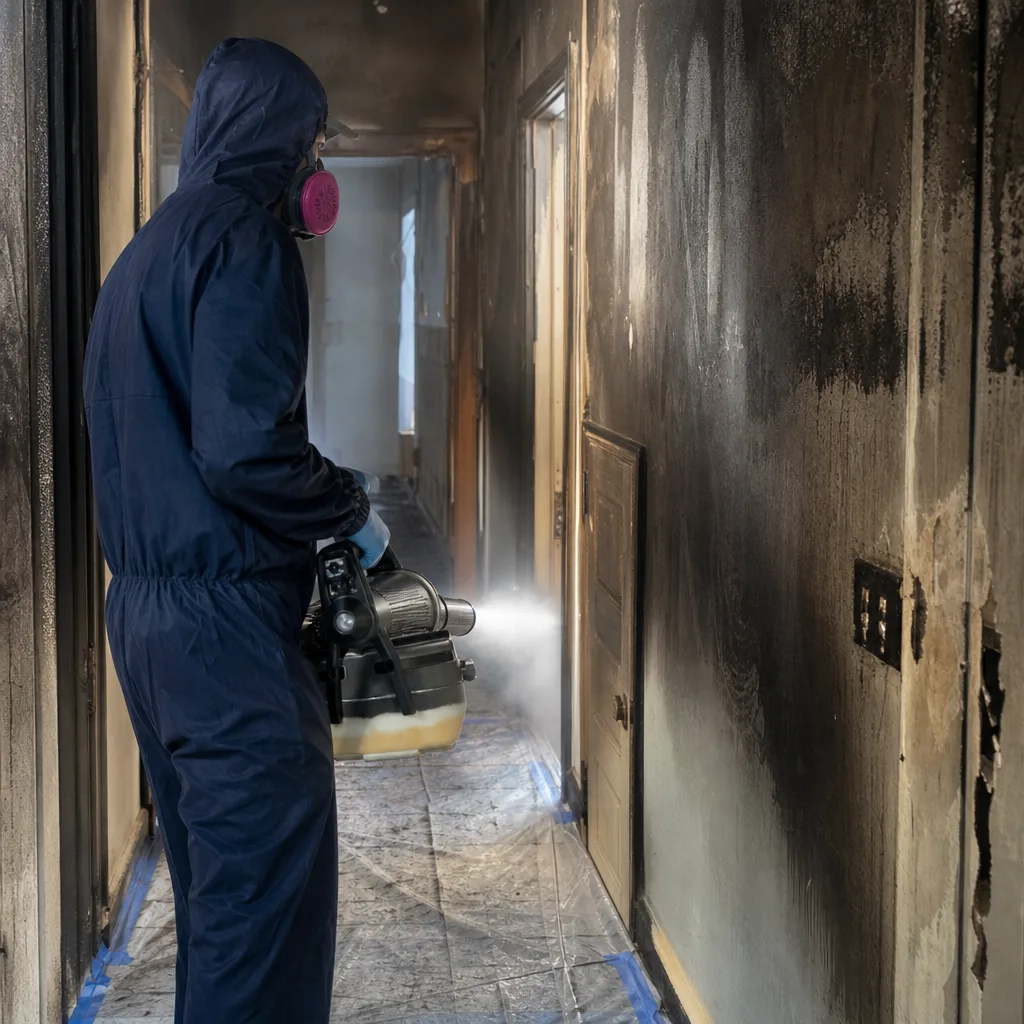
Mold Removal
This is the core of Mold Remediation: we remove the mold, remove the water that feeds it, and remove the materials that can’t be saved. In pre-war plaster-and-lath construction, that sometimes means careful demolition around original woodwork where salvage is possible, and full removal where the framing is compromised.
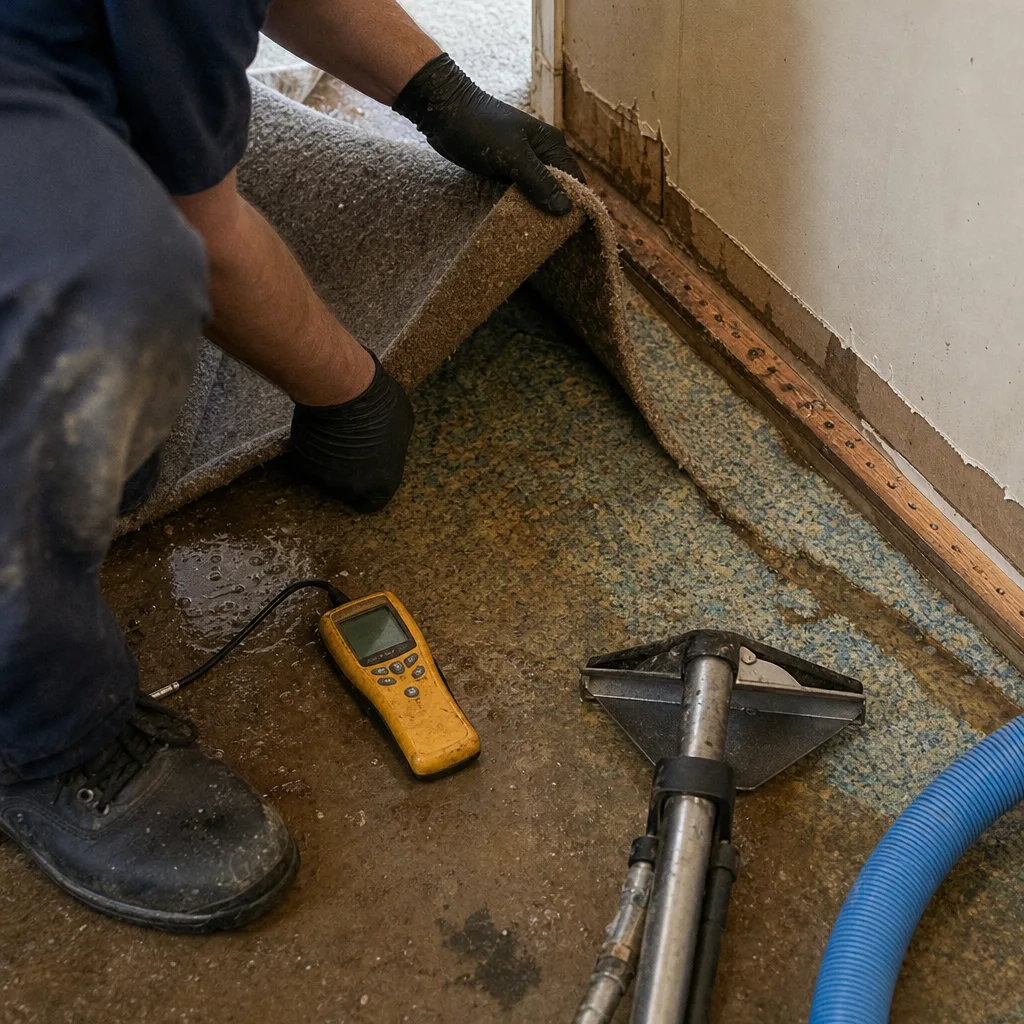
Black Mold Remediation
Stachybotrys, the black mold most people fear, grows where cellulose meets chronic water: wall cavities, behind baseboards, under cabinets that have been dripping for months unnoticed. In West New York’s dense housing, black mold in one unit often means hidden growth behind the party wall in the next. We contain before we cut, run negative air with HEPA filtration, and hold the work area under pressure until clearance testing comes back clean.
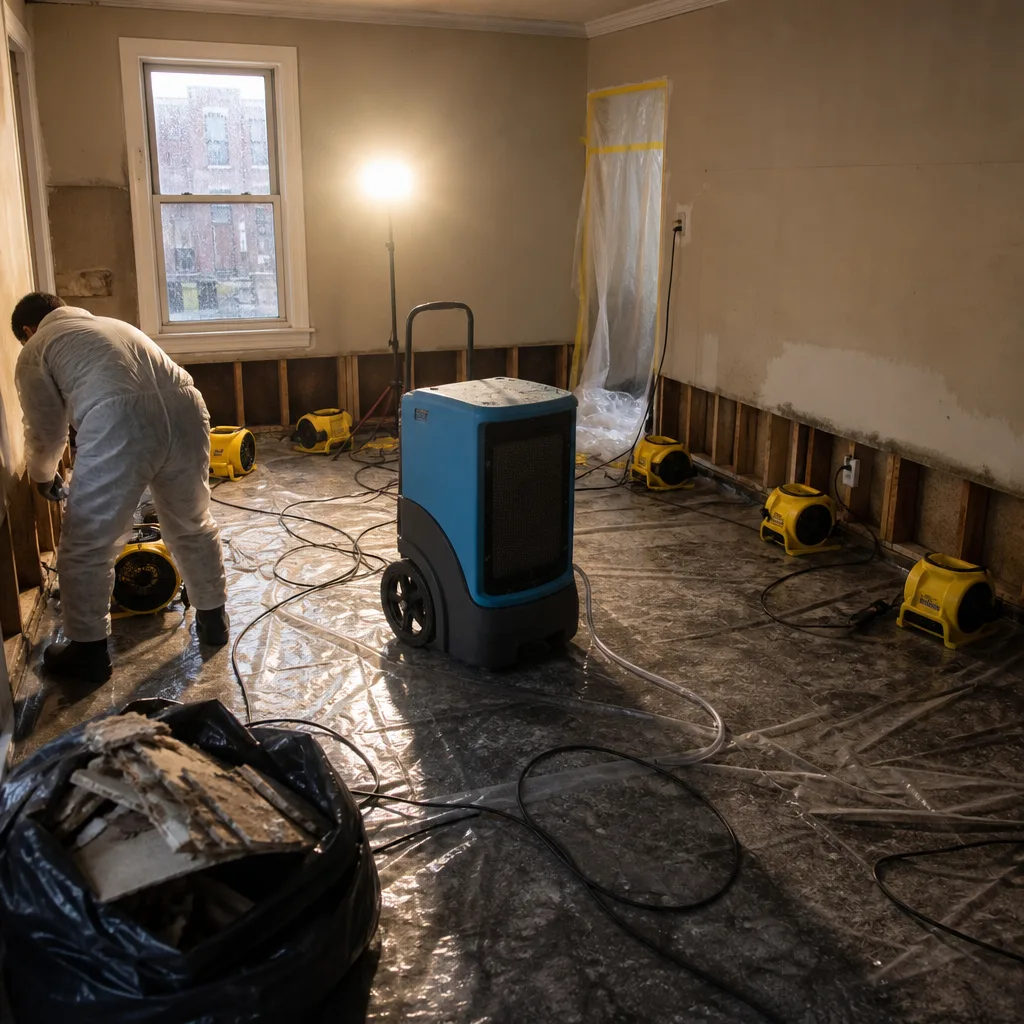
Air Quality Restoration
After remediation, the air is the last thing to clear. We run HEPA air scrubbers continuously during the work and through final clearance. For buildings with forced-air risers, we seal supply and return vents inside the work area so contaminated air doesn’t circulate to unaffected units. A third-party hygienist can do post-remediation verification when your claim requires it.
Crawl Space Treatment
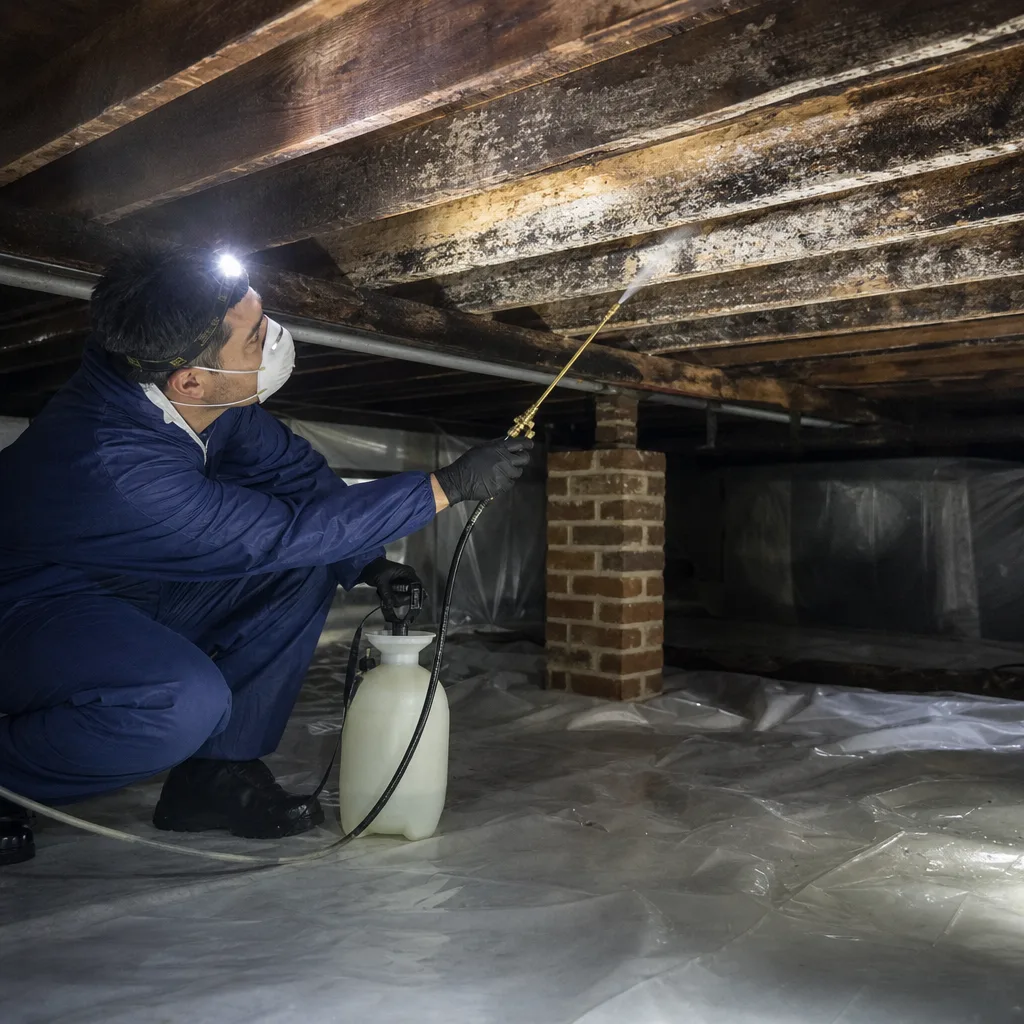
Many West New York buildings have partial basements or crawl spaces with dirt floors and old stone foundations. Those spaces feed humidity upward into first-floor units. We install vapor barriers, seal foundation cracks, and treat framing with antimicrobial after drying. The crawl space is often where the mold problem starts; ignoring it means a first-floor remediation that fails inside a year.
Moisture & Humidity Control
This is the service that prevents the next claim. After remediation, we identify why the moisture built up: failed ventilation, a bathroom fan that vents into the wall cavity, gutters dumping against the foundation, a roof membrane overdue for replacement. We fix what’s fixable and give you a written plan for what needs a longer timeline. The 90-Day Done Right Promise covers our work, and the goal is that you never call us back for the same spot.
What happens when you call
- 1
A real person answersNo phone trees - you reach a local pro.
- 2
You get an upfront price rangeHonest numbers before anyone is dispatched.
- 3
A background-checked tech heads outLicensed & insured, dispatched right away.
- 4
You approve before work beginsNothing starts until you say go.
Mold Remediation Costs in West New York, NJ
For a West New York apartment unit, mold remediation typically runs $1,800 to $6,500 for a single contained area. A small bathroom or closet job with surface mold, HEPA cleaning, and air scrubbing can come in around $1,500 to $2,800. A whole unit or multi-room job with full containment, drywall removal, framing treatment, and rebuild work lands in the $6,000 to $18,000 range depending on square footage and whether we’re replacing plaster on original lath. Whole-building jobs in multi-unit buildings go from there by scope. What moves the price in West New York specifically: containment in tight hallways and shared stairwells, multi-unit documentation, pack-out of contents when dust from demolition would otherwise settle on tenants’ belongings, and the longer drying times that brick masonry requires. When insurance covers the loss, you pay your deductible and we bill the carrier directly. When it’s out of pocket, we write a fixed scope before work starts so there’s no surprise at the end. Call (640) 500-3278 for a free visual inspection and a firm written estimate.
We Also Serve Cities Near West New York
Our crews work across the Hudson County riverfront and nearby towns: Hoboken, Weehawken, Union City, and Jersey City. If you own or manage property in Mold Remediation in West New York or any neighboring city, the same certified team responds.
Serving West New York, NJ - Our Local Coverage Area
We’re based in the West New York area and know this community well. Use the map below to see our service coverage - if you’re nearby, we can almost certainly help.
West New York Mold Remediation Questions, Answered
How do you handle mold remediation in a West New York apartment when only one unit owner calls, but neighbors above or below also show water damage?
We assess the affected unit first, then document adjacent units with moisture readings and photos before any work starts. If the water migrated through the shared structure, the claim expands. We coordinate documentation so each unit’s insurer gets its own scope, and we run containment so the work in one unit doesn’t spread spores into another.
What does containment look like in a 4-story walk-up with narrow hallways and no freight elevator?
Containment in a walk-up means sealing doorways with 6-mil poly, running negative-air pressure inside the work area, and protecting hallways with floor protection and sealed risers. Our techs carry equipment up stairwells by hand when there’s no elevator, and we stage materials in the smallest footprint the building layout allows.
Can you remediate mold behind original plaster walls without gutting the entire apartment in a pre-war building?
Sometimes. If the plaster is structurally sound on the surface but wet behind, we can cut access ports at the baseboard level, dry the cavity, treat the framing, and patch the plaster in kind. If the plaster has separated from the lath or crumbles under pressure, it comes out and we patch with period-appropriate methods. We’ll tell you honestly which category you’re in after inspection.
How do you document a multi-unit mold job so multiple insurance companies accept the scope of work?
We write a separate line-item scope for each affected unit, with photos keyed to each room, daily drying logs on that unit’s surfaces, and clear notes on shared boundaries affected by the loss. We send documentation directly to each adjuster and talk through what they need. Our goal is that no insurer stalls because the paperwork reads like one vague job instead of three precise ones.
Why does mold grow so fast in West New York’s brick apartment buildings compared to single-family homes?
The brick and mortar absorb water and hold it for weeks, so even after visible standing water is gone, the wall cavity stays humid enough for mold to colonize. Add shared walls that trap moisture, flat roofs that pond, and forced-air risers that carry humid air through the building, and the conditions for mold in a West New York walk-up are simply better than they are in a detached house.
How fast can a mold remediation crew reach a West New York address?
We commit to a 45-minute arrival for emergency water and mold response when you call (640) 500-3278. Live dispatch routes the nearest certified technicians from the metro office. For non-emergency inspections, we schedule same-day or next-morning visits in West New York.
Will my insurance cover mold remediation in West New York?
It depends on the cause of the water loss and the terms of your policy. Most policies cover mold remediation when it results from a covered peril like a sudden pipe burst or roof failure. Long-term seepage, neglect, or humidity issues are sometimes denied. We’ll document the loss from the first hour and work with your adjuster to make the coverage determination as clear as possible.
What should I do in the first 30 minutes after finding mold in my West New York apartment or building?
Call (640) 500-3278 and describe what you see. Shut off the water if there’s an active leak. Don’t disturb the mold with a fan or by scrubbing it; that releases spores into the air and makes the contamination worse. Keep the door to the area closed if you can, and wait for our team to assess with moisture meters and thermal imaging before anything gets touched.
Written by Curt Bowman, Owner at Floodline Restoration Co., providing Mold Remediation throughout West New York, NJ and Hudson County.