

Free visual inspection and a written scope of work before any mitigation begins - photos, moisture readings, and drying logs go in your claim file
The scope we write is the scope we bill. Anything new gets shown to you, in writing, before we touch it.
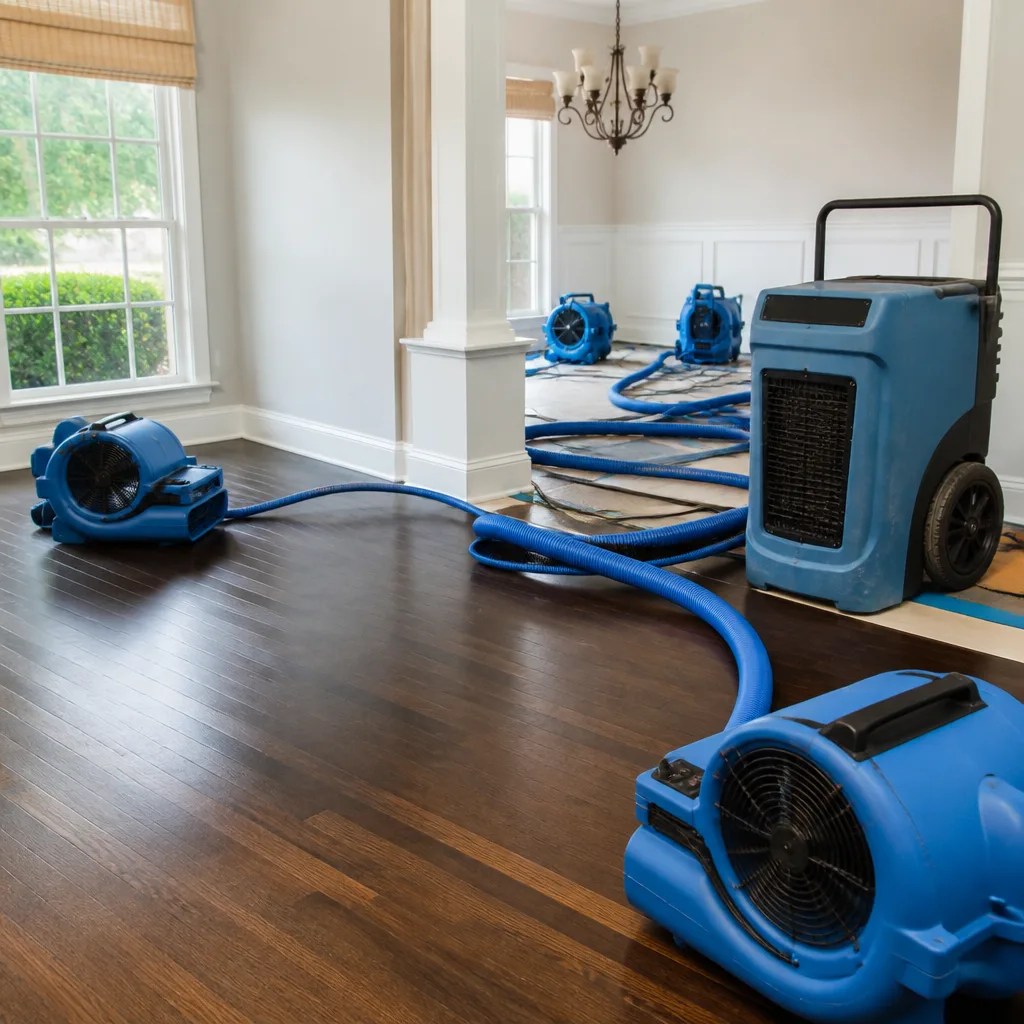
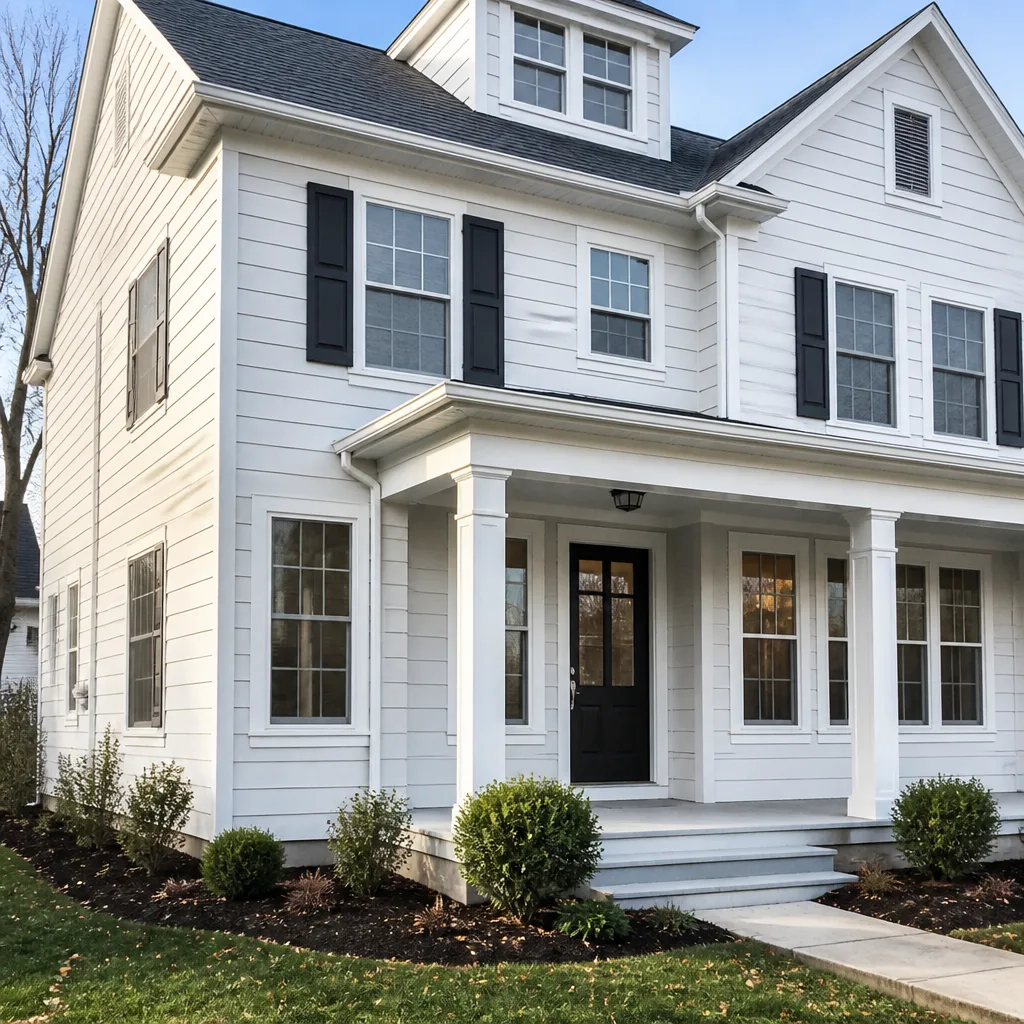
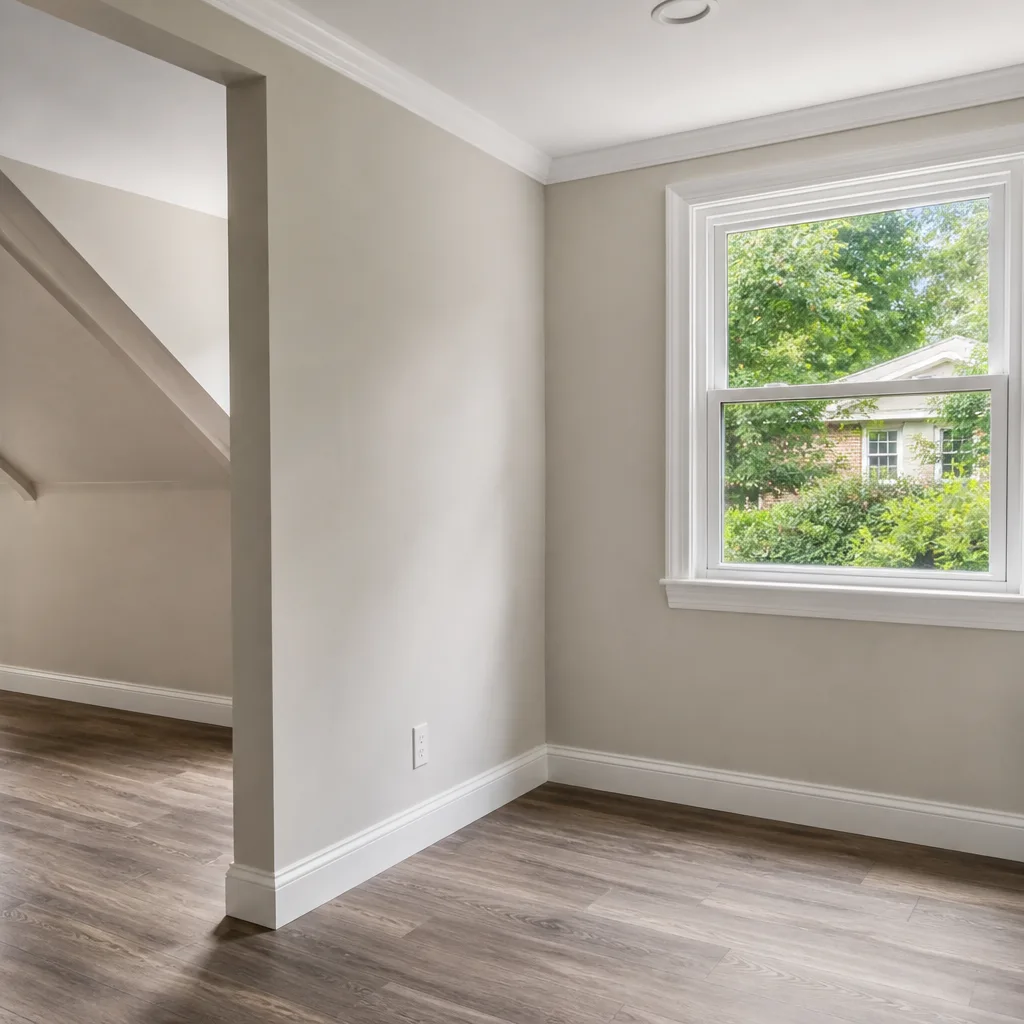
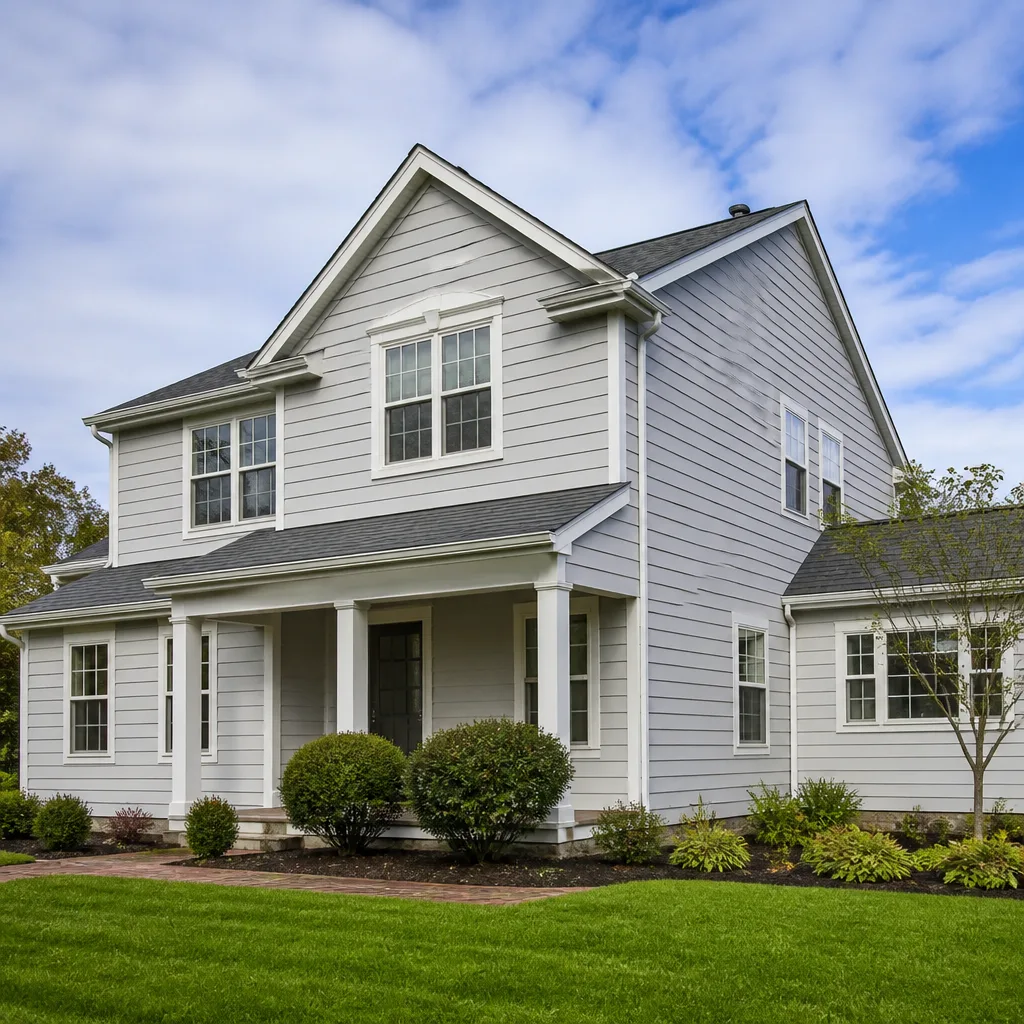
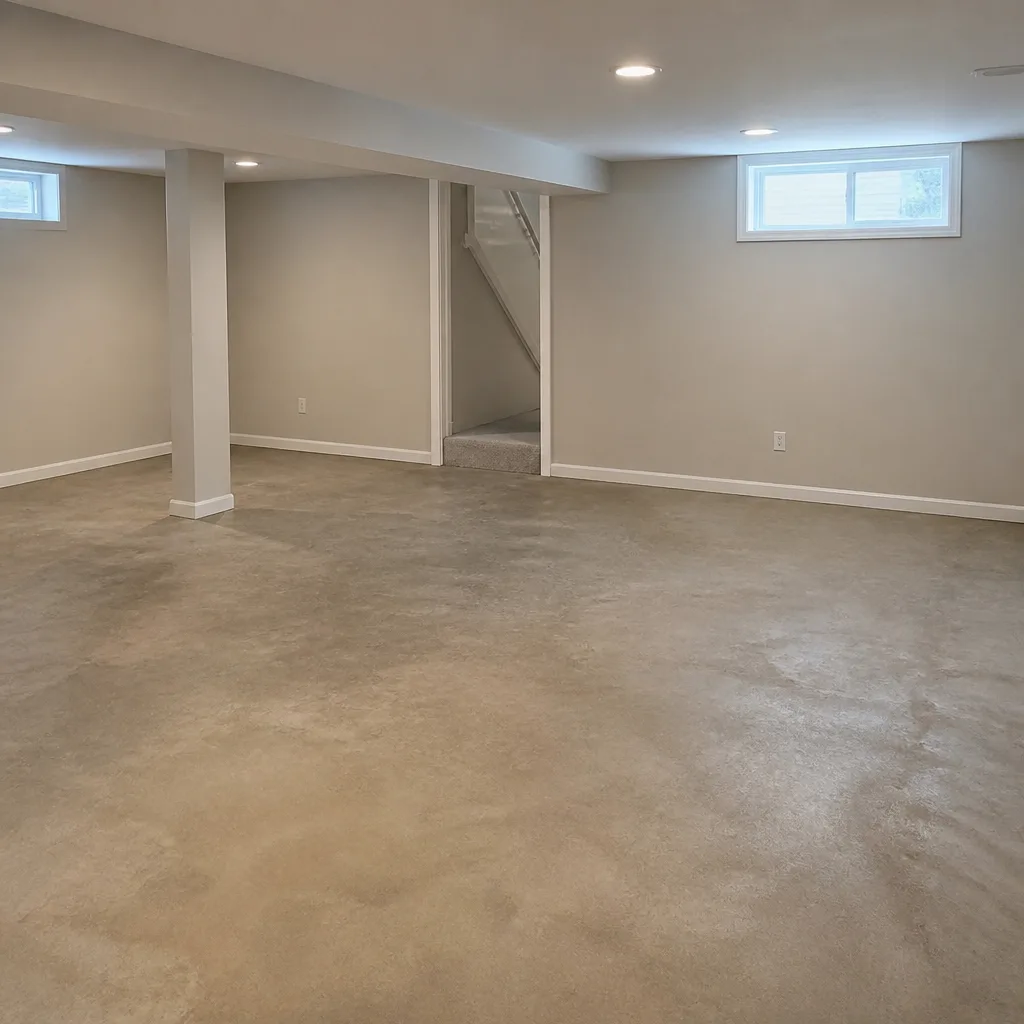

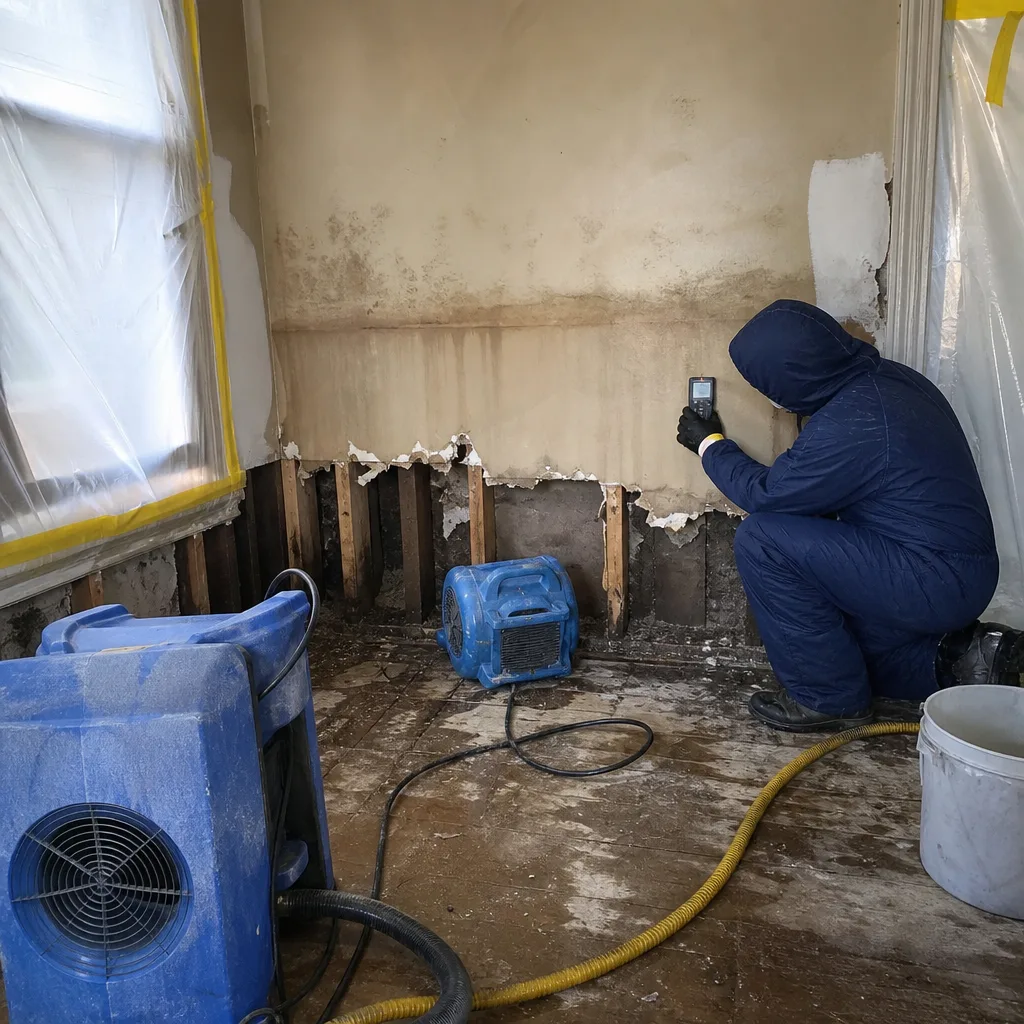 Before
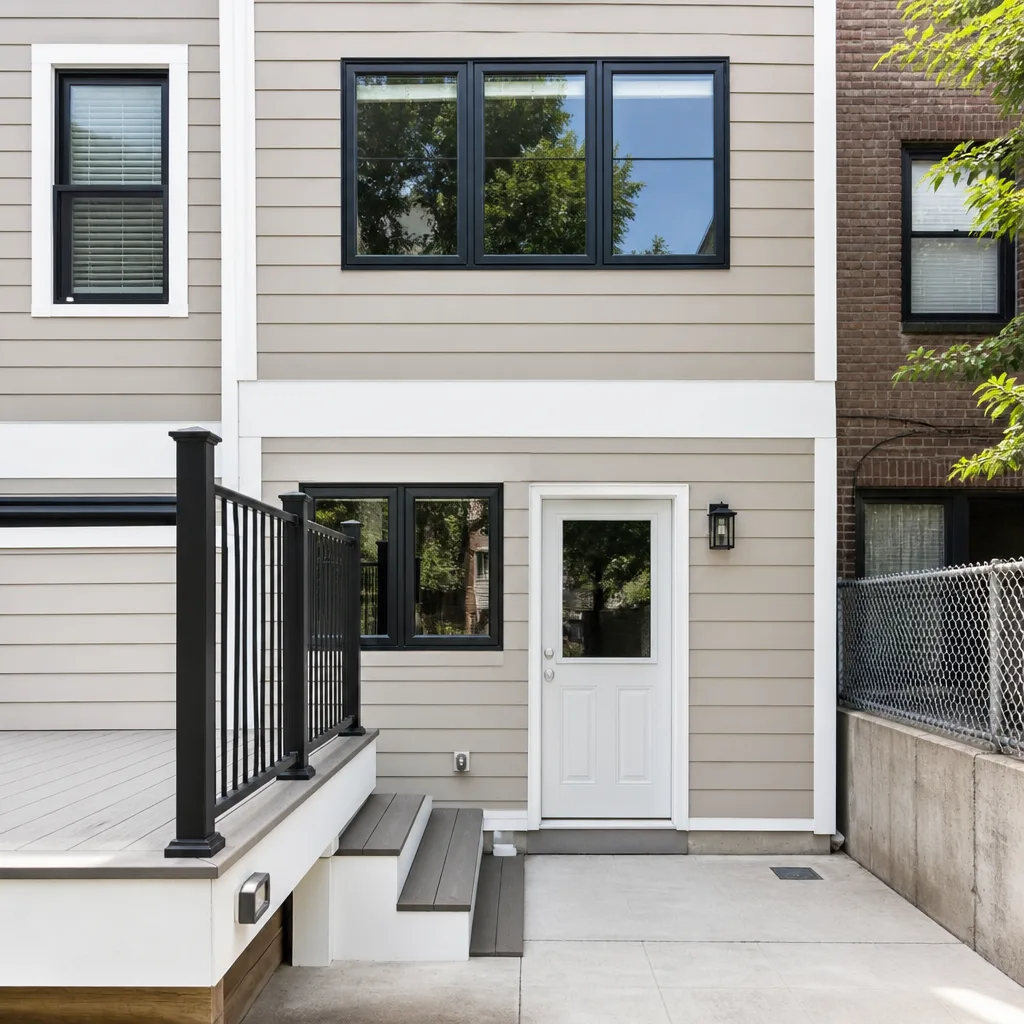 After
After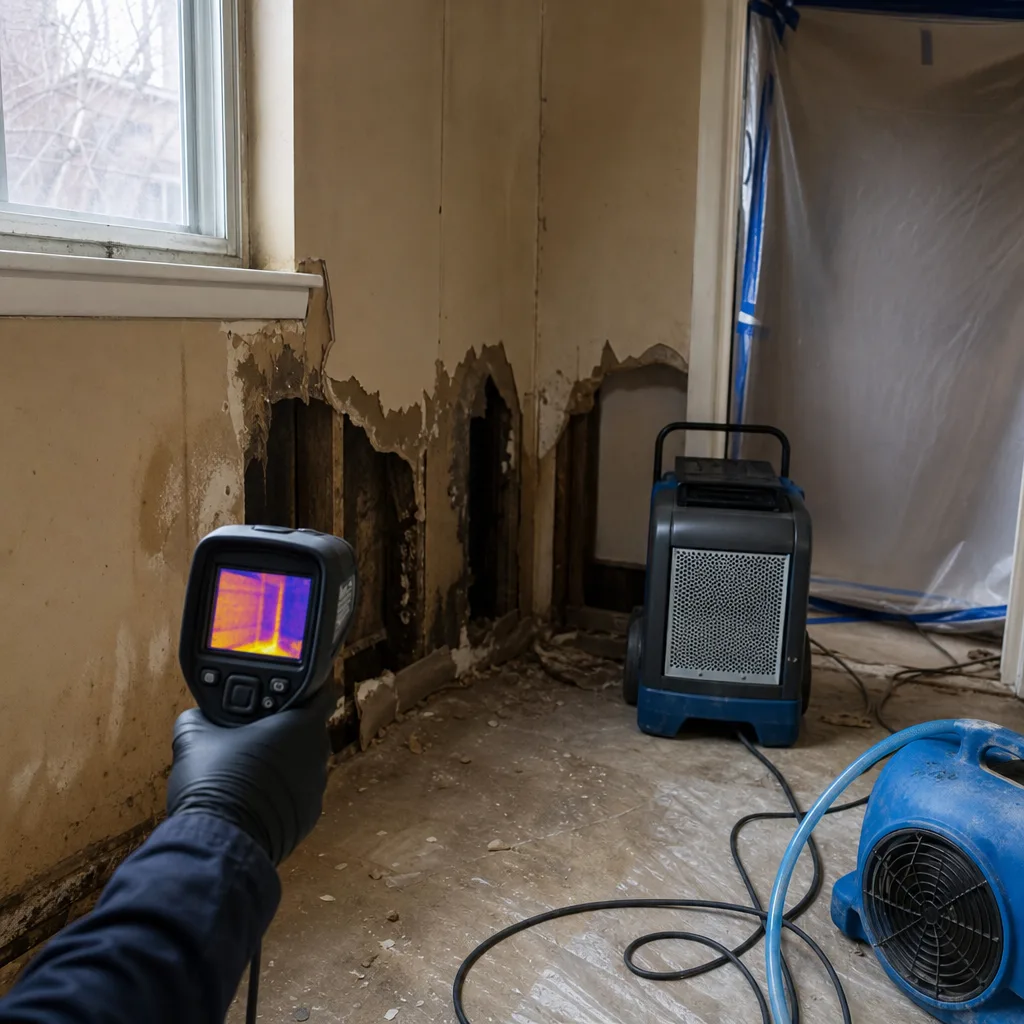 Before
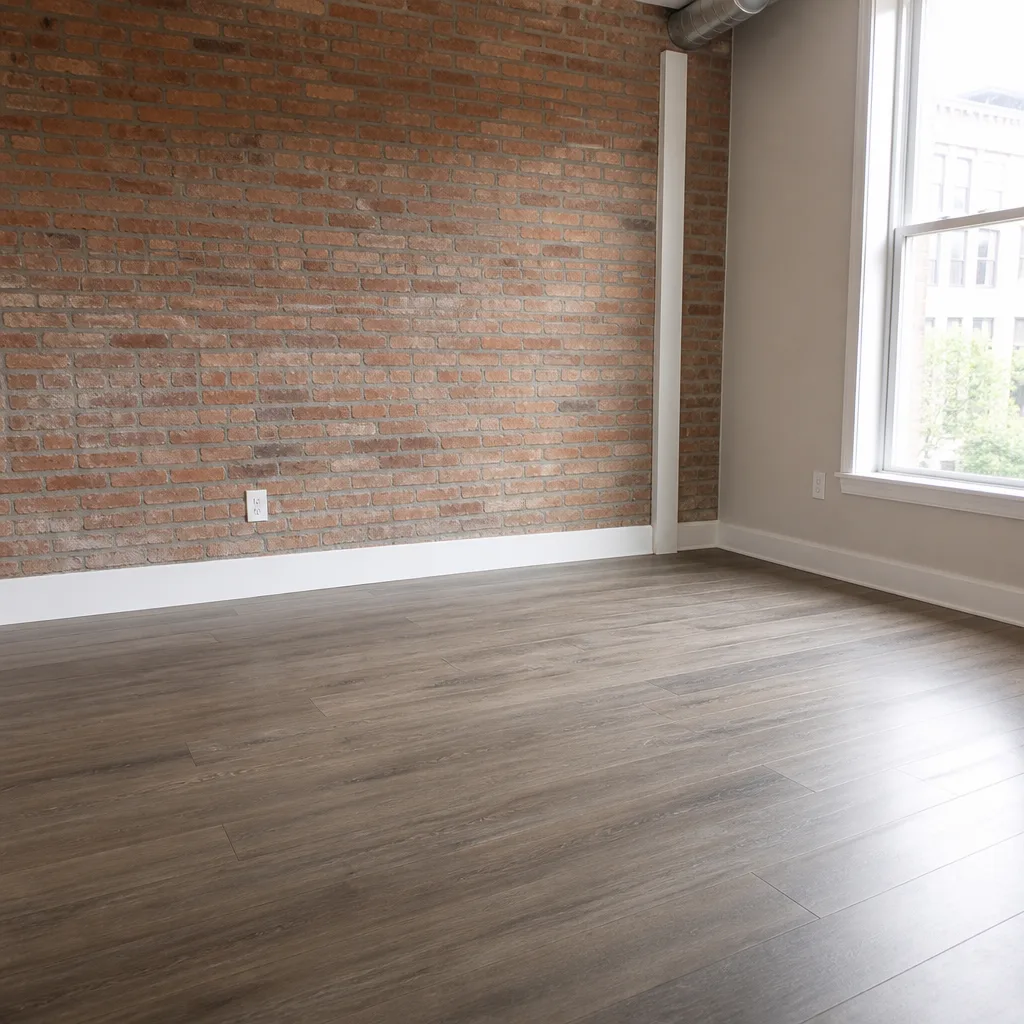 After
After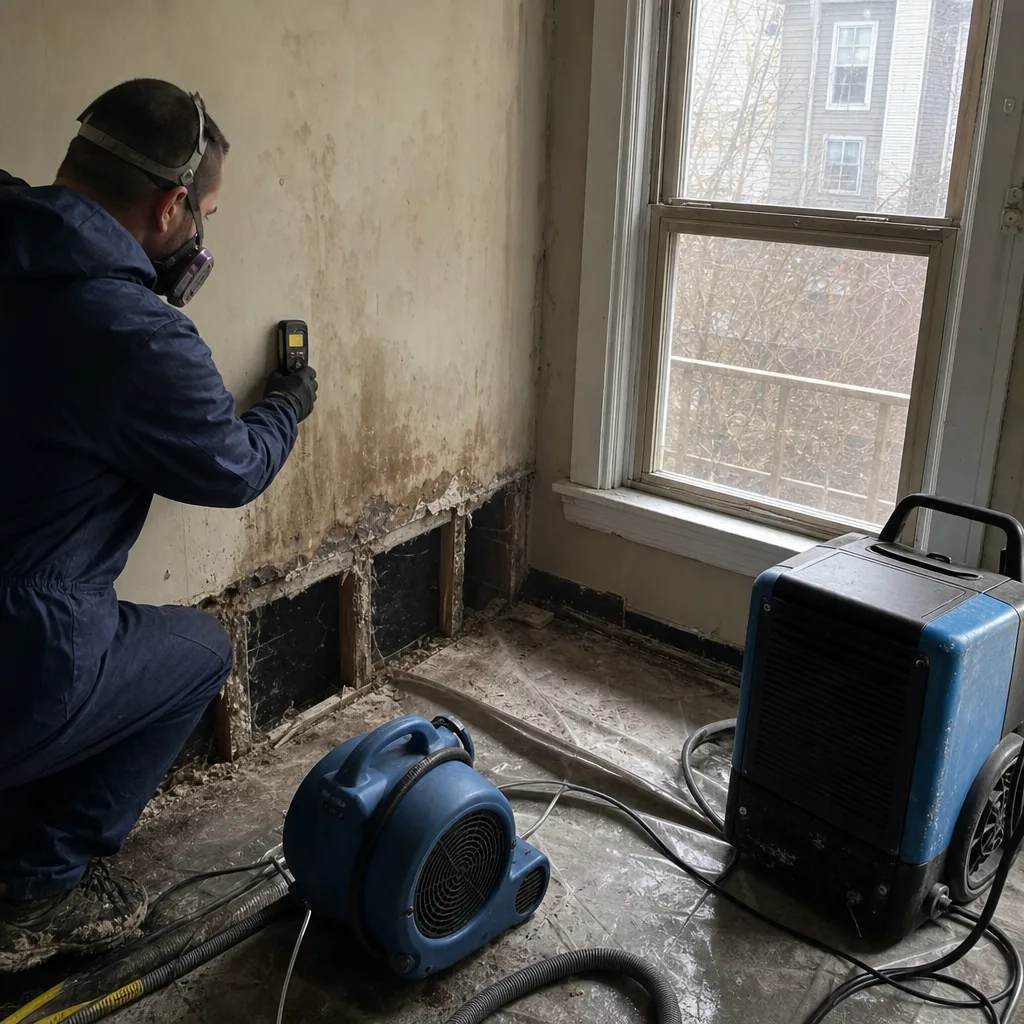 Before
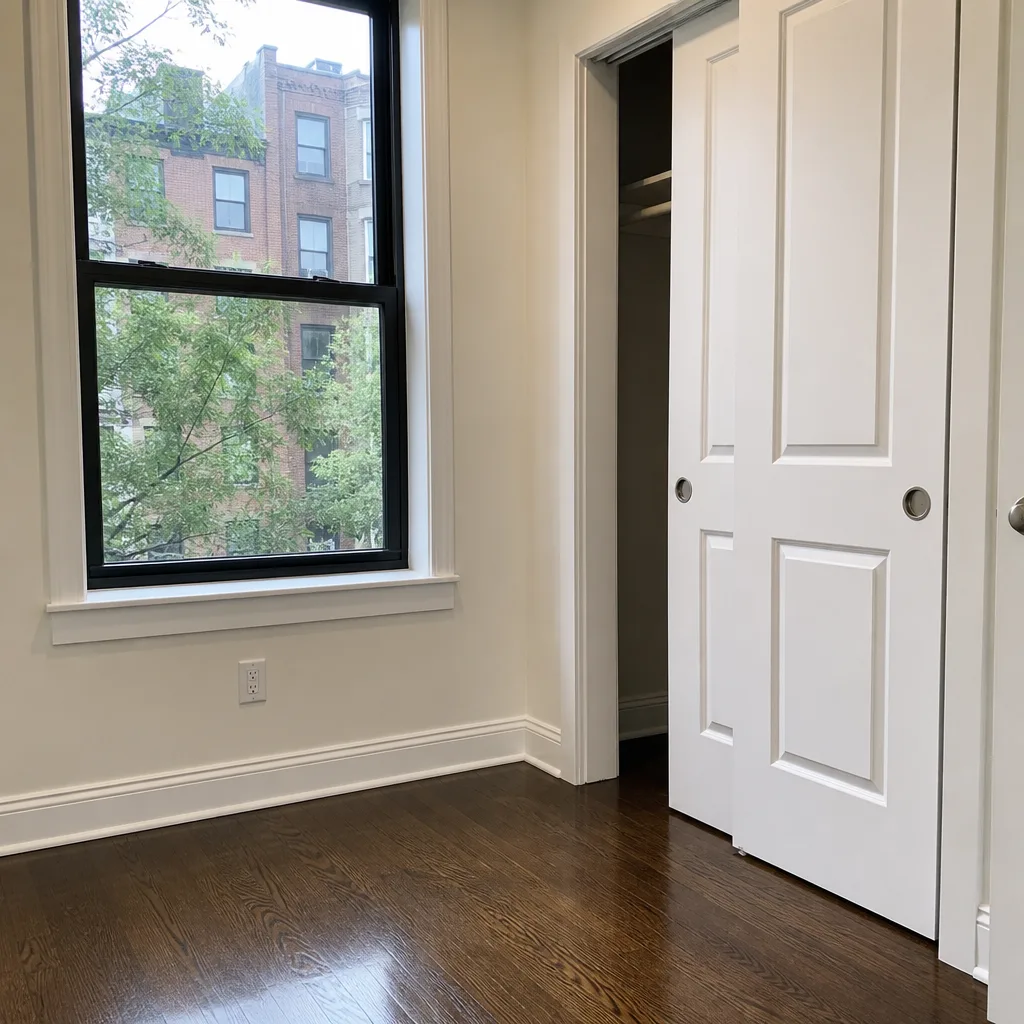 After
After24/7 Emergency Fire & Smoke Damage Restoration in Union City
A kitchen fire in a Union City tenement rarely stays in one apartment. Smoke, soot, and fire-suppression water move through shared floor joists, party walls, and common utility chases, spreading into two, three, sometimes four adjacent units before the trucks even leave. That’s why our crews answer live at (640) 500-3278 and dispatch into Union City within 45 minutes, day or night. The first hour after a fire matters more here than almost anywhere else in Hudson County, because every minute of delay lets acidic soot etch deeper into original plaster-and-lath walls and lets saturated joist cavities feed mold growth in neighboring apartments. We arrive, stabilize, document, and start extraction on the same visit. The free visual inspection tells you exactly what you’re facing before any work begins.
Understanding Fire & Smoke Damage Restoration Severity in Union City Properties
Fire damage in Union City’s pre-war housing stock behaves differently than in a detached North Bergen colonial. Those 4-6 story brick tenements and attached row houses built between 1895 and 1945 share structural members that act like chimneys for smoke migration. We classify what we find by residue type. Dry soot from a fast-burning paper or wood fire brushes off relatively easily, but it still penetrates open-web floor joists and travels three rooms deep through electrical chase openings. Oily or wet soot from a kitchen grease fire or smoldering synthetic materials bonds to surfaces within hours and requires aggressive chemical cleaning and hydroxyl or ozone deodorization. Protein residues from a stove fire are nearly invisible but emit a rancid odor that returns weeks later if not neutralized at the source.
Then there’s the water. Fire-suppression efforts in a Union City apartment routinely dump hundreds of gallons into floor cavities that drain down into the unit below. In buildings with original cast-iron drain stacks and galvanized supply lines still in service, that water finds every seam, crack, and chase opening. We pull moisture readings on the burn unit and every adjacent property sharing a wall or floor assembly. Cross-wall migration is not a possibility in Union City, it’s the baseline assumption.
Why Union City Property Owners Choose Floodline Restoration Co.
- 45-minute response commitment – A live dispatcher confirms a crew inside Union City the same hour you call, not a recording promising a callback.
- 24/7 live answer, always a person – The phone rings and a human picks up at 2 a.m. Curt Bowman built the company around a dispatch board in 2010, not a sales desk.
- IICRC-certified fire and smoke restoration technicians – Crews hold FSRT and WRT certifications and train to RIA and IFA standards, so the containment plan and drying map come from training, not guesswork.
- Free visual inspection with a written scope – You see the line-item plan and the dollar figure before any equipment comes off the truck. No surprises on the bill.
- Direct insurance billing and adjuster coordination – We document from the first hour, hand your carrier the moisture log and photo file, and never make you play messenger.
- One team from board-up to rebuild – The same certified crew that reads the moisture map on day one handles daily readings and rebuilds the wall. No handoffs, no inherited subs.
Our Fire & Smoke Damage Restoration Process
Inspection & Assessment
We map every affected surface in your unit, then pull moisture and soot readings on adjacent apartments sharing a wall or floor assembly. Thermal imaging finds smoldering pockets inside cavities that visual inspection misses. You get a written scope and a dollar figure before we move equipment.
Emergency Board-Up & Stabilization
Broken windows, open roof sections, and compromised doors get sealed immediately to stop weather intrusion and unauthorized entry. In Union City’s attached buildings, we also isolate shared stairwells and hallways so smoke doesn’t keep circulating through common spaces.
Water Extraction & Drying
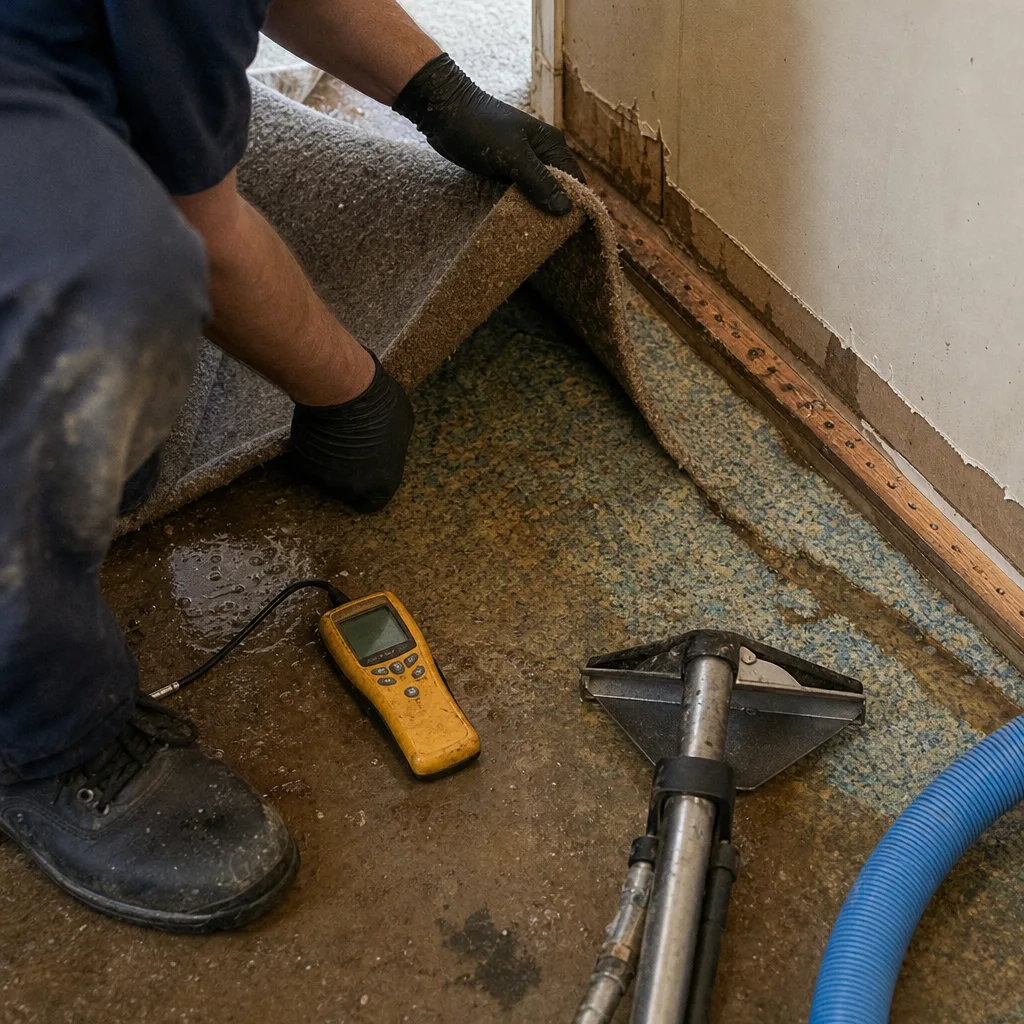
Fire-suppression water comes out first. We use truck-mounted extractors, then set Dri-Eaz and Phoenix dehumidifiers with XPOWER air movers in affected units and neighboring ceiling plenums. Daily moisture readings are logged until the dry standard is met, and that log goes to you and your carrier.
Soot & Smoke Cleaning
Every surface gets cleaned according to residue type: dry sponges for dry soot, HEPA-vacuuming for loose particulates, and aggressive chemical cleaning for oily residues. We run HEPA air scrubbers with negative air pressure to keep contaminated dust out of tenant bedrooms and hallways.
Odor Removal & Deodorization
Hydroxyl generators and thermal fogging neutralize smoke odor inside wall cavities, behind original plaster, and through shared utility chases. We don’t mask the smell. We treat the source and verify clearance with a post-remediation odor assessment.
Structural Repairs & Restoration
Charred framing is cut out and replaced, damaged plaster is restored, and finishes return to pre-loss condition. The same crew that started the mitigation handles the rebuild, so there’s no gap between drying and putting your kitchen back together.
Need Emergency Fire & Smoke Damage Restoration in Union City Now?
Crews minutes away, answering live 24 hours a day. The sooner we start, the less it costs.
Working With Your Insurance Company
Union City fires are almost never single-unit losses. When your kitchen fire spreads smoke and water into the apartment next door, your insurer and your neighbor’s insurer both need documentation that shows where the damage started, where it traveled, and what we did to stop it. We build that file from the first hour. Photos before any equipment moves. Moisture readings on every affected surface, including the other side of the party wall. Thermal imaging of cavity spaces. A line-item scope of work with no fuzzy language.
Our office coordinates directly with your adjuster, answers their questions, and provides the documentation they need to process the claim. You never sit on hold with a carrier trying to explain someone else’s drying log. We speak their language because we’ve handled thousands of these claims across Hudson County high-density housing.
What We Provide Your Insurer
- Thorough documentation of the loss
- Photos of all damage, room by room, including adjacent units where migration occurred
- Moisture readings and daily drying logs until the dry standard is met
- A detailed, line-item scope of work
- Direct coordination with your carrier and any neighboring property owner’s carrier
Built for Union City’s Loss Calendar
Union City’s fire season is not a season. It’s a function of the housing stock. The peak for kitchen fires runs November through February, when families crowd into small tenement kitchens for holiday cooking and grease fires ignite against exhaust hoods coated in years of residue. Space heaters in subdivided units get placed too close to bedding and upholstery in January cold snaps, and overloaded knob-and-tube or early cloth-wired circuits powering modern appliances cause smoldering electrical fires inside old wall cavities.
But the bigger pattern in Union City is the water after the fire. Because the city sits along the eastern face of the Palisades escarpment, basement-level and garden apartments on the lower streets take the runoff from every major storm. When a third-floor unit above them has a fire and the suppression water drains through floor joists into a basement apartment already dealing with groundwater seepage from the slope, the drying job doubles in size. We see this combination regularly on the blocks east of Palisade Avenue toward the lower avenues near the 07087 zip code. It changes our drying strategy: we stage dehumidifiers in vertical stacks, pull readings on every floor between the fire origin and the basement, and run containment on hallway doors so the contaminated air doesn’t push into neighboring units.
Fire & Smoke Damage Restoration Across Union City’s Neighborhoods
Response routes in Union City are defined by density and parking. On the blocks around Palisade Avenue near the 1900s-era tenements, our crews navigate narrow one-way streets with no staging space in front of the building, so equipment gets walked in from the nearest corner. Expect ladders and drying hoses moving through the same stairwells residents use. We schedule that around morning school runs and evening commute hours when hallways choke with foot traffic.
Down toward Summit Avenue and the storefront blocks, commercial fires in mixed-use buildings push smoke into second- and third-floor apartments above the shops. Those jobs need vertical containment and coordination with the business owner doing their own insurance claim on the storefront below. We handle both.
The garden apartments and lower-lying streets east toward the Hackensack River side of the city, around the blocks near 14th Street and Palisade Avenue’s eastern slope, see more water-heavy fire losses because drainage from the Palisades grade compounds what the fire department put down. Our drying plans there assume saturated ground-floor slab moisture in addition to structural drying above.
Bergenline Avenue runs the commercial spine. Apartment fires in the attached mixed-use buildings along that corridor mean smoke migration into multiple storefronts and residential units at once. We’ve pulled soot out of three apartments and a bodega in one afternoon because they all shared one floor assembly.
Specialized Fire & Smoke Damage Restoration Services We Offer in Union City
Emergency Board-Up & Tarping
After a fire in a Union City attached building, an open window or burned door doesn’t just expose your apartment. It changes air pressure through the shared stairwell and can draw smoke into hallways serving four other families. We board and tarp the same day, often within hours, and we use materials that hold until permanent repairs are scheduled. The goal is security and containment, not a sheet of plywood that falls off in the next nor’easter.
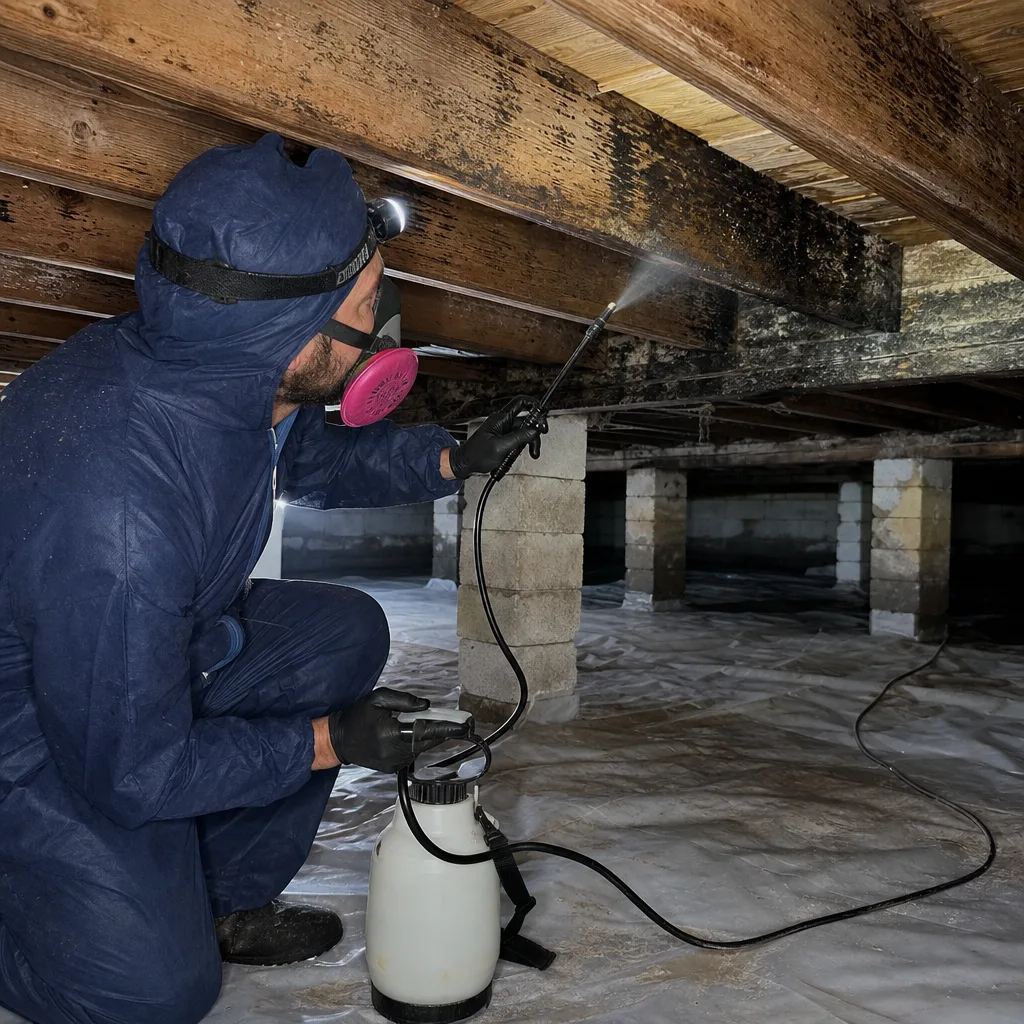
Smoke & Soot Removal
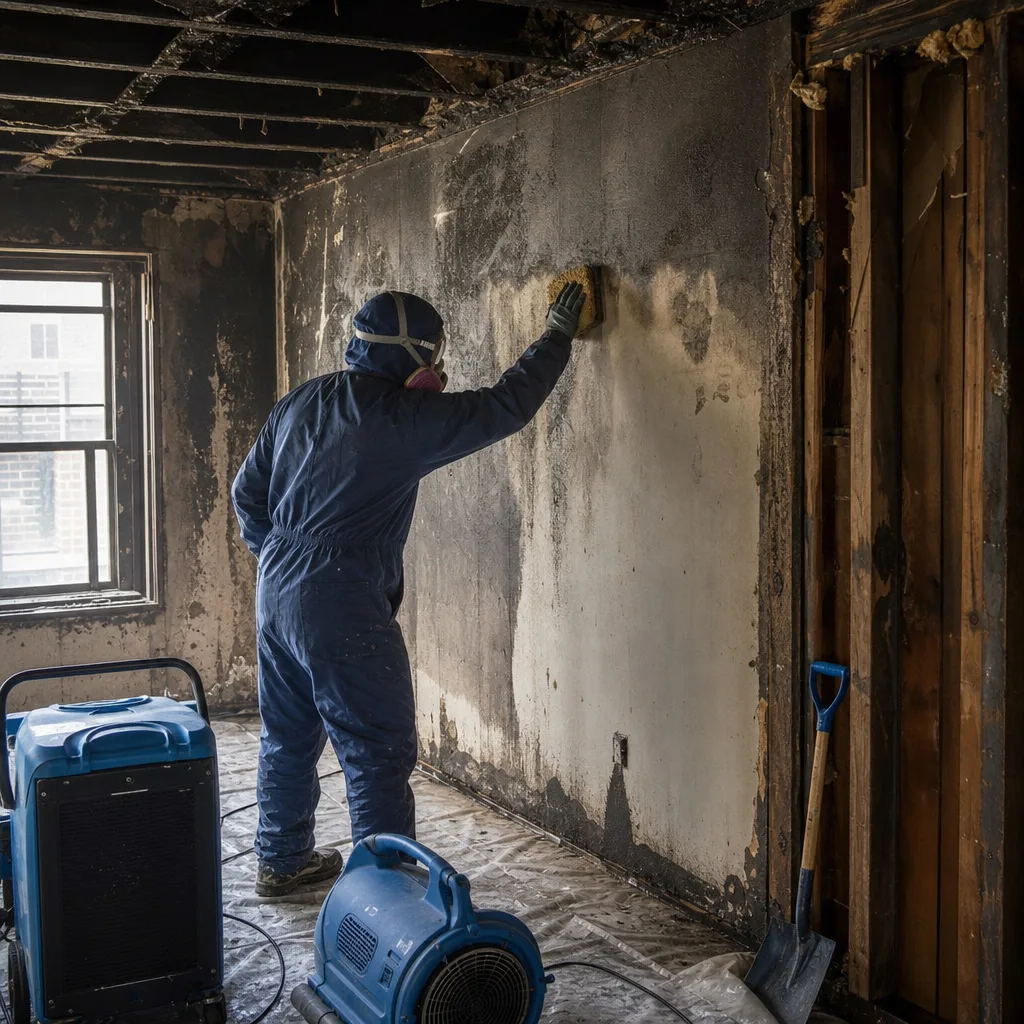
Soot in pre-war plaster-and-lath walls doesn’t respond to the same cleaning methods as drywall in a newer Secaucus condo. Original lime plaster is porous and alkaline, which means acidic soot bonds differently and requires pH-aware cleaning agents. Our techs know the difference between a wipe-down on modern drywall and careful surface treatment on 1920s plaster that crumbles under aggressive scrubbing. We pull soot out of open-web joist cavities with HEPA extraction and treat the cavity itself, not just the visible wall face.
Odor Removal & Deodorization
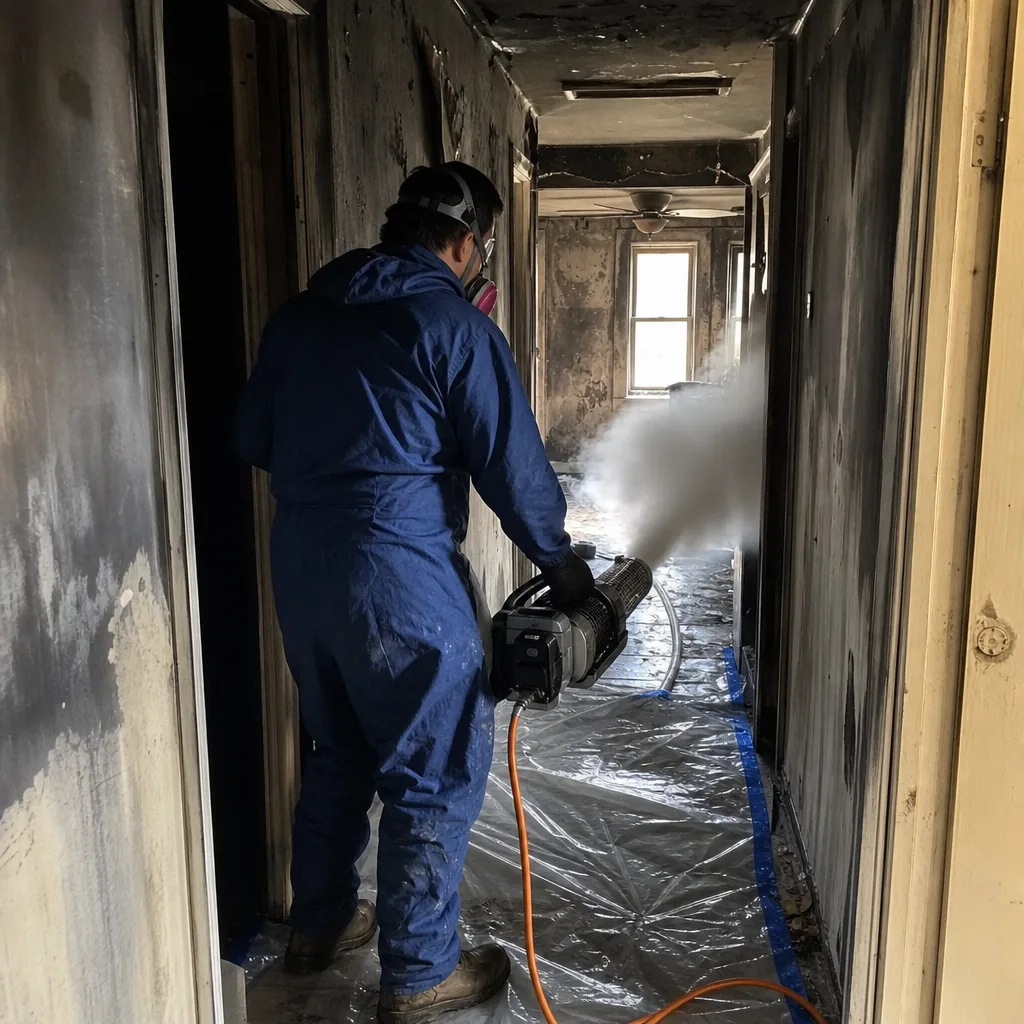
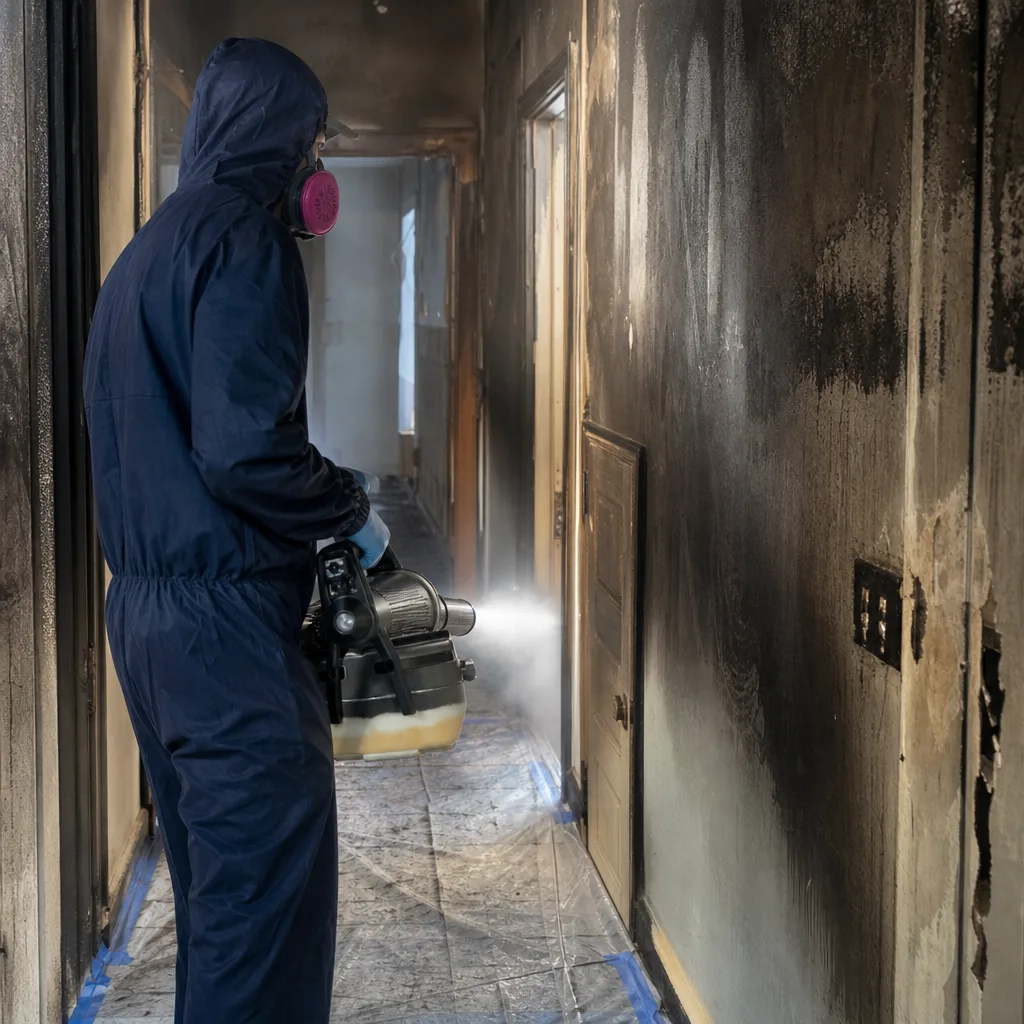
Smoke odor in Union City’s attached housing almost always re-enters from the shared cavity, not from your unit alone. That’s why we run hydroxyl generators in the floor plenums above and below the fire unit, and why we fog the common utility chase if smoke traveled through it. Treating only your apartment’s surfaces leaves a smell that comes back through the wall two weeks later. We document every access point and verify the job with a post-treatment walkthrough.
Contents Cleaning & Pack-Out
Subdivided Union City apartments are small, which means a kitchen fire’s smoke reaches the living room, bedroom, and closet contents faster than in a standalone house. We pack out clothing, textiles, cookware, and electronics with a room-by-room inventory that your adjuster gets a copy of. Cleaning happens off-site at our facility, then everything returns packed and labeled. The inventory has photos attached to each line item, so nothing gets lost between a tenement kitchen and a storage rack.
Structural Fire Repair
Charred joists, burned-out window frames, and fire-cut stair stringers in a pre-war Union City building need rebuild work that matches the original framing methods. We sister new lumber to original members where code allows, and we handle the permits with the city. When the fire opened a party wall, we rebuild to restore the fire-rating between units, which matters for both your safety and your neighbor’s insurance claim. The same crew that did the mitigation handles the framing and finish work.
What happens when you call
- 1
A real person answersNo phone trees - you reach a local pro.
- 2
You get an upfront price rangeHonest numbers before anyone is dispatched.
- 3
A background-checked tech heads outLicensed & insured, dispatched right away.
- 4
You approve before work beginsNothing starts until you say go.
Fire & Smoke Damage Restoration Costs in Union City, NJ
Pricing in Union City runs higher than in lower-density Hudson County towns because the work is more complex. A straightforward smoke cleanup in a single-unit apartment after a contained stove fire typically runs $2,500 to $6,500. Add water extraction and structural drying to that same loss and you’re looking at $7,000 to $16,000 depending on how many units the water migrated into. A full kitchen fire with contents cleaning, board-up, structural repair, and multi-unit smoke migration across shared cavities regularly lands between $18,000 and $45,000. That’s the Union City reality: you’re paying for containment of spaces you didn’t damage and documentation for insurance carriers you’ve never met.
Most of these losses are covered by homeowner’s or renter’s insurance, and we bill your carrier directly. What’s not covered is the gap in coverage limits, which is why the free visual inspection matters. It gives you a firm dollar figure before your adjuster shows up, so you’re not surprised by the scope three weeks later. Call (640) 500-3278 and we’ll come out, walk the loss, and put the number in writing.
We Also Serve Cities Near Union City
Floodline Restoration Co. handles fire and smoke damage restoration across the Hudson County region, including Weehawken, Hoboken, North Bergen, and Secaucus. The housing stock changes street by street out here, but the party-wall documentation and cross-cavity containment we use in Union City applies everywhere attached buildings share framing.
Union City Fire & Smoke Damage Restoration Questions, Answered
How does fire and smoke restoration in Union City’s attached tenements differ from a standalone house in North Bergen?
A tenement fire here almost never stays in one unit. Smoke and soot move through open-web joist cavities, common utility chases, and party walls into adjacent apartments, which means we’re documenting damage and coordinating with multiple property owners and insurance policies on nearly every job. A standalone North Bergen house has four exterior walls; your Union City apartment shares at least one structural wall and a floor assembly with someone else. The containment plan has to account for their air space, not just yours.
How soon after a fire should I worry about mold growth on wet drywall in a Union City apartment?
It starts within 24 to 48 hours. Fire-suppression water sitting in floor cavities and behind walls in a warm tenement apartment creates exactly the conditions mold needs. In Union City’s attached buildings, that water isn’t just in your unit, it’s draining into the apartment below through original joist spaces. The faster extraction and structural drying start, the less demolition you face. That’s why we dispatch crews inside 45 minutes, not the next morning. Call (640) 500-3278 as soon as the fire department clears the building.
How do you handle smoke odor removal in an old Union City building with original plaster walls and shared cavities?
You can’t treat only the painted surface. Original lime plaster is porous, so smoke odor penetrates into the wall itself, and the shared cavity behind it pulls that odor through to the neighbor’s side. We run hydroxyl generators in the unit, fog the wall cavities with deodorizing agents, and treat the floor plenums above and below. The building’s 1920s framing means there are open chases between units that act as odor highways. Every access point gets logged and treated before we call the job done.
What does a typical contents cleaning pack-out look like in a subdivided Union City apartment after a kitchen fire?
Small apartment, fast smoke travel. Everything from the kitchen, living room, and bedrooms gets inventoried with photos, packed room by room, and moved to our cleaning facility. We tag each box with a line item that matches your insurance claim’s contents schedule. Cookware, textiles, clothing, and electronics get cleaned by category. When the apartment is ready, everything comes back packed and labeled, and you check it against the photo inventory. Your adjuster gets a copy of the entire manifest.
Why do you often need to inspect a neighboring apartment even if the fire did not affect their visible walls?
Because the walls you can see are not the walls that matter. Smoke and water travel behind surfaces, through open-web joists, and inside party wall cavities. We’ve pulled moisture readings on a neighbor’s ceiling plenum showing 80% relative humidity while their painted walls looked completely dry. If we skip that reading and mold appears in their apartment two weeks later, the liability fight starts. Documenting cross-wall migration on day one protects you and gives both insurance carriers a clear record.
How fast can a crew actually get to a Union City fire loss?
Inside 45 minutes. Our dispatch is live 24 hours a day, and the person who picks up at (640) 500-3278 is confirming a crew for Union City while you’re still on the phone. We keep equipment staged for the 07087 zip code because the density here means a fire rarely waits for a morning crew when the suppression water is already running through the floor. The faster we start extraction and containment, the less the final bill.
Will my insurance cover fire and smoke restoration when it spreads to my neighbor’s apartment?
Almost always, yes. Standard homeowner’s and renter’s policies cover fire and smoke damage, and liability for migration into adjacent units is typically addressed through your carrier’s liability coverage. The key is documentation: your insurer needs to see exactly where the fire started, how the smoke and water traveled, and what you did to stop it. We provide that file from the first hour, bill your carrier directly, and coordinate with the neighbor’s adjuster as needed.
What should I do in the first 30 minutes after a fire in my Union City apartment?
After the fire department says it’s safe to enter, don’t touch anything. Don’t wipe down soot, don’t open windows, don’t plug in electronics, and don’t start cleaning. Every surface you disturb changes the documentation and can drive contamination deeper. Call (640) 500-3278 and let our crew arrive, photograph everything in place, and start the mitigation in the right order. The first hour determines how much of your apartment is restorable versus replaceable.
Serving Union City, NJ - Our Local Coverage Area
We’re based in the Union City area and know this community well. Use the map below to see our service coverage - if you’re nearby, we can almost certainly help.
Your Union City Fire Restoration Starts With One Call
When a fire hits your apartment on Palisade Avenue or a rowhouse off Summit, you need a crew that understands pre-war framing, shared cavities, and the insurance documentation that comes with multi-unit damage. Floodline Restoration Co. has handled these losses across Union City’s tenements and attached rows for years, always with a written scope before work starts and a 90-Day Done Right Promise in your hands when it’s finished. Done right, and backed in writing.
Call (640) 500-3278 now for a free visual inspection. A live person answers, day or night, and a crew is on the way within 45 minutes. The line the fire left is where we start.
Written by Curt Bowman, Owner at Floodline Restoration Co., serving Union City and Hudson County since 2010.